
 Justin D.
Your pool water can look crystal clear while slowly damaging the surface underneath it. And here’s the frustrating part: your pH and water chemistry could look completely normal.
That’s why checking chlorine and pH is only part of taking care of a pool. There’s another number that helps reveal whether your water is likely to leave calcium deposits behind—or dissolve calcium from your pool’s finish. It’s called LSI.
Hey guys, welcome back to The Pool Nerd. I’m Justin, your resident pool aficionado. Today, we’re taking something that sounds like a chemistry lesson and turning it into a useful tool for your pool so you can keep it looking amazing.
You don’t need to memorize an equation. You just need to understand what the number means, how to check it, and what to do next.
Products Mentioned in This Guide


What Is LSI?
LSI stands for Langelier Saturation Index. It describes your water’s balance with calcium carbonate, the mineral involved in common pool scale and the deterioration of calcium-containing finishes.
Think of it as a balance check with three possible directions.
On one side, the water has a tendency to dissolve calcium carbonate. In a plaster pool, that can mean drawing calcium from the finish.
On the other side, conditions favor calcium carbonate coming out of the water and forming deposits.
In the middle, the water is close to equilibrium: neither direction is strongly favored. That’s what we’re trying to maintain.
LSI isn’t a chemical you buy or a separate sanitizer. It’s a calculation that connects several water-test results. Instead of judging each number on its own, it helps you see how they work together.
What Should Your Pool’s LSI Be?
An LSI of 0.0 means the water is at calcium-carbonate equilibrium.
A negative number means it is below that balance point and has a tendency to dissolve calcium carbonate. A positive number means it is above that point and has a tendency to deposit it.
A commonly used operating range is −0.3 to +0.3. For plaster finishes, the National Plasterers Council recommends 0.0 to +0.3 for ongoing maintenance after startup.
Don’t get obsessed with making the screen read exactly 0.00. These are practical operating ranges, not a cliff where +0.30 is perfect and +0.31 instantly creates scale.
Look for a stable balance, not a perfect decimal.
Check your water balance
Enter your latest test results in the free Pool LSI Calculator to see whether your water leans toward etching, balance, or scale.
Why a “Good” pH Doesn’t Tell the Whole Story
Imagine two pools with a pH of 7.5.
One has cold water and relatively low calcium hardness. The other has warm water and considerably more calcium. Even with identical alkalinity, stabilizer, and dissolved solids, those pools will have different LSI readings.
Same pH. Different calcium balance.
That’s the problem with treating a water-test report like a collection of unrelated boxes. A pH reading can fall inside its recommended range without the entire combination being balanced. LSI connects the dots.
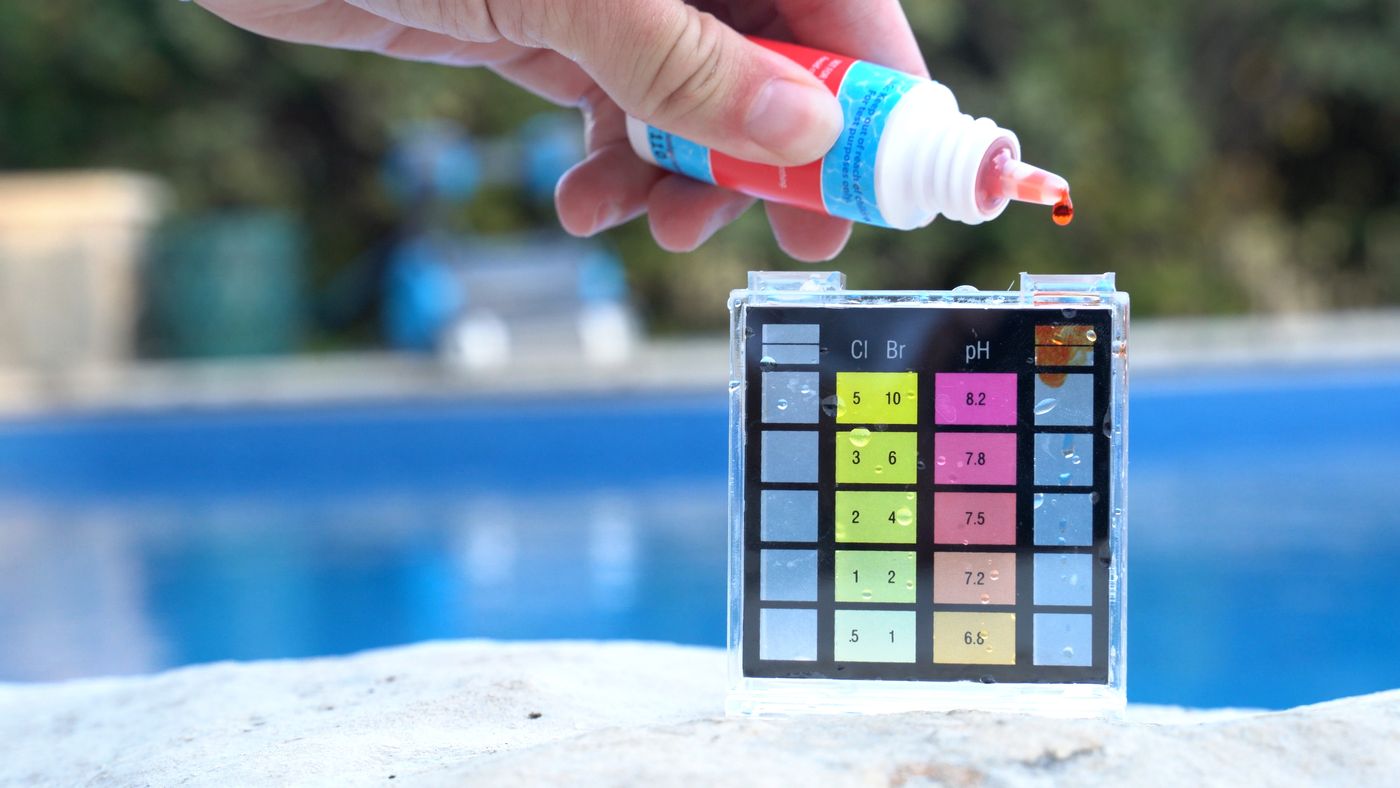
This does not mean you should ignore normal chemistry limits. A common pool pH range is 7.2–7.8, subject to your pool’s specific requirements. Don’t push pH outside the recommended range just to make the LSI look better. Adjust the combination of pH, alkalinity, and calcium instead. My guide to the ideal pool pH explains why the pH target still matters on its own.
Why LSI Matters: Etching Versus Scale
When water stays too far on the negative side, calcium-containing finishes can deteriorate. This is especially important with plaster and cement-based pebble or quartz finishes.
The surface may become rougher, develop pits, or show uneven wear. That is different from something sitting on top of the finish.
Etching removes material. Scale adds material.
Balancing the water helps prevent further chemistry-related damage, but it doesn’t put missing plaster back. Don’t assume a rough patch simply needs stronger chemicals or harder scrubbing. Have an uncertain surface problem identified before treating it.
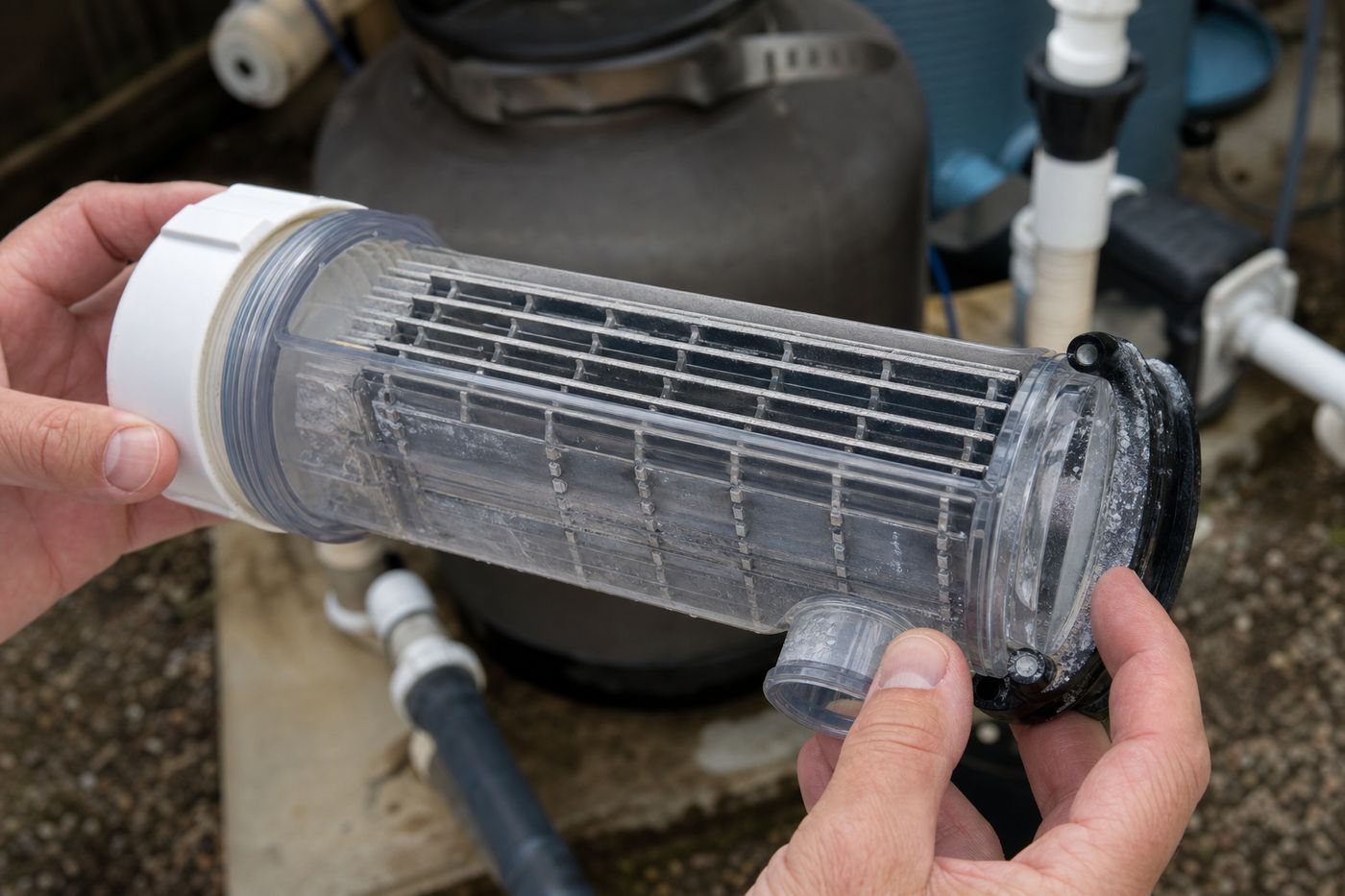
On the positive side, calcium-carbonate deposits can build up on surfaces and equipment. Salt cells are a particular concern because conditions right at the cell can favor scale even when a sample from the main pool looks reasonably balanced.
Vinyl and fiberglass pools don’t have a plaster layer to lose, but they can still develop scale. Don’t automatically copy a plaster pool’s calcium targets; follow the requirements for your surface and equipment.
How to Calculate Your Pool’s LSI
Head to ThePoolNerd.com/pool-lsi-calculator with your latest water-test results.
The useful part isn’t doing the math by hand. It’s feeding the calculation accurate information.
Start With Fresh Measurements
You need your:
- pH
- total alkalinity
- calcium hardness
- water temperature
- cyanuric acid
- total dissolved solids
These are the measurements used in a pool LSI calculation.
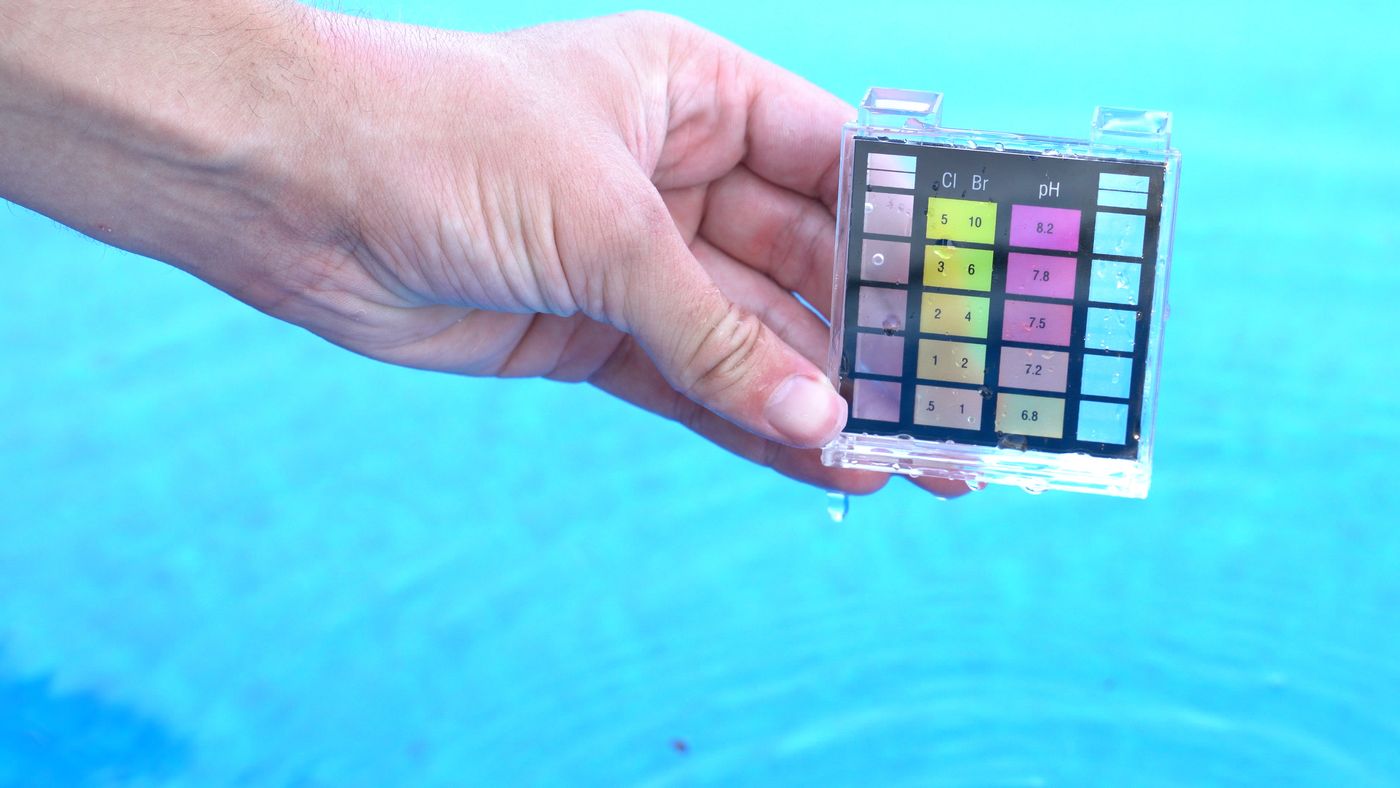
Use a complete pool test kit such as the Taylor K-2006 or a reliable water-testing service. A basic chlorine-and-pH kit doesn’t provide everything required. Make sure you have a calcium-hardness result, and use the actual water temperature, not the weather forecast. See the best way to test pool water for a practical testing routine.
Avoid combining today’s pH with a calcium result from before a major water replacement. Those readings no longer describe the same pool conditions.
A calculator can do excellent math with bad information—and still give you the wrong answer.
Understand What Those Numbers Do
pH, calcium hardness, and alkalinity do much of the heavy lifting. Raising them generally moves LSI upward; lowering them generally moves it downward, with the other factors held steady.
Temperature changes the balance, too. Warmer water pushes LSI upward. Colder water pushes it downward.
Total dissolved solids, or TDS, accounts for dissolved material in the water, including salt. Don’t assume a salt reading represents every dissolved solid, or enter zero just because the pool isn’t a saltwater pool.
Cyanuric acid, also called CYA or stabilizer, matters because it contributes to the total alkalinity test. Not all that measured alkalinity belongs in the calcium-balance calculation.
For a calculator that requests total alkalinity and CYA separately, enter the measured numbers as requested. Don’t manually subtract stabilizer’s contribution and then have the calculator subtract it again. Pools using borates need that contribution accounted for, too.
Use the Result to Make a Plan
Suppose the result is −0.6. That tells you the water is on the calcium-dissolving side, but it does not automatically mean “add calcium.”
The cause could be low pH, low alkalinity, insufficient calcium, cold water, or a combination.
Likewise, +0.6 doesn’t automatically mean you must drain the pool. An unnecessarily high pH could be doing much of the work. Those interpretations follow from the way the individual measurements contribute to LSI.
The result tells you which direction the balance is leaning. Your individual test results tell you what to adjust.
Before adding anything, calculate the effect of your proposed target values. Then base the actual chemical dose on your pool’s water volume and the product’s concentration and instructions—not on the LSI number alone. The pool chemistry calculator can help you plan the individual adjustment.
What to Do When LSI Is Too Low
First, check whether pH is below your recommended range. When it is, correcting it can help bring LSI up.
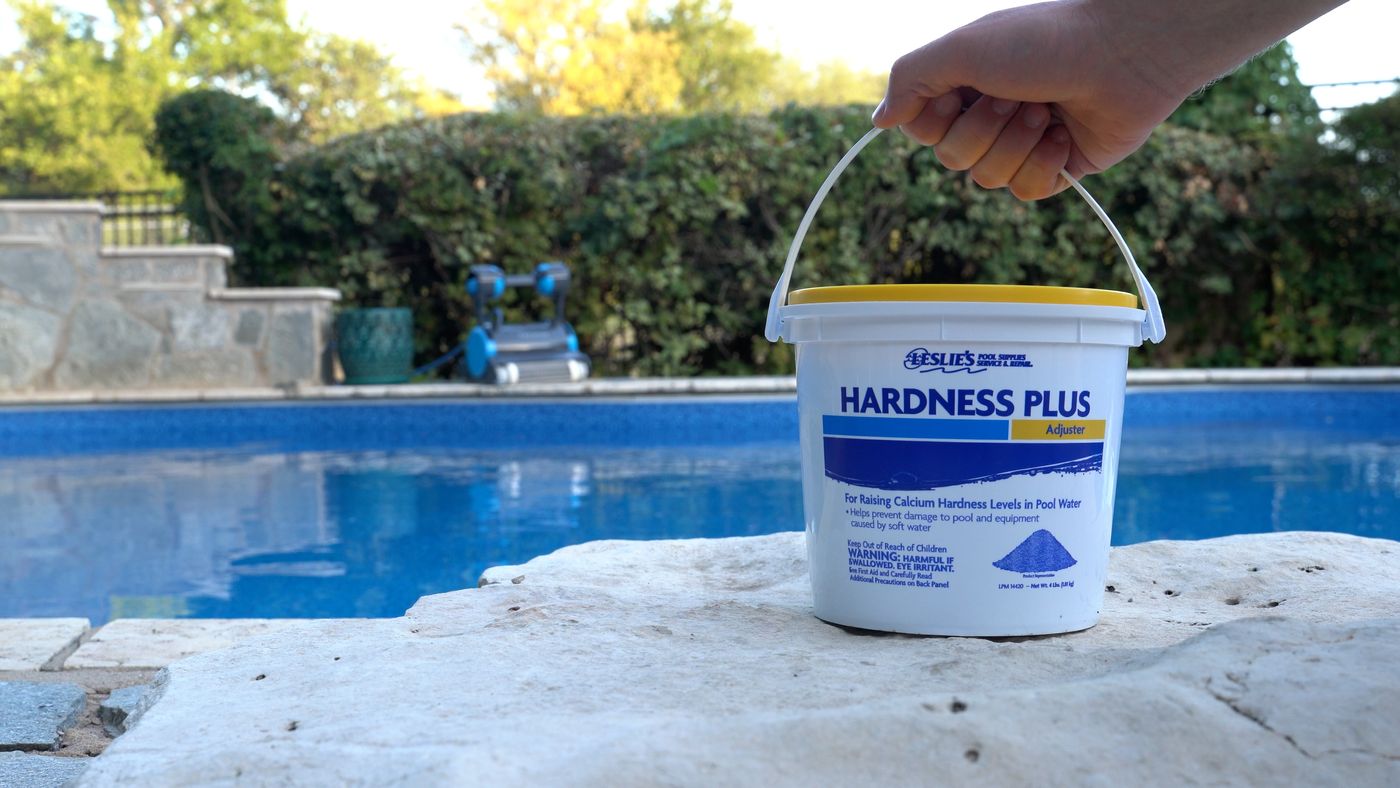
Next, look at alkalinity and calcium hardness. Low alkalinity may need an alkalinity increaser such as baking soda. Low calcium in a plaster pool may call for a calcium-hardness increaser, typically calcium chloride.
But don’t raise all three automatically.
If calcium is already appropriate and pH is unusually low, adding more calcium may create an unnecessary problem later. Correct the measurement that needs correcting, circulate according to the product instructions, and retest.
Also check temperature. Water that was balanced during summer can read negative after cooling down, even without a dramatic change in the other measurements.
The question isn’t “What chemical fixes negative LSI?” It’s “Which part of my water balance needs attention?”
What to Do When LSI Is Too High
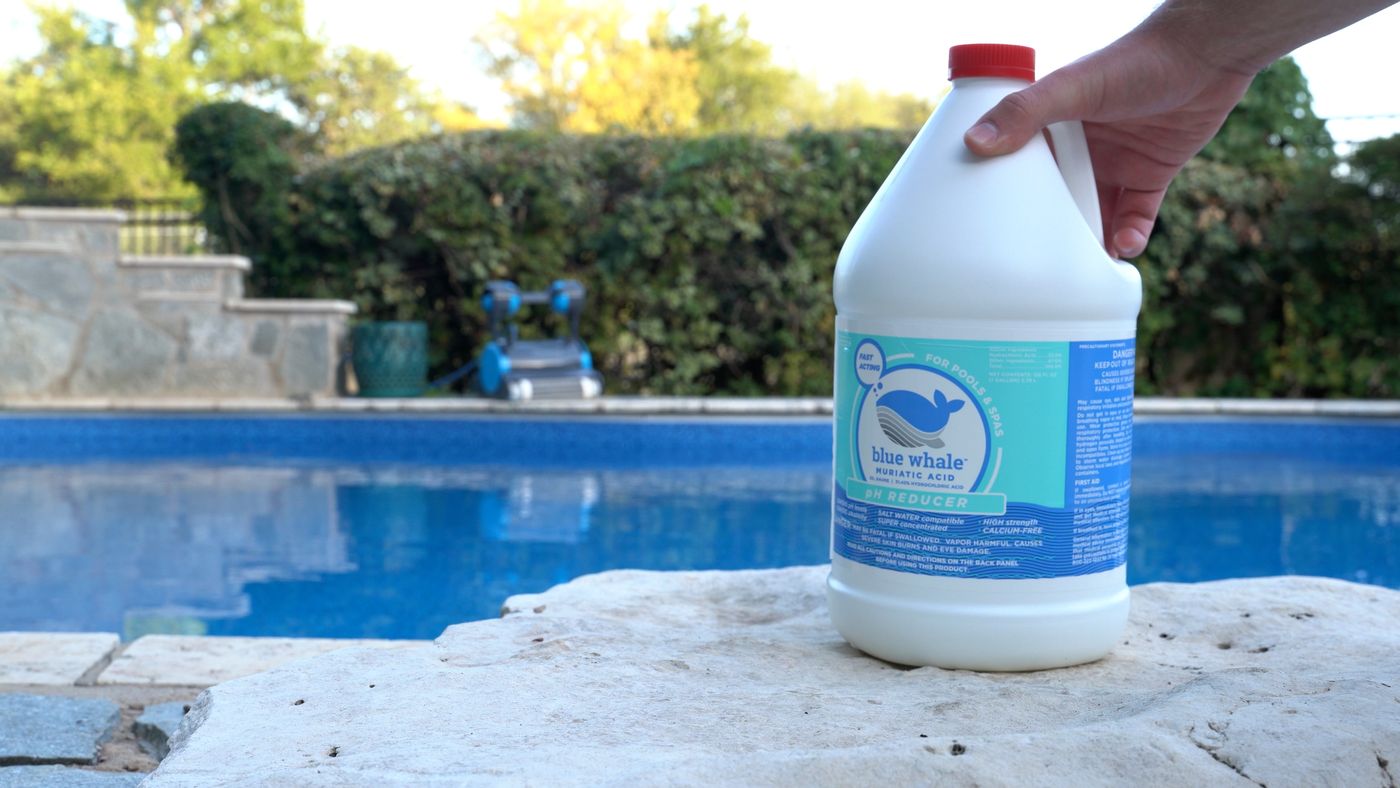
Start by checking pH and alkalinity. When either is above the appropriate target, a carefully calculated acid adjustment—often muriatic acid—may help bring the balance down. Remember that acid lowers both pH and alkalinity. Don’t keep adding acid after pH is already low enough.
If calcium hardness is genuinely excessive, lowering pH doesn’t remove that calcium. It changes the conditions that influence whether it stays dissolved.
Reducing the calcium itself may require a planned partial water exchange with lower-calcium water. Test the replacement water first; replacing hard water with equally hard water won’t accomplish much. Get professional guidance before significant draining rather than risking damage to the pool.
With any adjustment, follow the chemical label, keep incompatible products separate, and allow proper circulation before retesting. You’re making controlled corrections, not trying to force the number into range with one giant dose.
The Winter Mistake You Don’t Want to Make
Temperature deserves extra attention because it’s easy to overlook.
As water cools, LSI drops when the other measurements remain the same. That means a pool that looks balanced at closing can become more aggressive toward a plaster finish during winter.
Closing the pool doesn’t pause the chemistry.
Before winterizing, calculate the balance using your current temperature, then check what it would look like at the coldest water temperature you reasonably expect.
That gives you a chance to plan adjustments before the cold arrives. The solution isn’t automatically a huge calcium addition or pushing pH excessively high; it depends on the complete set of readings.
The reverse matters when the pool warms up again. Recheck the balance rather than assuming the winter settings still make sense.
How Often Should You Check LSI?
I’d make it part of your weekly water-care routine, using fresh pH, alkalinity, and temperature readings. Check calcium hardness, CYA, and TDS periodically—often monthly in a stable pool—and sooner when water replacement or treatment could have changed them. Recalculate after substantial chemistry adjustments and meaningful seasonal temperature changes.
Newly plastered pools are a separate situation. Follow the installer’s startup instructions and testing schedule rather than treating fresh plaster like an established pool.
And don’t let a good LSI score distract you from sanitation. LSI does not measure chlorine or tell you whether the water is free of germs. You still need to maintain and test sanitizer and pH. It’s one important check, not a replacement for the rest of pool care.
My Final Verdict
You don’t need to become a chemist to use LSI.
You need accurate readings, a calculator, and a better question than “Is my pH okay?”
Ask: “Are these numbers working together to protect my pool?”
Start with ThePoolNerd.com/pool-lsi-calculator. Check your current balance, identify what actually needs attention, and make measured adjustments instead of guessing.
And before buying your next test kit, water monitor, or pool cleaner, visit ThePoolNerd.com/deals for my recommended pool equipment and current offers. Spend your money on tools that help you care for the pool—not another bottle you never needed.
Until next time—enjoy that pool. I’ll see you in the next one.


Comments
Loading comments…