
 Justin D.
This is the "forbidden" chemical that pool stores don't want you to know about. It helps prevent algae, keeps your water sparkling, and the best part — you only need to add it once. Your pool store sells this exact chemistry for sixty dollars. The grocery store sells it for five. Today I'm going to prove they're the same thing — and show you the one way to add it without wrecking your pH.
Welcome back to The Pool Nerd. I'm Justin, your resident pool aficionado, and today we're going after the most demoralizing ritual in pool ownership: the algae treadmill. The box we're talking about costs about five bucks, and it lives in the laundry aisle next to the dryer sheets. In the next few minutes, I'll show you how it re-engineers your pool water so algae physically cannot grow in it — not for a week, not for a month, for the whole season.
And stick around, because I'll show you exactly how to add it — how many boxes you need, the order of operations, and the one mistake that turns this miracle into a cloudy, pH-spiked mess. Do not add a single scoop until you've read that part.
The Borate Shield: What You Need Checklist
One box of Borax per thousand-ish gallons, muriatic acid to hold pH in range while you add it, borate strips to confirm 30–50 ppm, and a monitor watching the chemistry hold. One Saturday, season-long shield.

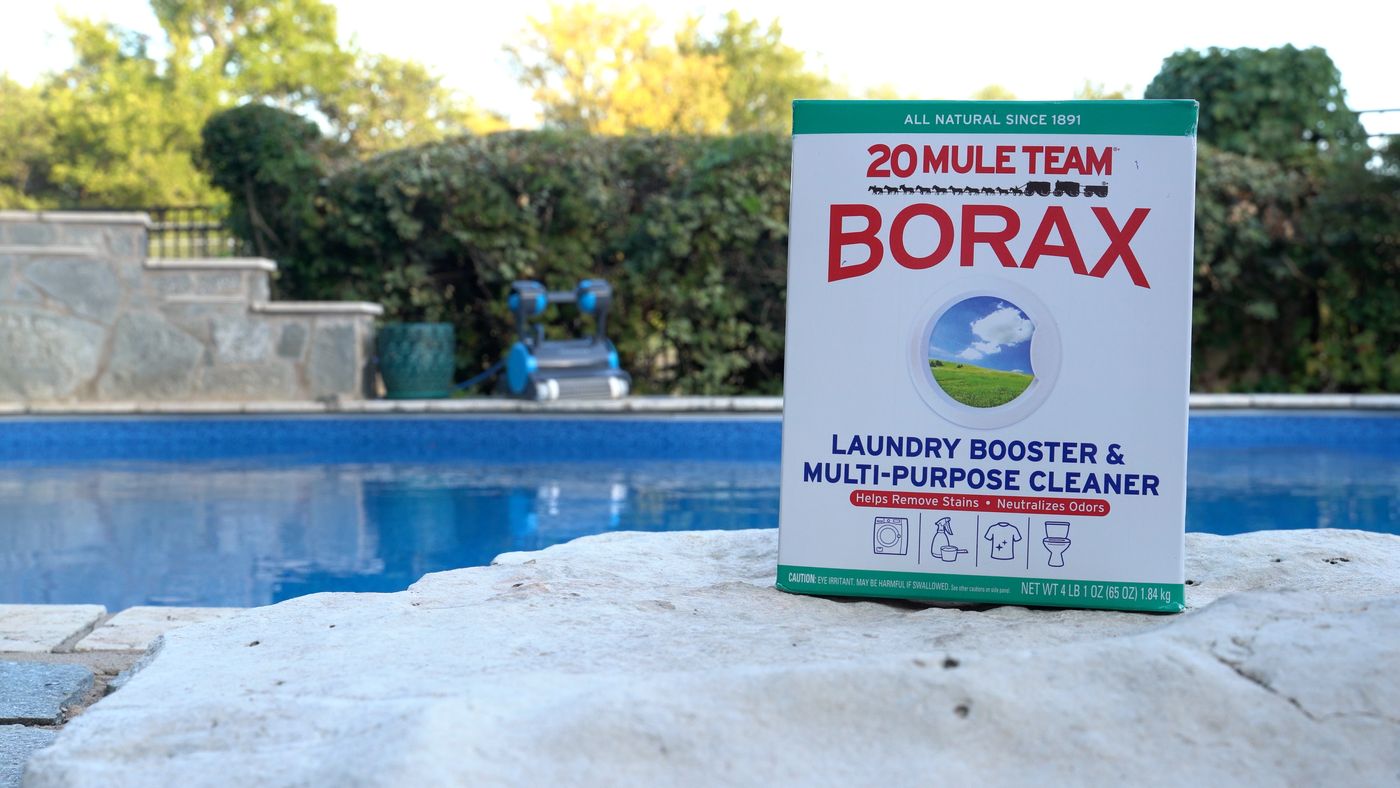
20 Mule Team Borax
What it is: Pure sodium tetraborate—the exact same borate chemistry the pool industry sells in "optimizer" buckets for three to four times the price.
Why you need it: Held at 30–50 ppm, borates act as an algistat—algae spores can't build cells or get a foothold. Add it once and it stays; borates don't burn off in sunlight or break down.

Champion Muriatic Acid
What it is: Dilute hydrochloric acid—standard for lowering pH and, with the right method, total alkalinity.
Why you need it: High pH destroys chlorine efficiency. Always follow the label; never mix acid with chlorine.

Taylor Borate Test Strips
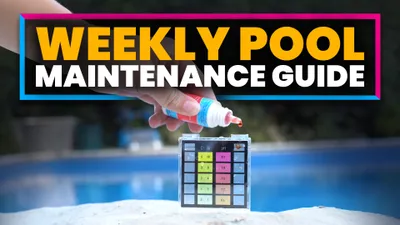
What it is: Strips that measure borate concentration specifically—standard pool strips and drop kits don't test for it.
Why you need it: The shield only works in the 30–50 ppm window. Dip after your final round to confirm you landed, then recheck monthly and after heavy rain.

Taylor K-2005 Test Kit
What it is: A professional drop (titration) kit for chlorine, pH, alkalinity, calcium hardness, and cyanuric acid.
Why you need it: You can’t SLAM or balance blind—especially CYA, which handcuffs chlorine. This kit gives numbers you can trust, not strip guesswork.

Ondilo ICO Pool Water Monitor
What it is: A floating smart monitor that samples pH, ORP (sanitizer effectiveness), and temperature on a schedule and sends trends to your phone.
Why you need it: You still need a real drop kit for parameters the ICO doesn’t replace (like TA and CYA), but hourly ORP/pH catches drift and dosing mistakes long before weekly strip checks do.
Read the full ICO review — Shop ICO direct (no Amazon listing for the hardware we run).

Dolphin Premier
What it is: A corded robotic cleaner with dual scrubbing brushes and strong filtration—built to pull debris and biofilm off surfaces so your sanitizer is not fighting mulch and leaves first.
Why you need it: Shock oxidizes what is in the water—leaves, pollen, and biofilm burn sanitizer too. A strong robot pulls debris off surfaces and into the filter so your chlorine works on algae and organics, not mulch. See the Dolphin Premier review for why it is our test-pool scrubber of choice.
The Algae Treadmill
You probably already know how this looks. Tuesday, you spot that faint green haze creeping across the steps. Wednesday, you're at the pool store dropping eighty, ninety dollars on shock, algaecide, and a bottle of clarifier the guy behind the counter swears by. Friday, the pool looks incredible. Ten days later, the green is back — and so are you, wallet out, loading the trunk again.
Let's get real: if you have to re-buy a product every two weeks to hold back algae, that product is not solving your problem. You're not buying a cure. You're renting clear water. And the pool store is delighted to keep taking your money every two weeks. But there's a cheap fix that will help.
The $5 Box in the Laundry Aisle
The ingredient is Borax. Yes — the laundry booster. The orange box your grandmother kept on a shelf. It has been sitting in grocery stores for over a hundred years, it costs about five dollars, and chemically, it's sodium tetraborate — the same borate chemistry the pool industry packages in premium buckets labeled "optimizer" and "water enhancer" for fifty or sixty dollars.
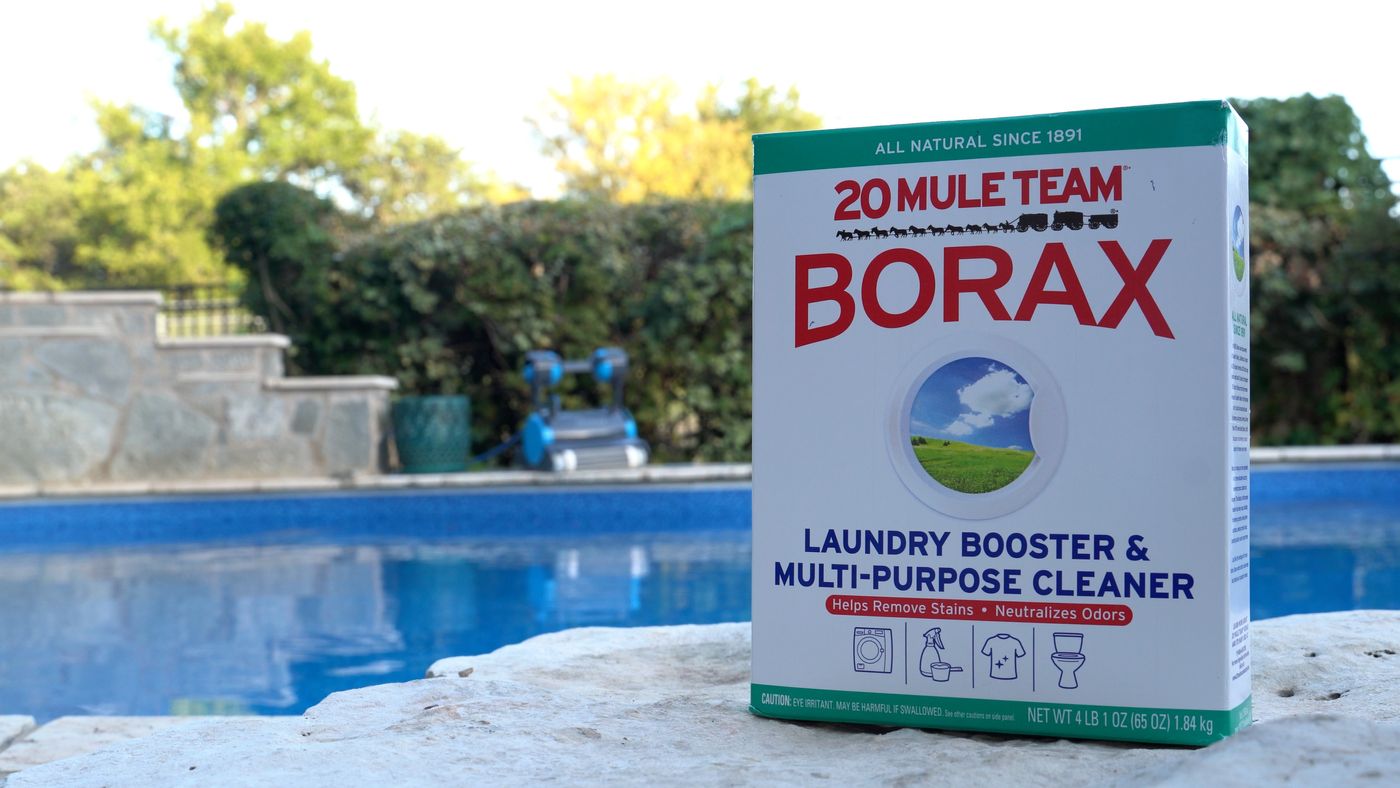
If you look at the ingredient list, it is one thing: sodium tetraborate — a natural mineral.
Here's the kicker: your pool store can't point you to the laundry aisle even if the guy behind the counter wanted to. Borax is registered and labeled as a cleaning product. Nobody has run it through the EPA paperwork required to market it as an algae treatment, so no store shelf, no bottle label, and no pool tech is ever going to connect those dots for you. The industry's answer was to repackage the same molecule, print a palm tree on the bucket, and charge three to four times the grocery price.
The Science: Algaecide vs. Algistat
Now let's nerd out on why this works. Everything on the pool store's algae shelf is an algaecide. "Cide" — like pesticide. It kills. An algaecide is reactive: the algae blooms first, then you pour in the killer.
Copper-based algaecides can stain plaster and turn blonde hair green. The cheap quat-based ones foam like a bubble bath the moment your return jets kick on. And none of them change the one thing that matters — whether your water is a place algae can live at all.
Borates do something different. Held at the right concentration, they act as an algistat. "Stat," as in static — it holds the line. It doesn't kill algae after the party starts; it cancels the party. Keep 30 to 50 parts per million of borates in your water and you interfere with algae's cell wall development and its metabolism. Spores still land in your pool — they ride in on every breeze — but they can't build cells, can't process energy, can't get a foothold. You've turned your pool from a buffet into a desert.
| Algaecide | Borates (Algistat) | |
|---|---|---|
| How it works | Kills algae after it blooms | Prevents algae from establishing at all |
| When you add it | Reactively, every 1–2 weeks | Once, at the start of the season |
| Side effects | Staining (copper), foaming (quats) | None at 30–50 ppm |
| Season cost | $15–25/month, every month | ~$40–60, one time |
Think of it this way: algaecide is mopping up after the bar fight. Borates are the bouncer who never lets trouble through the door.
Three Bonus Effects Nobody Talks About
And the algae shield is only reason number one. Borates hand you three bonus effects the label will never mention.
Bonus #1: pH Stability
Borate is a buffer, and it pushes back against the upward pH drift that plagues nearly every outdoor pool. Why does that matter so much? Because chlorine's killing power lives and dies by pH. Around 7.2, roughly 65 percent of your free chlorine exists as hypochlorous acid — the form that does the killing. Let pH drift to 8.0 and you're down near 20 percent. Same reading on the test strip, a third of the firepower.
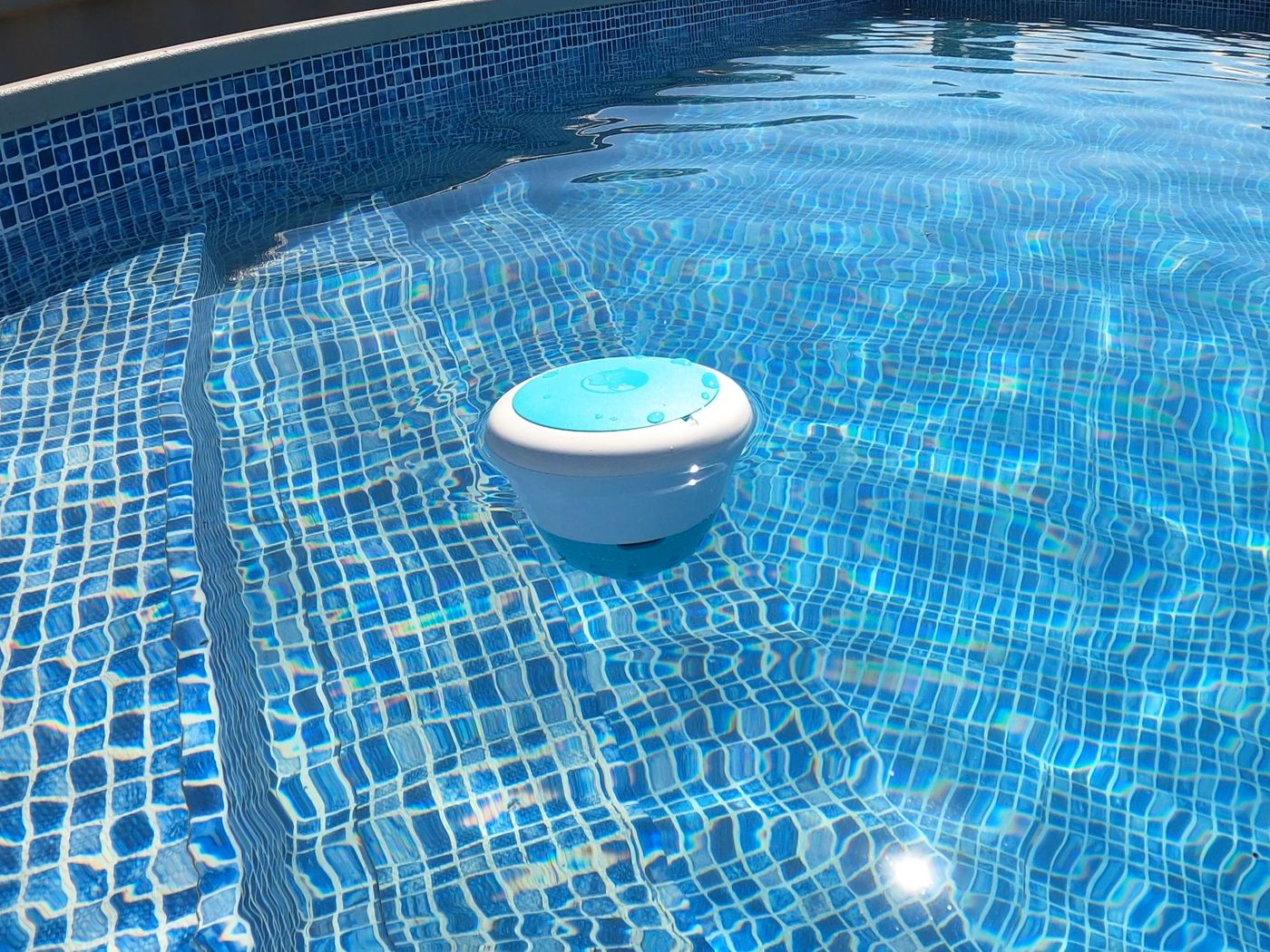
Borates help hold pH in the power zone, which keeps chlorine potent, which keeps your ORP parked in that 650-to-700-millivolt range I never shut up about — ideally north of 700. If you're new here: ORP measures what your sanitizer is actually doing, not just how much you dumped in. I keep an eye on mine 24/7 with the ICO smart monitor.
Bonus #2: The Sparkle
In my testing, borate pools take on a polished, spring-water shimmer that's hard to describe until you've seen it side by side. There's a reason the industry named its version an "optimizer."
Bonus #3: The Feel
Owners report — and I agree — that borate water feels noticeably silkier on skin. Less of that tight, itchy chlorine-bath sensation. Your swimmers will comment before you say a word.
The Math: Dosing & Cost
Alright, the math — and it's easier than you think. The target is 50 parts per million of borates, the top of the effective 30-to-50 range. To get there, plan on roughly 3 pounds of Borax for every 1,000 gallons of pool water.
| Pool Size | Borax Needed | Grocery Boxes (~4 lbs each) |
|---|---|---|
| 5,000 gallons | ~15 lbs | 3–4 boxes |
| 10,000 gallons | ~30 lbs | 7–8 boxes |
| 15,000 gallons | ~45 lbs | 10–11 boxes |
| 20,000 gallons | ~60 lbs | 14–15 boxes |
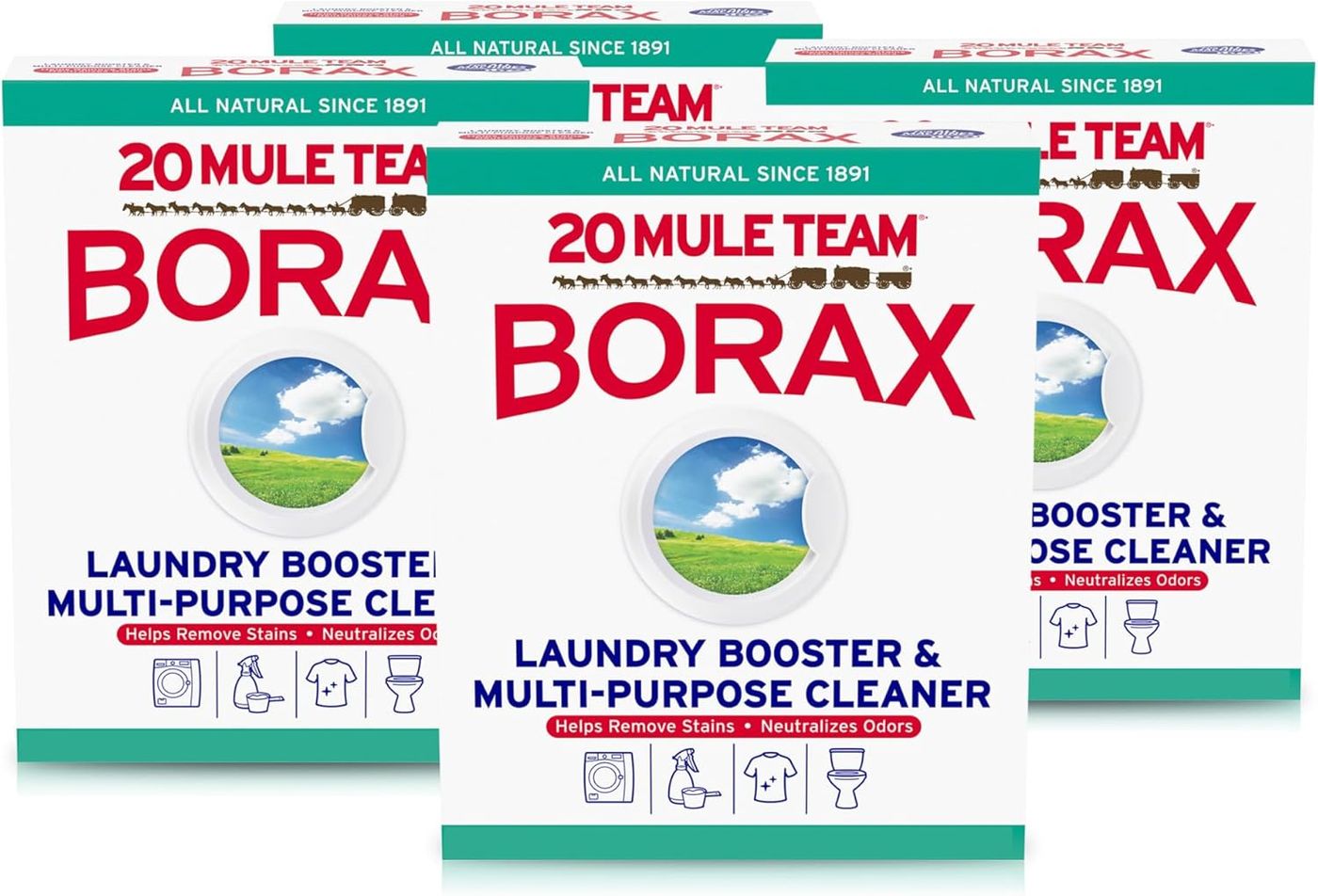
Fifteen-thousand-gallon pool? That's about 45 pounds — call it ten or eleven grocery store boxes. Yes, you will get looks in the checkout line. Embrace them. Or be like me and order it online on Amazon. It's probably one of the best $50 investments you can make in your pool. Not sure of your gallons? Run your dimensions through my pool volume calculator first.
Here's the thing though: this is a one-time addition. Chlorine burns off in sunlight. Acid gets consumed. Borates don't evaporate, don't break down in UV, and nothing in your pool eats them. The only ways they leave are splash-out, backwashing, and heavy rain diluting the water. Add them once and you might top up a few pounds late in the season after a monsoon or a cannonball-heavy birthday party. That's the whole maintenance plan.
Total damage: somewhere between $40 and $60, one Saturday, and the shield stays up all season — most of it carries into next year too. Compare that to the algaecide treadmill at $15 to $25 a month, every month, every summer. The grocery aisle wins in a landslide.
The Catch: The pH Spike
Now — the mistake I warned you about. This is where people torch the whole project, so do not skip ahead.
Borax is alkaline. In solution it runs a pH around 9.5. If you stand at the deep end and dump 45 pounds in at once, your pH will launch into the stratosphere — and you already know what happens up there. Your chlorine drops to a fraction of its killing power, calcium starts falling out of solution, and your beautiful clear pool goes cloudy in the middle of its own upgrade.
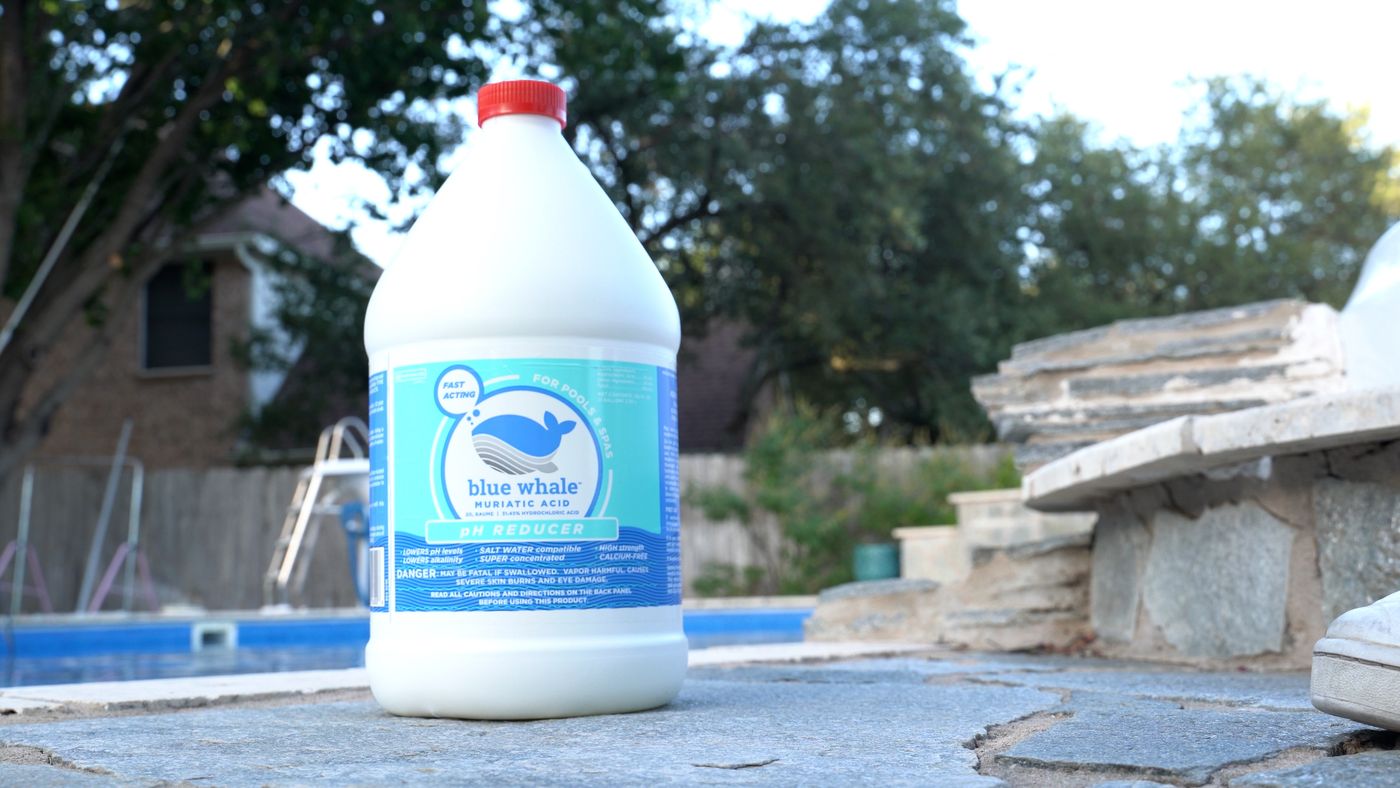
Ask the internet how to add borates and half the answers say "just dump it in." That is completely wrong. Here's the right way.
The Staged Method, Step by Step
Split your total into thirds. For our 15,000-gallon example, that's three rounds of about 15 pounds each.
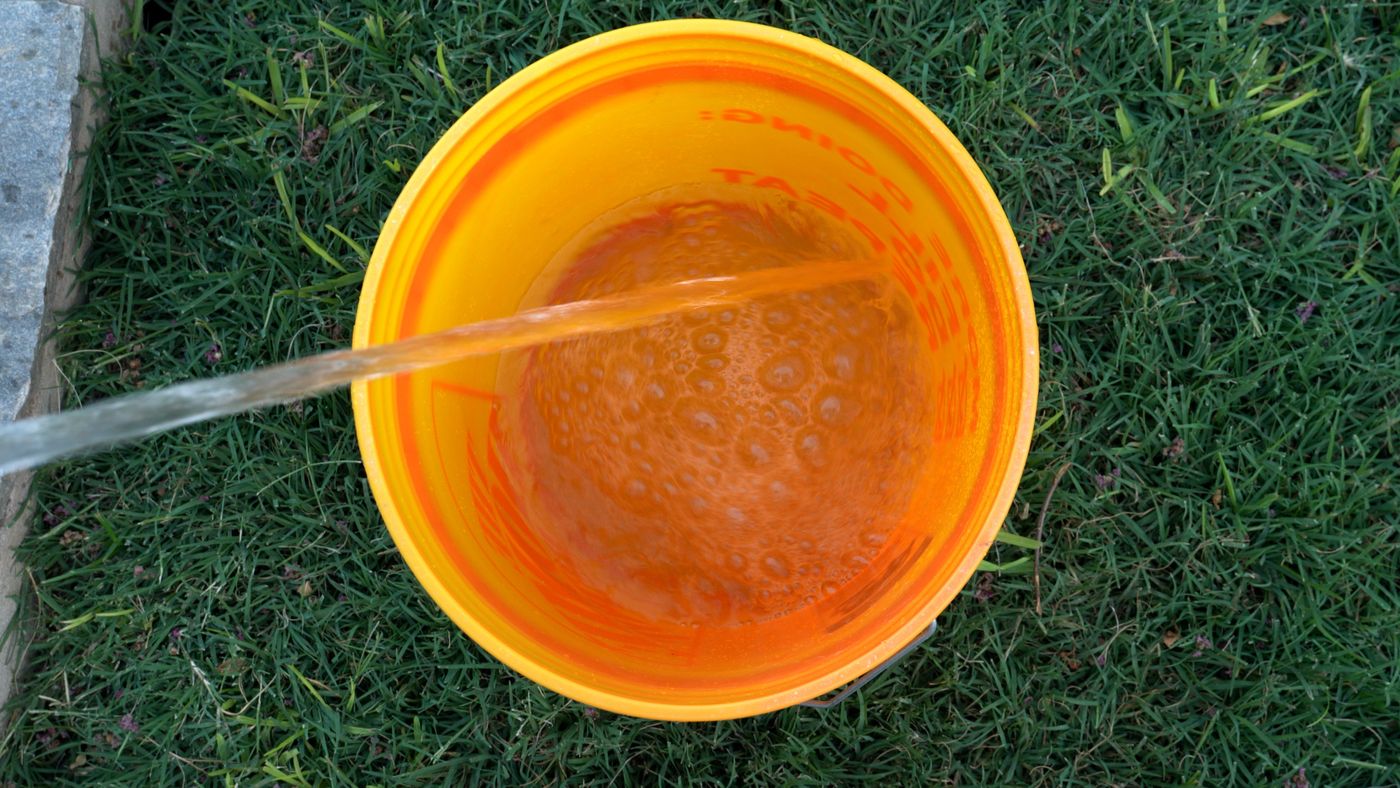
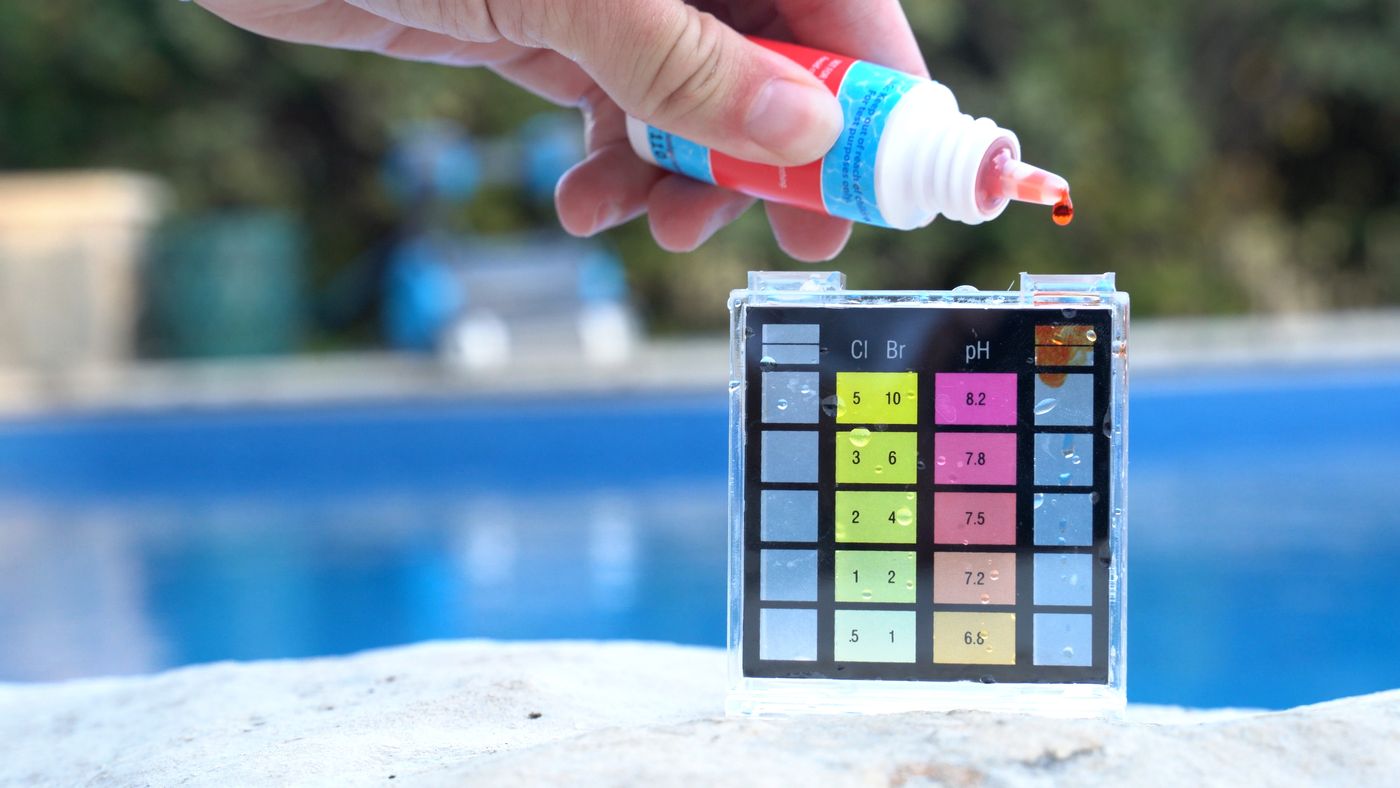
Round one: pre-dissolve the Borax in a five-gallon bucket of warm water — it dissolves slowly in cold — then pour it around the pool with the pump running. Give it 30 to 60 minutes to circulate, and test. The pH will have jumped. Now you answer with muriatic acid, poured slowly near a return jet, until you're back in range — and on this channel, "in range" means 7.0–7.2 for vinyl and fiberglass, 7.2–7.4 for gunite. If you need a refresher, my guide on how to lower pool pH walks through it.
Quick Safety Note
Gloves on, goggles on, stand upwind, and never let acid and chlorine anywhere near each other — acid first, 30 to 60 minutes of circulation, then chlorine. Always.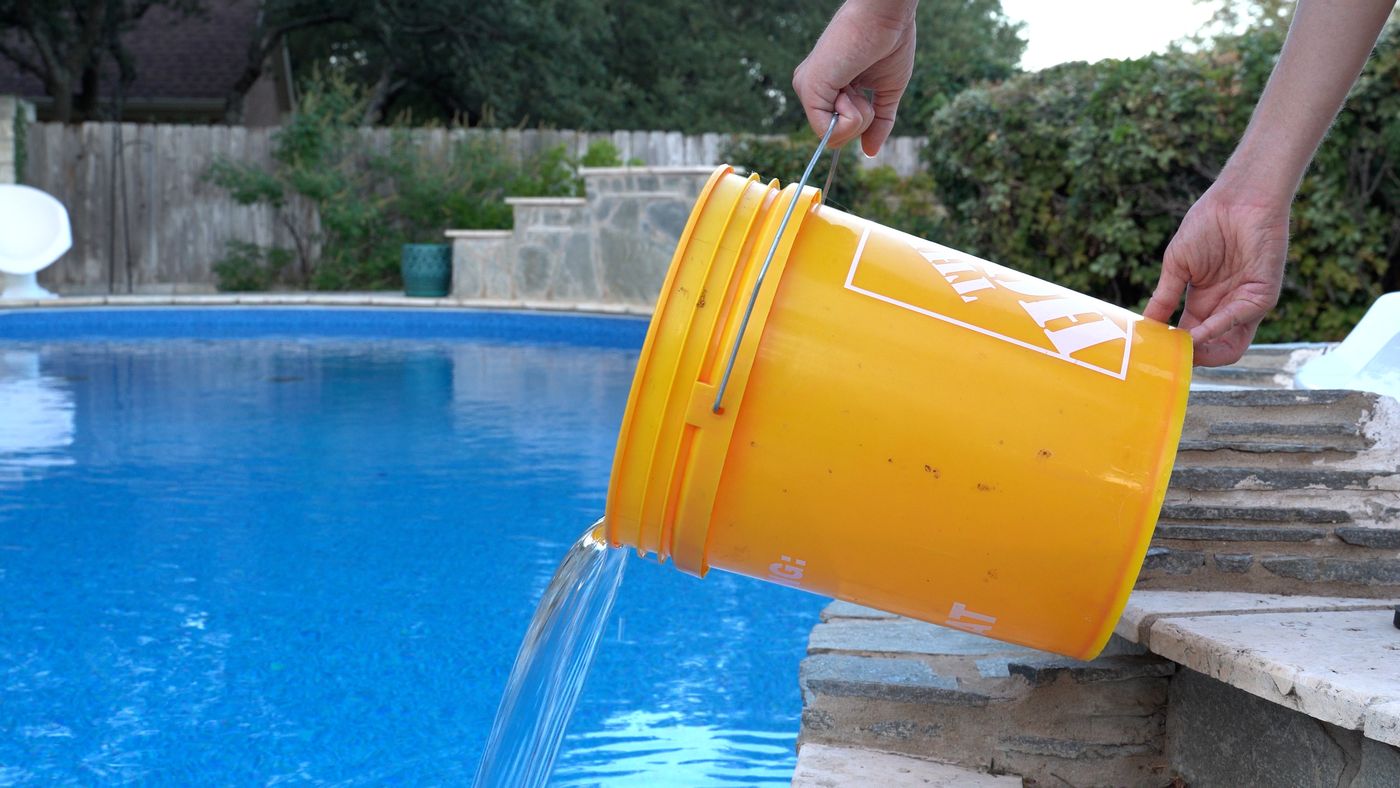
If you have a water monitor, like an ICO, it'll let you know when your pH is back in the right zone. And if you don't have a pool water monitor already, check out my list of the best pool water monitors.
Retest, confirm you're back in the zone, then run round two. Same dance: Borax, circulate, test, acid, confirm. Then round three. For 45 pounds of Borax, have around three gallons of muriatic acid on hand — but your test kit makes the final call on every dose, not my estimate. Every pool starts at a different alkalinity.
Done this way, the water never leaves the safe zone. Rushed, you'll spend a week fighting cloudy water and wondering why the miracle hack ruined your weekend.
One more piece of advice: borate test strips. Standard pool strips don't measure borates, so grab a bottle of borate-specific strips. Dip, wait, confirm you've landed in that 30-to-50 window. Recheck monthly and after big rains.
A Note for the Pet Parents
Fifty parts per million is swim-safe for people, but if your dog treats the pool like a giant water bowl, keep fresh drinking water on the deck and break the habit. Borates and canine kidneys are not friends in large, repeated doses.Shield, Not Cure: SLAM First
ORDER OF OPERATIONS
Borates are an algistat, not an algaecide. They will NOT clear an existing bloom. Green pool = SLAM first with liquid chlorine (FC at 7.5% of CYA, pH corrected to ~7.2 before dosing, ORP holding 650+), get it crystal clear, THEN add the borate shield. Adding Borax to a green pool wastes the Borax and delays the cure.
Now, the caveat that keeps you from calling me a liar in the comments: Borax prevents algae. It does not cure it. Borates sabotage algae trying to establish — they will not knock down a bloom that has already colonized your walls.
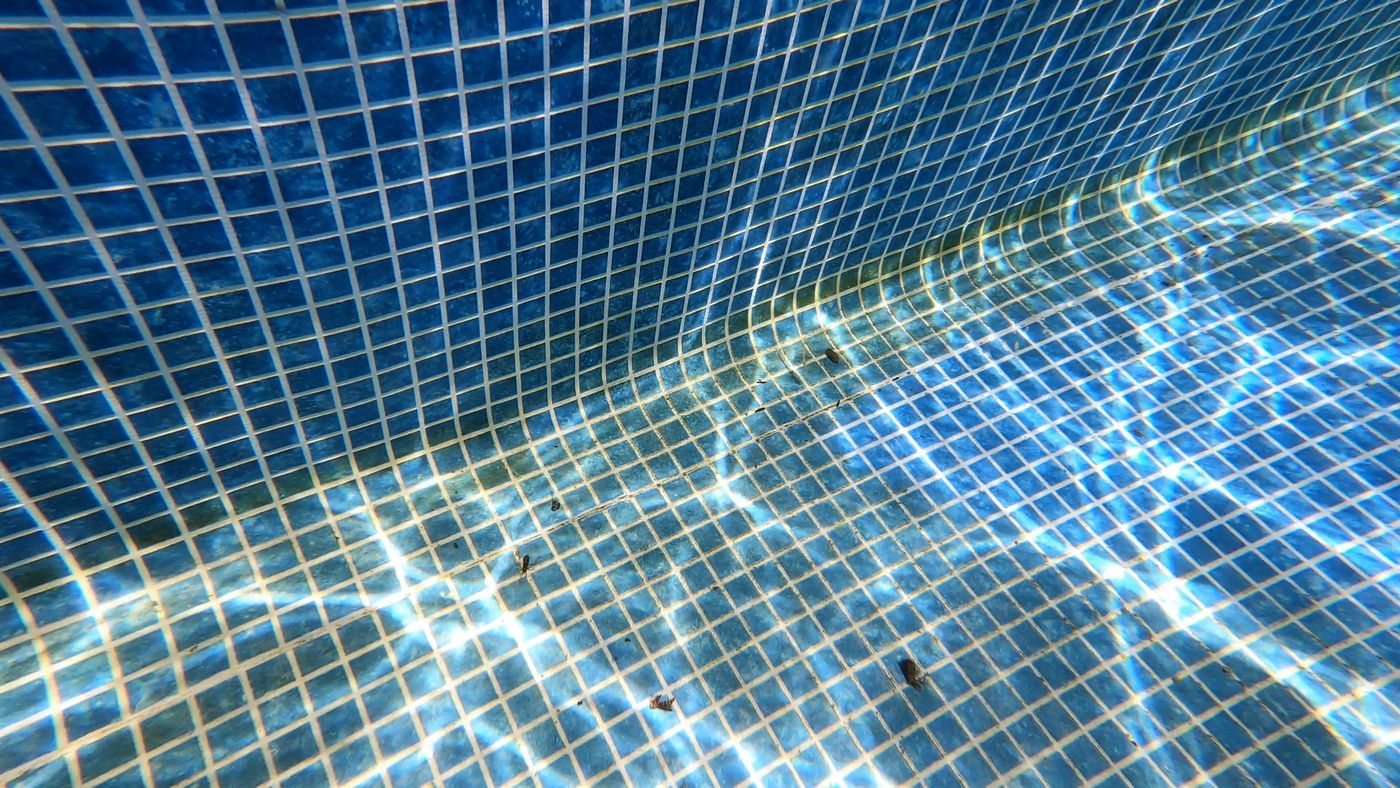
If your pool is green right now, you SLAM it first: correct pH down to about 7.2, then hit the water hard with liquid chlorine based on your CYA level — that free-chlorine-to-CYA ratio of seven and a half percent is your floor — and hold that level until the water is crystal clear and your ORP reads 650-plus. I've got a full walkthrough of that exact protocol in my SLAM guide, and a broader rescue plan in how to clean a green pool. Clear water first. Then the borate shield goes up. In chemistry, order of operations is everything.
The Physical Defense
So the chemistry is now bulletproof. Last piece of the system: the physical side. Borates stop algae — they don't stop leaves, pollen, and dust from landing in your water. Every leaf rotting on your floor is organic debris quietly burning through chlorine, and a shield only holds if you stop feeding the enemy.

This is where the robot earns its keep, and I'm specific about the spec sheet: corded power, a Weekly Smart Timer, and NanoFilters. My number one overall is the Dolphin Premier — dual commercial-grade motors, MultiMedia filtration with an oversized leaf bag for heavy weeks and NanoFilters for the fine stuff like pollen and algae spores, and that Weekly Smart Timer so it scrubs floor, walls, and waterline on schedule, all season, without you touching it. Set it once; rinse a filter once a week; done. On a tighter budget, the Dolphin Cayman runs the same core playbook for less. You can find my complete current list, which I update regularly, at ThePoolNerd.com/best-robotic-pool-cleaners.
Want full autopilot? Two add-ons finish the system. A liquid chlorine injection system drip-feeds liquid chlorine on a schedule, so your daily dose happens without you. And a UV light system neutralizes microorganisms as water passes through the chamber, slashing how hard your chlorine has to work. Stack borates, UV, automated dosing, and a robot on a timer, and "pool maintenance" becomes a test strip and a cup of coffee on Saturday morning. Find all of that and more at ThePoolNerd.com/deals.
The Borate Protocol
THE BORATE PROTOCOL
- Start with clear, balanced water. Green pool? SLAM first — borates after.
- Buy roughly 3 lbs of 20 Mule Team Borax per 1,000 gallons. 15,000 gallons ≈ 45 lbs (ten to eleven boxes).
- Add in thirds. Pre-dissolve each batch in a bucket of warm water; pour with the pump running.
- After each third: circulate 30–60 minutes, test, then walk pH back into range with muriatic acid — 7.0–7.2 vinyl/fiberglass, 7.2–7.4 gunite. Acid first, 30–60 minutes of circulation before any chlorine goes in.
- Next day: confirm 30–50 ppm with borate test strips; confirm ORP at 650–700 (ideally 700+).
- Retest monthly and after heavy rain. Top up rarely, if ever — borates only leave via splash-out, backwash, and dilution.
As promised — the recipe card, and I'll say it slow so you can screenshot it. One: start with clear, balanced water; if it's green, SLAM first. Two: roughly three pounds of Borax per thousand gallons — fifteen thousand gallons, about forty-five pounds. Three: add it in thirds, pre-dissolved in warm water, pump running. Four: after each third, circulate, test, and walk the pH back into range with muriatic acid. Five: next day, confirm thirty to fifty parts per million on borate strips and an ORP of 650 to 700. Six: retest monthly and after heavy rain. One Saturday. Season-long shield.
Frequently Asked Questions
Is grocery store Borax really the same as pool store "optimizer"?
Chemically, yes. 20 Mule Team Borax is pure sodium tetraborate — the same borate chemistry sold in premium pool buckets for three to four times the price. The pool store version can't be beaten on convenience, but the molecule doing the work is identical.
How much Borax do I need?
Plan on roughly 3 pounds per 1,000 gallons to reach the 50 ppm target. A 15,000-gallon pool needs about 45 pounds — ten to eleven grocery boxes. Confirm with borate test strips the next day, and aim to land anywhere in the 30–50 ppm window.
Will Borax clear my green pool?
No — and this is the most important thing in this article. Borates are an algistat: they prevent algae from establishing, but they won't kill an existing bloom. If your pool is green, SLAM it first with liquid chlorine, get it crystal clear, and then add the borate shield.
Is 50 ppm of borates safe to swim in?
Yes — 50 ppm is swim-safe for people. The one caution is pets: if your dog drinks pool water regularly, keep fresh water on the deck and break the habit, because borates in large, repeated doses are hard on canine kidneys.
How often do I need to re-add it?
Almost never — that's the whole appeal. Borates don't burn off in sunlight or break down over time. They only leave through splash-out, backwashing, and rain dilution, so a once-a-season addition with the occasional few-pound top-up is the entire maintenance plan.
Final Verdict
So what's my final verdict?
Where I land: for about fifty dollars and one afternoon, you replace an endless subscription of algaecides and pH adjusters with water that defends itself. The pool store's model is selling you reactions, one emergency at a time. This channel is about building environments. Stop fighting the symptom and start changing the water.
Everything from today — the Ondilo ICO, the SpectraLight UV, the liquid chlorine injection, and more — is linked above, along with my deals page at ThePoolNerd.com/deals.
I'm Justin, your resident Pool Nerd. Keep nerding out — and enjoy that pool. I'll see you in the next one.


Comments
Loading comments…