
 Justin D.
What Is Aluminum Sulfate? The $10 "Forbidden" Pool Chemical
There's a $10 "forbidden" chemical that will clear your cloudy pool overnight.
It's a little bag of aluminum sulfate — alum — and municipal water treatment plants have trusted the chemistry inside it for more than a hundred years. It's part of the reason the water coming out of your kitchen tap is crystal clear. And your local pool store has never once mentioned it to you.
Welcome back to The Pool Nerd. I'm Justin, your resident pool aficionado, and today we're tackling the most frustrating problem in pool care: cloudy water that refuses to clear no matter what you throw at it. I'm going to show you how to take a pool that looks like a gallon of milk and turn it into water that looks like glass by tomorrow morning.
But fair warning — there's one step in this process that can wreck your filter if you skip it, so stay with me, because I'll flag it the second we get there.
Let's get real about how you got here. You shocked the pool. Then you shocked it again. You've run the pump for 48 hours straight. You grabbed that pretty blue bottle of clarifier for twenty bucks, poured it in like the label said, and three days later your pool still looks like someone stirred a bag of flour into the deep end.
Here's what nobody at the pool store told you: you don't have a chemical problem. You have a physics problem. And once you understand the physics, the fix costs ten dollars and one night of patience.
Aluminum Sulfate Treatment: What You Need Checklist
Floc is unforgiving if you're sloppy—dial in pH first, dose the alum right, and have liquid chlorine ready for the rebalance after you vacuum to waste.

Taylor K-2005 Test Kit
What it is: A professional drop (titration) kit for chlorine, pH, alkalinity, calcium hardness, and cyanuric acid.
Why you need it: You can’t SLAM or balance blind—especially CYA, which handcuffs chlorine. This kit gives numbers you can trust, not strip guesswork.

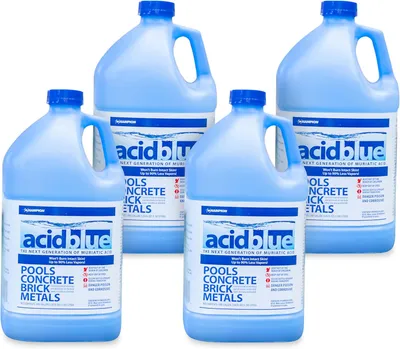
Champion Muriatic Acid
What it is: Dilute hydrochloric acid—standard for lowering pH and, with the right method, total alkalinity.
Why you need it: High pH destroys chlorine efficiency. Always follow the label; never mix acid with chlorine.

Aluminum Sulfate (Alum)
What it is: True dry flocculant—the same coagulation chemistry municipal water treatment plants have run for over a century.
Why you need it: It neutralizes the negative charge on suspended particles so they snap into heavy floc and sink overnight—then you vacuum to waste. About 4 lb per 10,000 gallons (confirm on your label).
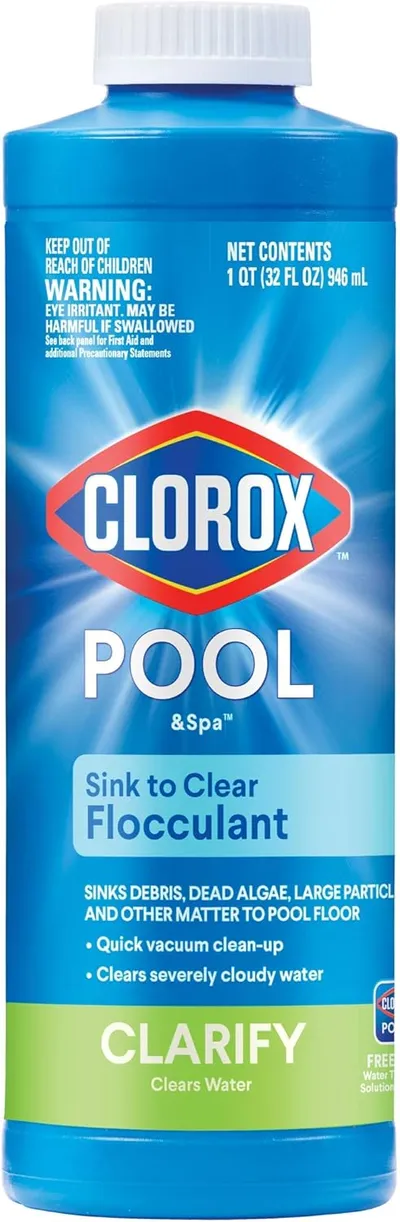
Clorox Pool Flocculant
What it is: Drops fine particles to the floor so you can vacuum to waste (per label).
Why you need it: When the filter won’t clear dead algae or ultra-fine dust, floc is often faster than clarifier alone.

Champion Pool Shock (4 Pack)
What it is: A case of liquid pool chlorine (sodium hypochlorite)—not cal-hypo granules. Confirm strength on the listing and jug label (often around 10–12.5%).
Why you need it: Same upside as other liquid shock: no CYA from the product, easy to pour with the pump running—useful to keep stocked for openings, algae pushes, storms, or parties.
How to use: Treat it like any liquid shock (pour with circulation; big doses still work best at dusk). Store cool and shaded; opened jugs lose strength over time—plan to use them within a few weeks.
Why Cloudy Pool Water Won't Clear: Your Filter Never Had a Chance
First, let's define the enemy. Cloudy water is a suspension of microscopic junk — dead algae cells, pollen, dust, fine mineral particles. Most of it lives in the 1 to 5 micron range. For scale, a human red blood cell is about 7 microns wide. The stuff clouding your pool is smaller than your blood cells.
Now let's talk about what your filter can actually catch:
| Filter Type | Smallest Particle It Can Catch | The Cloud (1–5 microns) |
|---|---|---|
| Sand filter | ~20 microns | Passes straight through |
| Cartridge filter | ~10–15 microns | Passes straight through |
| DE (diatomaceous earth) | ~3–5 microns | Catches some, misses the finest |
You see the problem. You're trying to catch 1 micron particles with a 20 micron net. That cloud isn't stuck in your pool because your filter is broken. It's stuck there because the particles are passing straight through the media, taking a lap around the plumbing, and shooting right back out the returns. Your filter isn't failing. It was never in the fight.
And here's the kicker — the part almost nobody explains. Every one of those particles carries a negative electrical charge on its surface. And what do two negative charges do when they get close? They repel — like pushing the wrong ends of two magnets together. So these particles physically cannot clump into something big enough to catch or heavy enough to sink. They just hang there in suspension, scattering sunlight in every direction. That scattered light is the milky haze you've been staring at for two weeks.
Your water isn't dirty the way you think it's dirty. It's electrically locked in place. And no amount of chlorine changes an electrical charge. If you think one more bag of shock is going to fix this... wrong. Shock kills algae. It does not make dead algae sink.
Shock Kills Algae — It Doesn't Sink It
If your chlorine is holding and the water is still milky, you're past the sanitation problem and into a physics problem. More shock just wastes money. For the sanitation side of the fight, see my SLAM guide.
Pool Clarifier vs. Flocculant: Why Alum Wins
So what about clarifier — the pool store's answer to everything? Here's the thing: clarifier isn't a scam. It's just weak. Clarifier is a mild polymer coagulant. It slightly reduces that repelling charge so particles can drift together over several days into clumps just barely big enough for your filter to grab — assuming you run the pump 24/7 the whole time. For a light haze, fine. For milk? You're bringing a squirt gun to a house fire.
Now let me show you what the professionals use: aluminum sulfate. Alum. This is true flocculant — not "clarifier plus," not a blend, the real deal. Water treatment plants have run this exact chemistry for over a century, turning murky river water into clear drinking water millions of gallons at a time. You've been drinking the results of this chemical your entire life. It's essentially a dry form of pool flocculant.
Here's how it works, and this is the beautiful part. When alum dissolves, it releases aluminum ions with a strong positive charge. Those positive ions swarm the negatively charged particles and neutralize them almost on contact. The force field drops. And the instant it does, the particles don't just drift together — they snap together into fat, heavy clusters called floc. And floc does not float. Floc obeys gravity. It falls to the floor like snow.
Read that back: you're not filtering the cloud out of the water. You're making the cloud collapse.
| Clarifier | Flocculant (Alum) | |
|---|---|---|
| How it works | Mildly reduces particle charge so clumps drift together | Neutralizes the charge — particles snap into heavy floc |
| Where the junk goes | Through your filter (eventually) | To the floor overnight, then out the waste line |
| Time to clear | 3–5 days, pump running 24/7 | 8–12 hours, pump off |
| Best for | Light haze | Milk |
How to Use Aluminum Sulfate in a Pool (5 Steps)
Alright, let's do this right, because floc is unforgiving if you're sloppy. Five steps — and the first one decides whether the other four work at all.
Step 1: Balance Pool pH to 7.0–7.4
Alum only forms proper floc when pH sits between 7.0 and 7.4 — I park mine right around 7.2. Outside that window you get a weak, partial floc that never fully settles, and now you've got cloudy water AND fuzzy junk drifting around. Worst of both worlds.
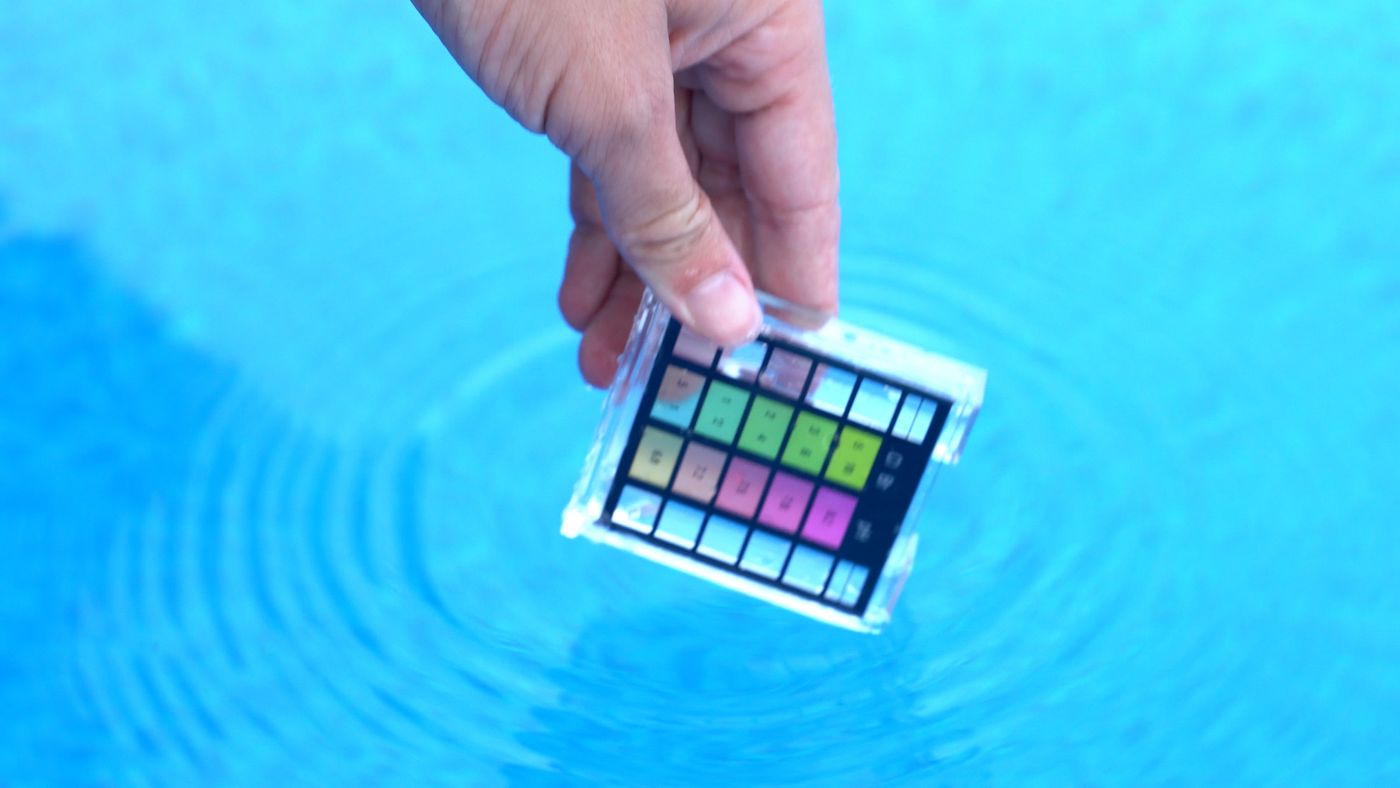
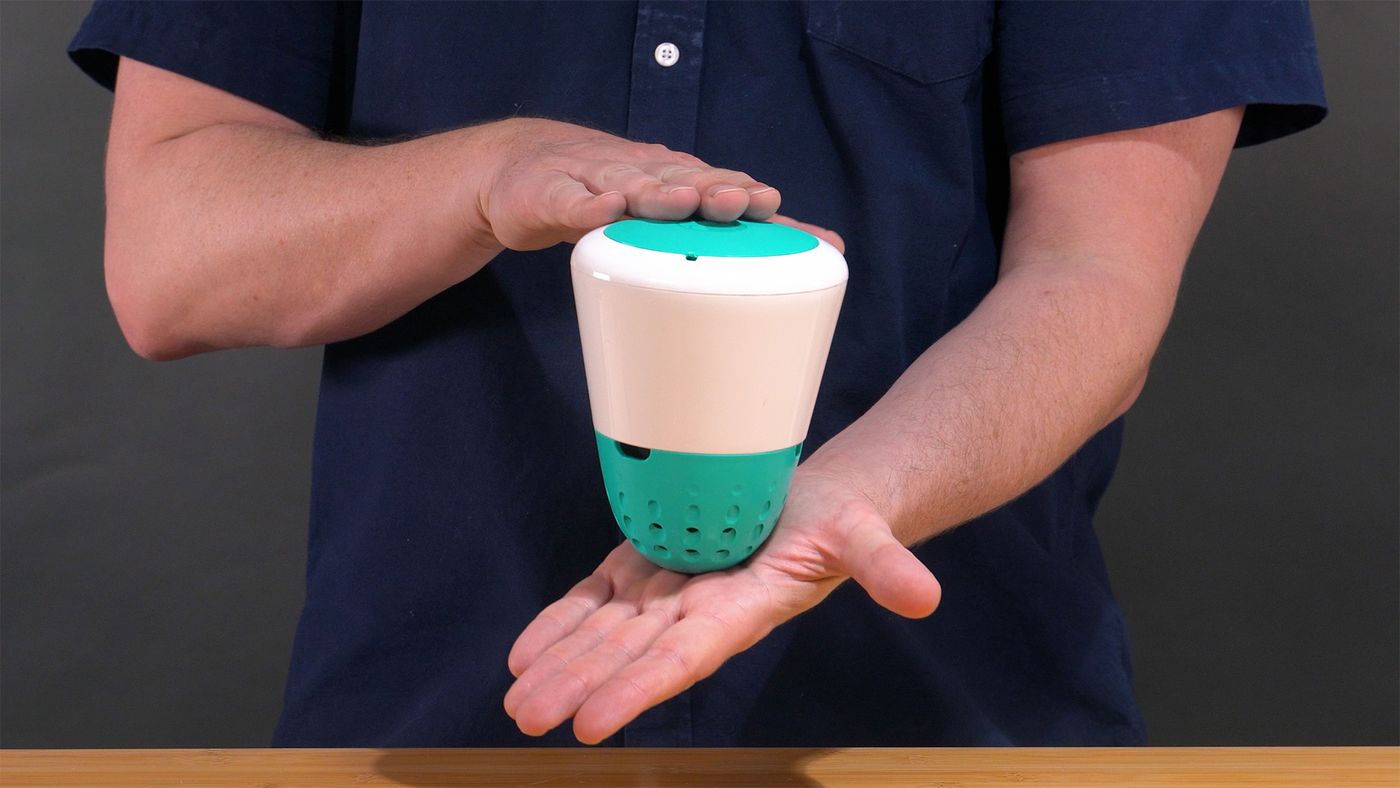
I keep an Ondilo ICO floating in my pool around the clock, so while I'm dosing I can watch pH move live on my phone instead of squinting at test strips. If you're above 7.4, add muriatic acid, let it circulate for 30 minutes, re-check, and repeat until you're in the zone. Gloves and eye protection on — and remember the golden rule: acid into water, never water into acid. My full walkthrough is in the how to lower pool pH guide.
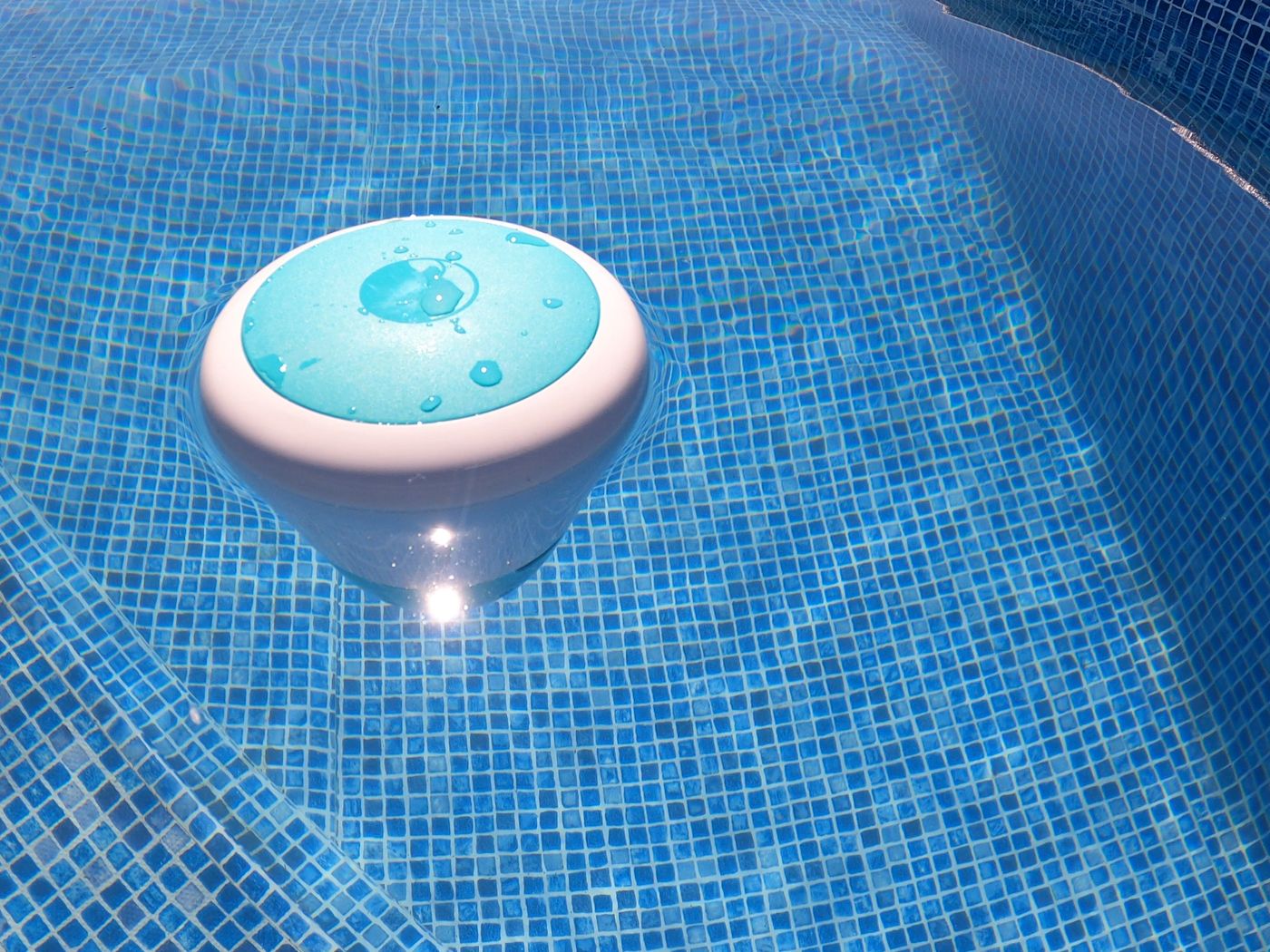
Do not eyeball this step. Precision here is the difference between glass and mud.
Step 2: Raise the Pool Water Level
Overfill the pool two to three inches above normal. Tomorrow you'll be vacuuming to waste, which throws water out of the pool fast, and you do not want the skimmer sucking air halfway through the job.
Step 3: Dose and Dilute the Alum
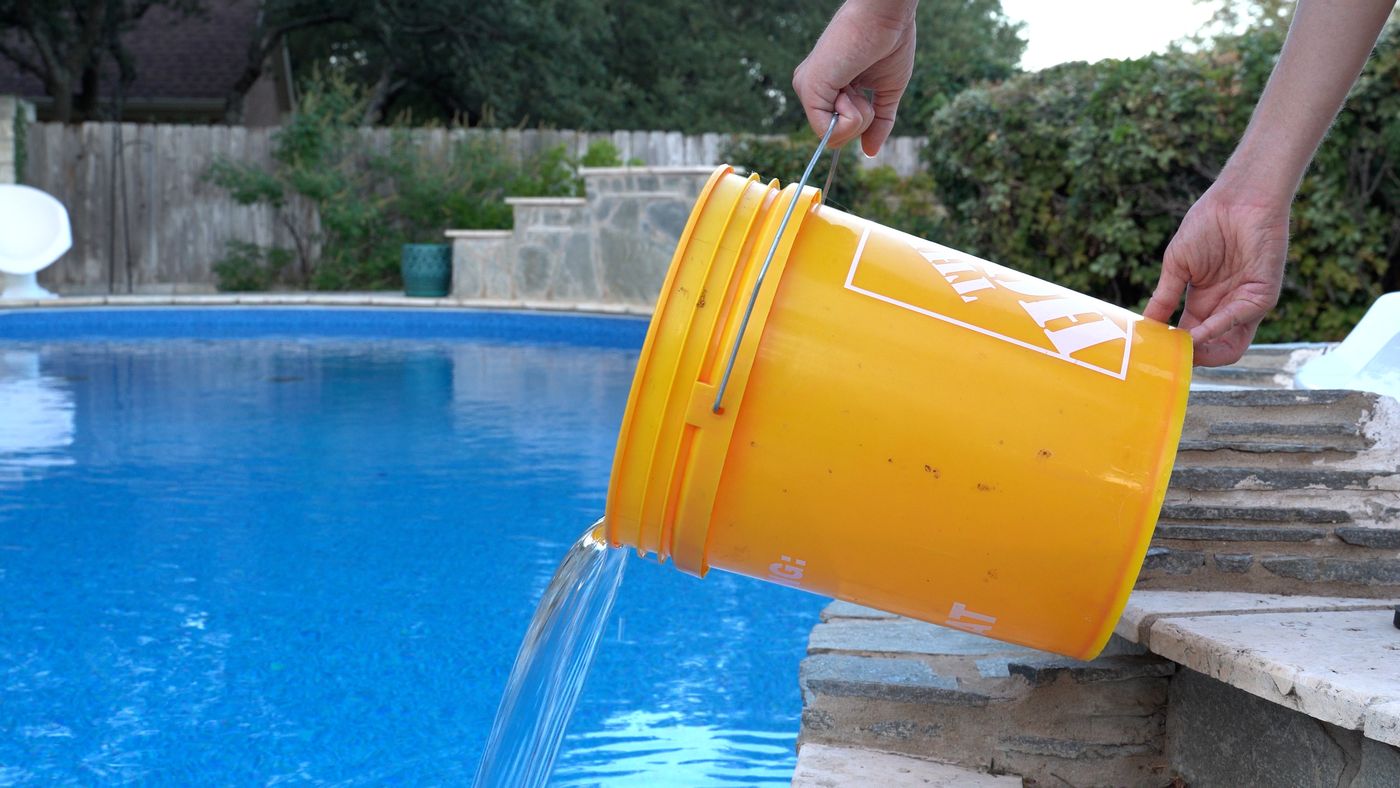
The standard rate is about 4 pounds of alum per 10,000 gallons — confirm it on your product's label. Never throw dry alum straight into the pool. Dissolve it in a bucket of warm water, then walk the perimeter and pour slowly so it spreads evenly.
Step 4: Set the Multiport Valve to RECIRCULATE — Not Filter
This is the filter-wrecking step I warned you about. Walk to your multiport valve and set it to RECIRCULATE. Not filter. RECIRCULATE. That setting moves water through the plumbing to mix the alum while completely bypassing your filter media. Push floc through a sand bed or a cartridge and it gums the media into a clogged mess — there's a good chance that filter is done for good.
Run it like this for about two hours.
RECIRCULATE — Not Filter
Mix on RECIRCULATE, clean up on WASTE. Floc pushed through a sand bed or cartridge can gum the media into a clogged mess for good. If your multiport valve never leaves FILTER during this job, you did it wrong.
Step 5: The Blackout — Pump Off for 8 to 12 Hours
Now shut everything down. Pump off. Water features off. Heater off. And here's the one people forget: if your robot runs on a Weekly Smart Timer like my Dolphin Premier does, open the app and cancel tonight's cycle — this is the one night of the year your automation works against you.
The water needs to sit dead still for 8 to 12 hours, so overnight is perfect. Keep swimmers out. While you sleep, gravity does what your filter never could.
Two Ways to Wreck This Job
Floc through the filter media. Mix on RECIRCULATE, clean up on WASTE — floc pushed through a sand bed or cartridge can clog the media for good.
Robots before the blanket is gone. Brushes and jets re-suspend the settled floc and erase the overnight work. Robots return to duty only after the manual vacuum to waste is done.
And keep swimmers out from the moment you dose until the floc is vacuumed out and the chemistry is rebalanced.
The Morning After: How to Vacuum Pool Floc to Waste
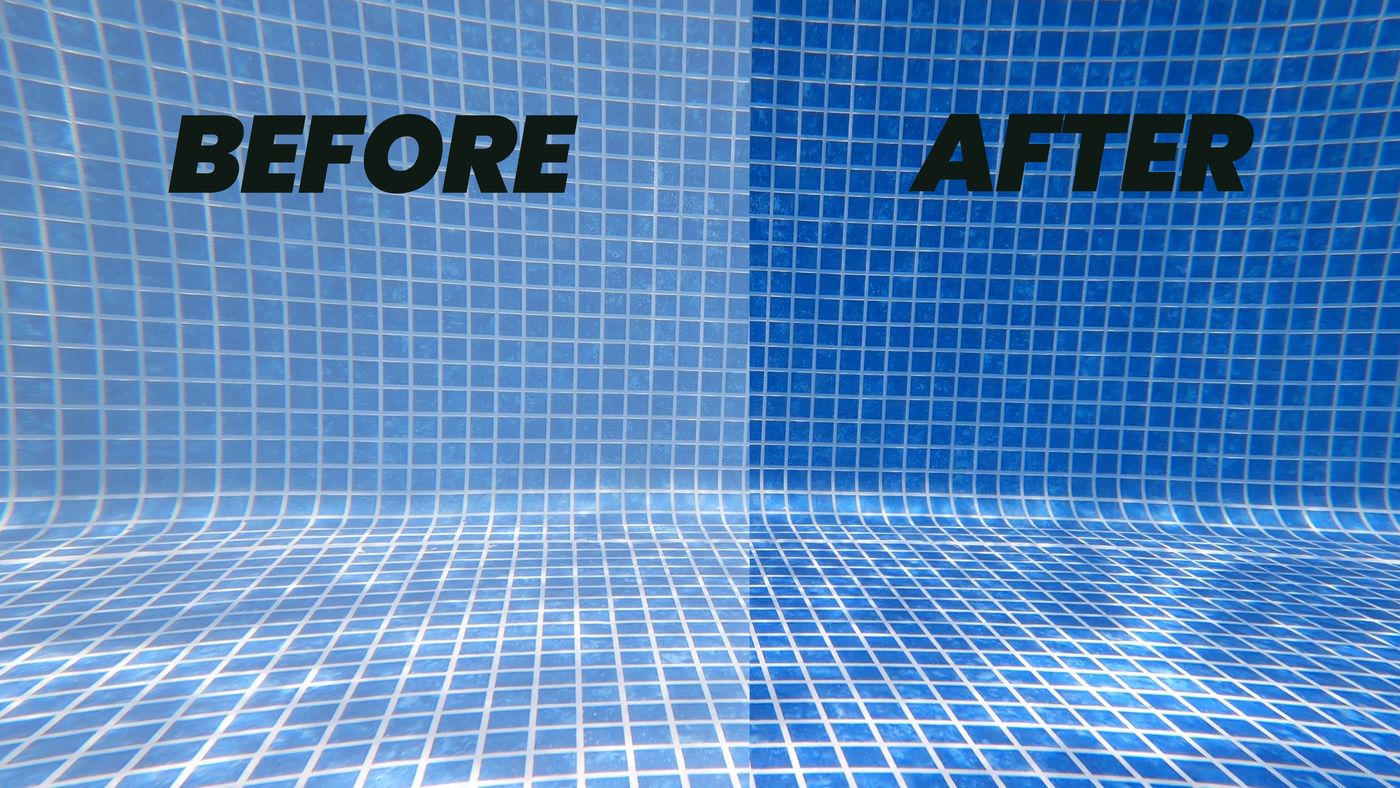
Walk outside the next morning and it's going to look strange. The top three feet of your pool will be stunning — the clearest water you've seen all season. And the floor will be covered in a thick, ugly, gray-brown blanket. That blanket is every particle that's been haunting you for weeks. Dead and grounded.
Now, the temptation. I know exactly what the robot crowd is thinking, because I am the robot crowd. You want to drop in your robotic pool cleaner, hit start on the app, and go pour a coffee. Do not do it. I don't care how good the robot is — and I've tested just about all of them — the second those brushes and jets touch that blanket, they blast the sediment right back into the water column, and you just erased the entire night. Floc is fragile. Today, the robots stay on the deck.
This is the one job in modern pool care you do old school:
- Set the multiport valve to WASTE — not filter, WASTE.
- Hook up a manual vacuum.
- Move slow. I mean painfully slow, like you're defusing something.
Vacuuming to waste sends the sediment completely out of the pool, bypassing the filter entirely. Move too fast and you'll stir the blanket back up — if that happens, stop, give it an hour to resettle, and come back.
Cartridge-Only Systems: This Method Is Off the Table
If you're on a cartridge-only system with no waste line, you have no way to send the floc out of the pool without destroying your cartridge. For you, it's clarifier and patience. For everyone with a multiport valve? You're in business.
Other Pool Flocculants: Liquid Floc and Drop-Out Products
Alum is my pick because it's the same industrial-strength chemistry the treatment plants run, at a commodity price. But it's not the only flocculant on the shelf, and depending on where you shop, it may not even be the easiest one to find.
Liquid pool flocculant is the mainstream option — brands like Clorox Pool&Spa sell it in a bottle at most big-box stores. It's typically an aluminum-based coagulant already in solution, so there's no bucket mixing: check your pH, pour the dose around the perimeter, and run the same recirculate-blackout-vacuum-to-waste playbook. It costs a bit more per treatment than dry alum and most bottles are sized for smaller doses, but for a typical residential pool it's the grab-and-go version of the exact same physics.
"Drop out" or "drop and vac" products are the same idea under a marketing name — read the active ingredient. If it's aluminum-based and the label says vacuum to waste, it's a true floc. If the label says "keep the pump running" and never mentions the waste line, you're holding a clarifier in a floc costume.
Whichever you buy, the rules don't change: pH in the 7.0–7.4 window first, mix on recirculate, settle overnight with the pump off, and vacuum to waste in the morning.
Rebalance Your Pool After Flocculant — and Never Go Cloudy Again
After vacuuming, you'll be down a few inches of water — that's why we overfilled. Top it off, flip the valve back to FILTER, and rebalance.
Get pH to target — I run 7.0 to 7.2 on vinyl and fiberglass, 7.2 to 7.4 on gunite. Then bring your chlorine back up with plain liquid chlorine, nothing fancy, until the ICO shows ORP between 650 and 700 millivolts. That number — not the color on a test strip — is what tells me the sanitizer is working. Quick channel rule while you're at it: keep free chlorine at 7.5% of your CYA or better. At 50 ppm of stabilizer, that's a floor of about 3.75 ppm.
One last nerd note, because the best cure is never needing one. Cloudy water is usually the corpse of an algae bloom you caught late — a sanitation failure that started two weeks before you saw it. Keep chlorine where it belongs and pH in range, and most pools never go milky. Here's the prevention stack I run:
-
A UV system. If your pool struggles every peak summer, a UV system like the SpectraLight I run destroys algae and chloramines at the equipment pad before they ever get the chance to cloud the water.
-
A liquid chlorine injection pump. If hauling jugs is your objection, an injection pump doses liquid chlorine for you on a dial — I've got a full list of the best at my best chlorine injection system guide.
-
A corded robot on a Weekly Smart Timer. My Dolphin Premier pulls debris out daily, before it decomposes and feeds the problem — and its NanoFilter handles everyday fine-particle duty once the floc is out.
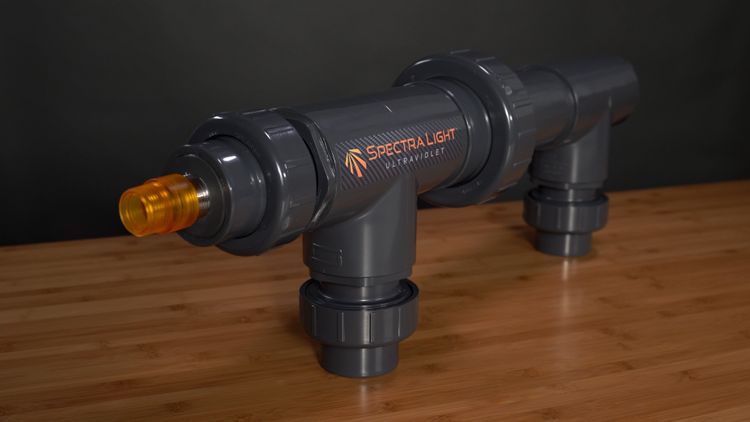
UV destroys the algae that causes cloudy water before it starts // The Pool Nerd
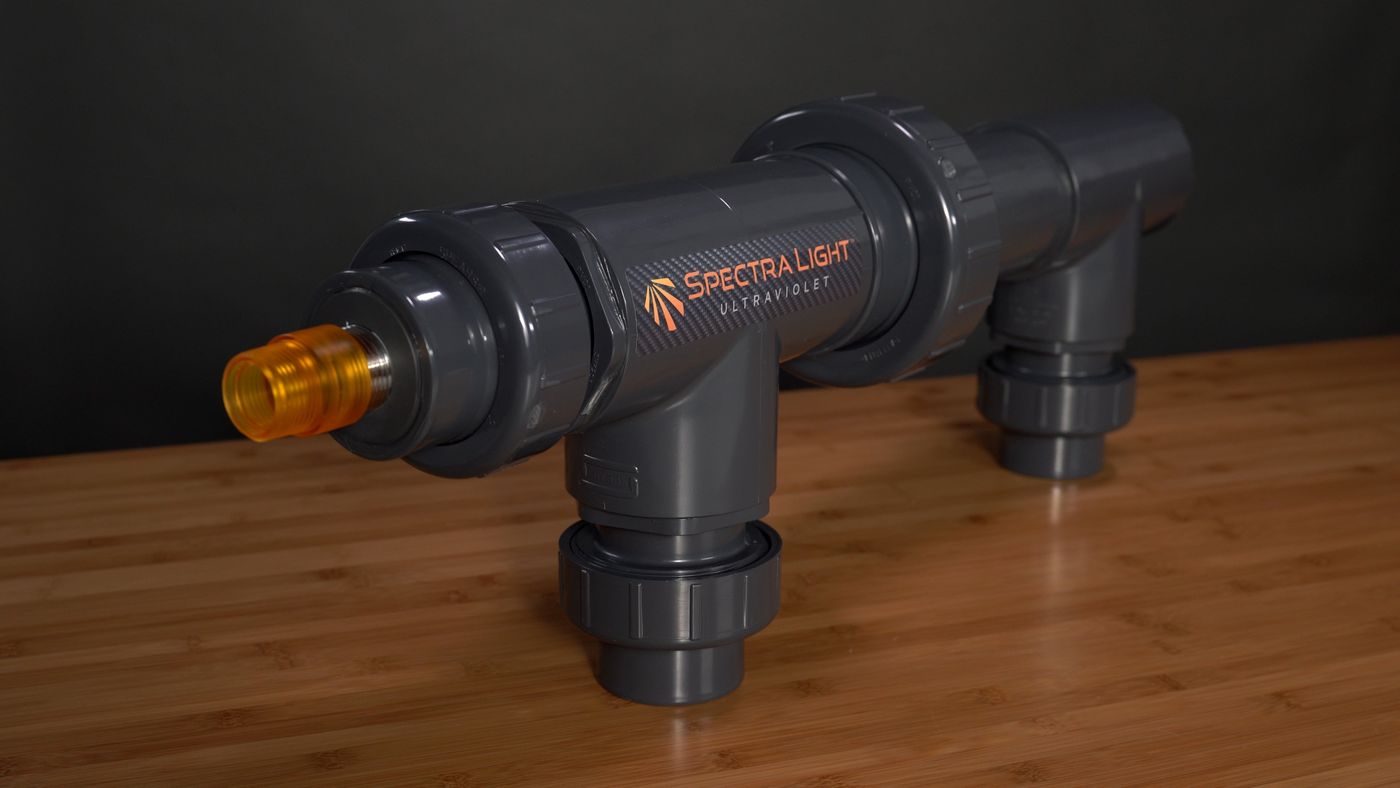
SpectraLight UV
Shock Less, Swim Cleaner
UV on the return line cuts chloramines and organic load so you pour less chlorine and shock over the season—not a sanitizer replacement, but a serious upgrade next to good circulation and testing.
Final Verdict on Aluminum Sulfate
So what's my final verdict?
Cloudy water isn't a mystery, and it isn't a reason to hand the pool store another hundred dollars. It's a cloud of negatively charged particles too small for your filter, and a few dollars of century-old municipal chemistry collapses the whole thing overnight. Nail the pH. Recirculate. Blackout. Vacuum to waste. That's the entire playbook.
Stop throwing expensive chemicals at bad physics. If you've been fighting a cloudy pool, grab some flocculant this weekend and get it done — then drop a comment and tell me how fast it cleared, because the before-and-afters make my week.
If you want to keep nerding out over your pool, head on over to ThePoolNerd.com/deals — that's where I post the best prices on robotic pool cleaners, the ICO monitor, UV systems, and the rest of the gear I trust.
Until next time, enjoy that pool. I'm Justin, your resident Pool Nerd, and I'll see you in the next one.
Related Reading
- How to Clear Cloudy Pool Water — The prevention-first guide to keeping water clear
- SLAM Pool Guide — When the problem is live algae, not dead algae
- How To Lower pH In Your Pool — The safe muriatic acid walkthrough Step 1 depends on
- Pool Shock Explained — What shock does and doesn't do
- ICO Pool Water Monitor Review — The ORP and pH monitor I use
- SpectraLight UV Review — My full review of the UV system
- Best Chlorine Injection Systems — Automate your liquid chlorine dosing
- Dolphin Premier Review — The corded robot on everyday fine-particle duty
This information is for educational purposes only. Handling pool chemicals — especially muriatic acid and aluminum sulfate — carries a real risk of injury or property damage. Always read the manufacturer's labels and SDS sheets, and use this information at your own risk.


Comments
Loading comments…