
 Justin D.
Introduction
You shocked your pool last night, the water looks perfect, and the kids are already in their swimsuits. One problem: you have no idea what your chlorine level is right now — and your test strip stopped at 10 ppm.
Welcome back to The Pool Nerd. I'm Justin, your resident pool aficionado. And today, we're tackling a problem that sneaks up on every pool owner sooner or later: chlorine that's too high.
Maybe you shocked last night and the kids want to swim this morning. Maybe a tablet floater dumped more than you planned. Maybe the pool store talked you into "one more bag, just to be safe." However you got here, the questions are the same: Is my water safe? How would I even know? And how do I bring the level down without creating a brand-new problem?
We'll answer all of it — including the testing trap where your test strips stop telling the truth at the exact moment you need them most.
The Quick Answer
If your chlorine is too high, here's the play:
Stop adding chlorine. Pull the floater, close the feeder, dial the salt cell to zero.
Let sunlight burn it off. UV destroys free chlorine naturally. For most pools this is the safest fix, and it's free.
Need it down faster? Partially drain and refill, or use a chlorine neutralizer (sodium thiosulfate) — carefully, and never at full dose on the first pass.
Don't swim until free chlorine is at or below 5 ppm — or, if you monitor ORP like I do, until the reading settles back into the 650–750 mV range.
That's the short version. Now let's talk about why this matters, because high chlorine does more damage than most people realize — and your test kit may be hiding it from you.
Lowering Chlorine: What You Need Checklist
Sunlight is the free fix—so the real shopping list is testing gear that still works above 10 ppm, a neutralizer for true emergencies, and the setup that stops the spikes for good.

Taylor K-2006 Test Kit
What it is: The FAS-DPD drop kit the pros carry—free and combined chlorine, pH, alkalinity, calcium hardness, and CYA, all from drops instead of guess-strips.
Why you need it: Use it every few weeks to confirm your smart monitor, and a couple times a season to check CYA—the one number the float doesn't track. Drops over strips, every time.
Pick your version: Taylor K-2006 (chlorine pools) or the K-2006 Salt (salt pools)—same kit, the salt version adds a salinity test.

Ondilo ICO Pool Water Monitor
What it is: A floating smart monitor that samples pH, ORP (sanitizer effectiveness), and temperature on a schedule and sends trends to your phone.
Why you need it: You still need a real drop kit for parameters the ICO doesn’t replace (like TA and CYA), but hourly ORP/pH catches drift and dosing mistakes long before weekly strip checks do.

In The Swim Chlorine Neutralizer
What it is: Granular sodium thiosulfate—the chemical the pros use to drop chlorine within the hour. About 2 oz per 10,000 gallons lowers chlorine by roughly 1 ppm.
Why you need it: Strictly for emergencies, like a swim party in three hours. Dose for half the reduction you want, circulate 30–60 minutes, retest, then add more only if needed. Overdose it and you create chlorine demand that eats every new drop of chlorine for days.

Champion Muriatic Acid
What it is: Dilute hydrochloric acid—standard for lowering pH and, with the right method, total alkalinity.
Why you need it: High pH destroys chlorine efficiency. Always follow the label; never mix acid with chlorine.

SpectraLight UV
What it is: Inline UV-C on the return line—knocks down pathogens and helps with chloramines as water passes the lamp.
Why you need it: Cleaner water with less organic load means you reach for shock less often while staying comfortable. Read the full SpectraLight review for sizing and install notes.
Why High Chlorine Is A Problem
Here's the thing — chlorine is medicine for your water, and like any medicine, the dose makes the poison.
It's rough on swimmers. Somewhere past 5 ppm, water starts biting back: stinging eyes, itchy skin, brittle hair, and airway irritation — especially for kids and anyone with asthma. Push well past 10 ppm and you're soaking in something closer to a sanitizing solution than a swimming pool.
It bleaches everything it touches. Swimsuits fade, solar covers degrade, vinyl liners lighten in blotches. I've seen liners with permanent pale patches from chronically hot chlorine.
It ages your equipment. Chlorine is an oxidizer — that's the whole point. But sustained high levels oxidize things you paid good money for: pump seals, o-rings, gaskets, heater internals, cleaner parts. None of it fails overnight, but all of it wears out faster.
It sabotages your testing. This one fools even careful pool owners, and it gets its own section in a minute.
It burns money. Every ppm above your target is chlorine you bought so the sun could destroy it. Multiply that across a season and you're funding the pool store's vacation yourself.
What Counts As "Too High"? The Numbers
Let's put hard numbers on it — in both languages your pool speaks: free chlorine (ppm) and ORP (millivolts).
Free Chlorine (FC)
With cyanuric acid in my recommended 30–50 ppm range, here's the ladder:
| Free Chlorine | What It Means | Swim? |
|---|---|---|
| 1–4 ppm | Everyday target zone (with CYA at 30–50 ppm) | Yes |
| 5 ppm | My swim ceiling — the same threshold the WHO uses for reopening a pool after shock treatment | Last call |
| 6–9 ppm | Post-shock cooldown; irritation territory | No — let it fall |
| 10 ppm | The public-pool closure line. Also where most test strips max out | No |
| Above 10 ppm | This is after shocking your pool territory — working water, not swimming water | No |
One nuance the pool store never explains: free chlorine doesn't operate alone — CYA buffers it. At CYA 30–50, the numbers above hold. If years of trichlor tablets have pushed your CYA past 100, your chlorine is muted: you can carry a high FC reading with weak sanitizing power at the same time. That's a different disease with a different cure (a partial drain and refill), and it's one more reason I don't run tablets. I cover that whole mess in my guide on how to lower CYA.
ORP: The Number I Trust
ORP — Oxidation Reduction Potential — measures what your chlorine is doing, not just how much is floating around. It's the standard in commercial and Olympic facilities, and it's what I use at home via the ICO pool water monitor. But if you don't want the ICO, there are quite a few other pool water monitors out there that also track ORP. You can find them all in my guide to the best pool water monitors.
ORP doesn't map one-to-one onto ppm (pH and CYA both move it), but as a working guide:
| ORP (mV) | What It Means |
|---|---|
| Under 650 | Under-sanitized — the opposite problem. Time to add chlorine |
| 650–750 | The sweet spot. Swim |
| 750–800 | Hot — expected right after shocking. Let it coast down |
| Above 800, sustained | Over-oxidized. Stop feeding chlorine and let the sun bring it home |
After a shock, expect ORP to spike past 750–800 mV — that's the treatment working. The swim signal is watching the curve coast back into the 650–750 band. In my experience, readings that camp above 800 for a day or more after the job is done mean the water is over-oxidized: you're aging equipment and swimsuits for zero added sanitizing benefit. My take: at that point, close the chlorine tap and let sunlight finish.
The pH Connection (Why This Keeps Happening)
Quick chemistry tie-in: pH decides how hard your chlorine punches. At pH 7.0 it's near peak strength; at 7.5 it has lost about half; at 8.0 it's down to roughly 20% effective. High pH is exactly why so many owners over-chlorinate by 200–300% — the chlorine "isn't working," so they add more, and more, until pH finally drifts down and all of it wakes up at once.
Fix pH first (7.0–7.2 for vinyl and fiberglass, 7.2–7.4 for gunite) and the chlorine spikes mostly stop happening. My full guide on how to lower pool pH walks through it step by step.
The Test Strip Trap: Why Your Kit Quits When You Need It Most
Here's the kicker — the moment measuring chlorine matters most is the exact moment most test kits quit on you.
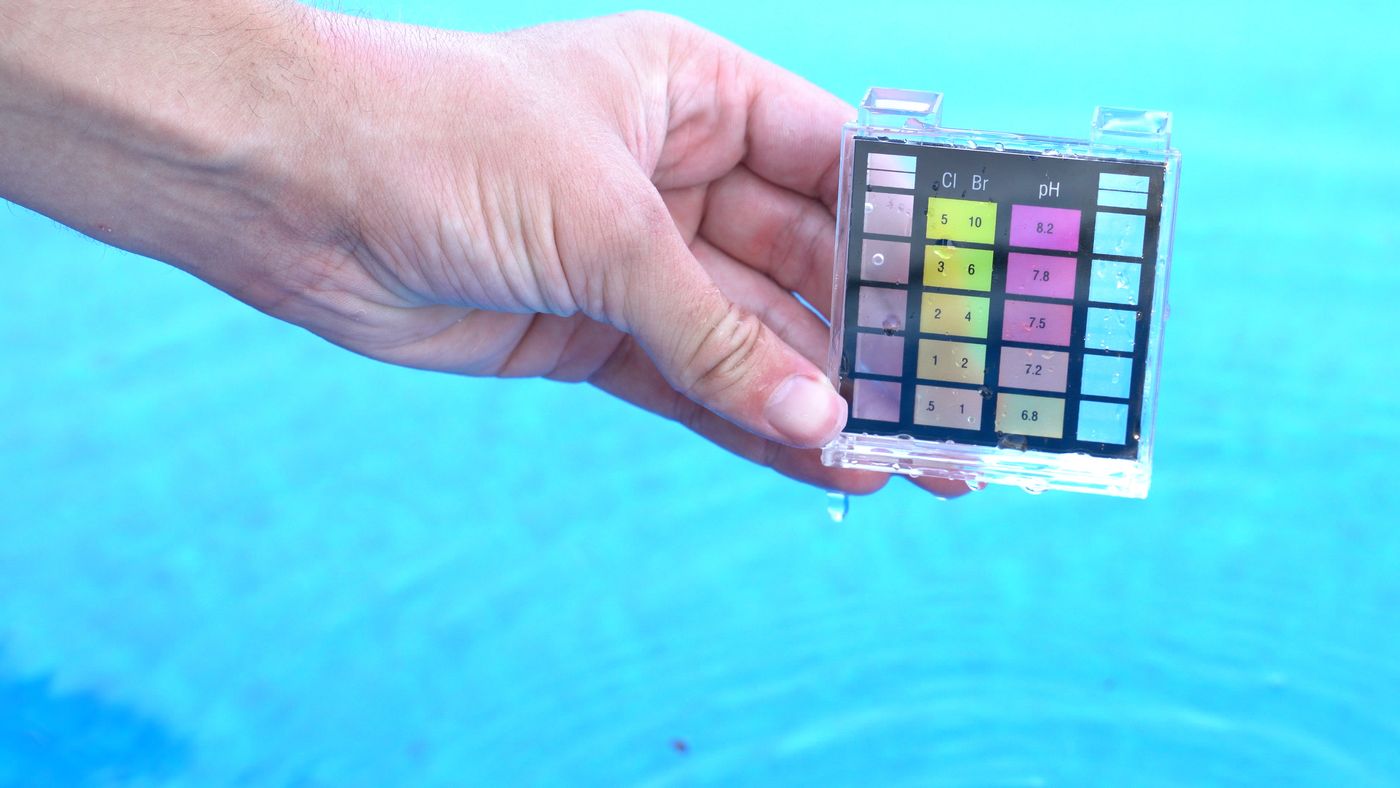
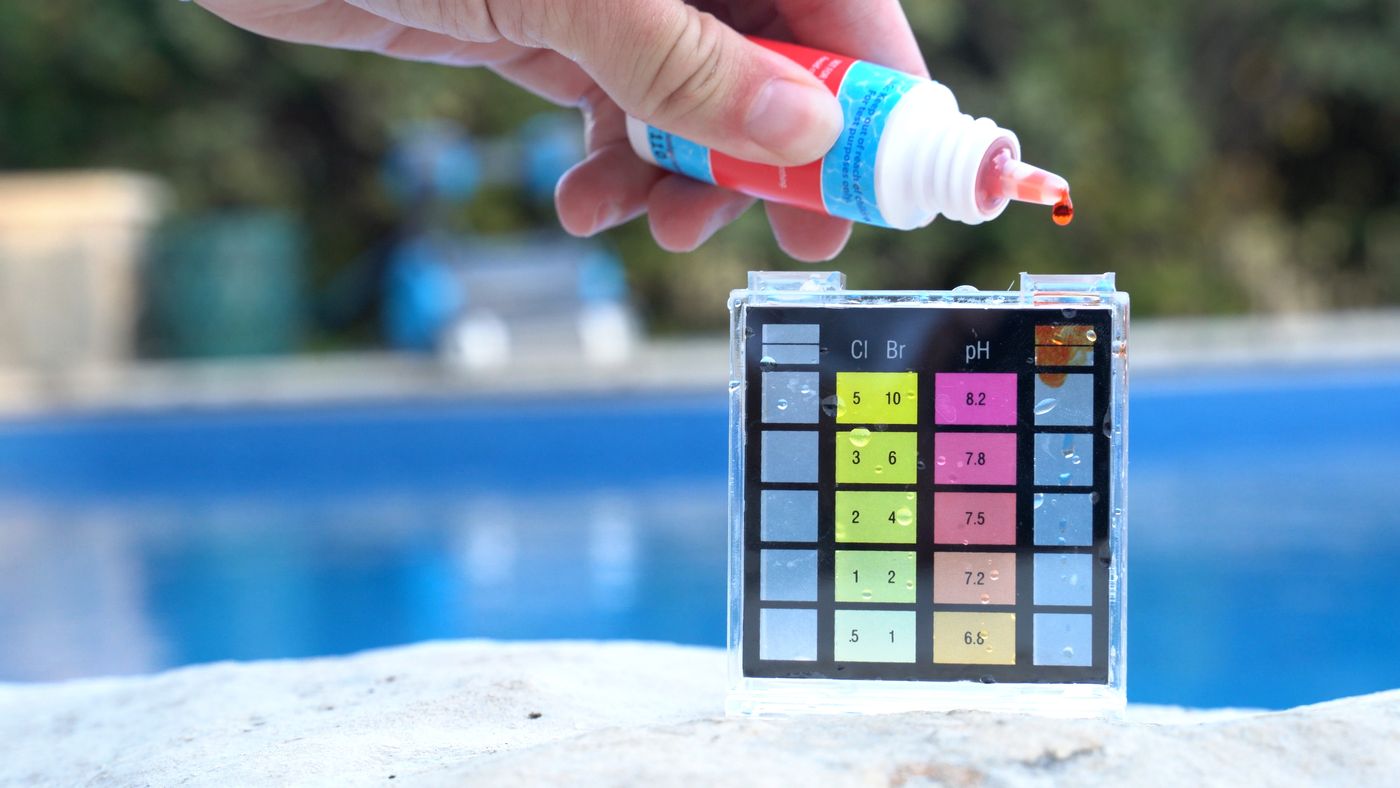
Most strips max out at 10 ppm. Check the color chart on your bottle: the top block on nearly every consumer strip is 10 ppm free chlorine. After a decent shock, your water might be sitting at 12, 15, even 20 ppm — and the strip physically cannot say so. It shows "high," with no idea how high.
Worse: high chlorine bleaches the test itself. Above roughly 10 ppm, the DPD chemistry used in strips and standard drop kits starts bleaching out — you'll see a flash of pink that fades to nothing, and the reading comes back low or flat zero while your pool is at its harshest. I've watched pool owners stare at that zero and reach for another jug. That's not just wrong — it's the exact opposite of what the water needs.
A zero reading after shocking is not zero chlorine
If your strip or DPD kit reads zero (or suspiciously low) the morning after a shock, assume bleach-out, not a chlorine crash. Confirm with an FAS-DPD drop test or the dilution trick below before adding anything. Dosing more chlorine into an already chlorine-heavy pool is how a two-day wait becomes a week.
Even your pH test joins the con. Push chlorine past roughly 15–20 ppm and phenol red — the pH reagent in nearly every strip and liquid kit — converts into a different compound that reads purple no matter what your pH is. Owners see what looks like 8.2, dump in acid the pool never asked for, and now they have two problems and one very confused pool.
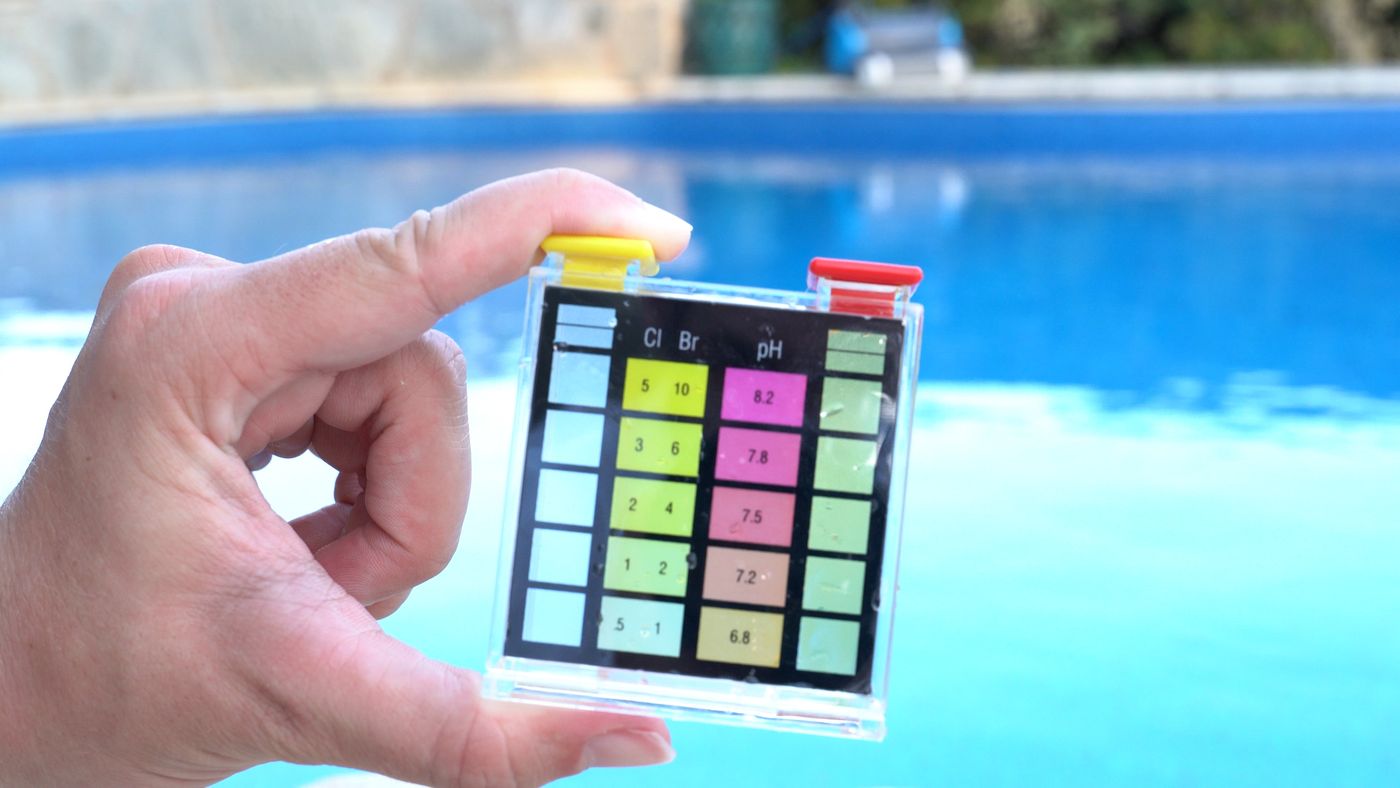
So how do you test when chlorine is high?
Testing when chlorine is high
Taylor K-2006 (FAS-DPD drop test). Counts drops instead of matching colors, and Taylor rates it accurate up to 50 ppm. The gold standard, and what lives on my shelf. Salt pool? Grab the K-2006 Salt version instead.
The dilution trick. Fill the test vial half pool water, half distilled water, run your normal test, and double the result. Crude, but it works in a pinch.
Continuous ORP with a pool water monitor. No reagents to bleach, no color chart to squint at. Most of these, like the ICO, use lab-quality commercial-grade sensors. It reads sanitizing power around the clock and shows you the curve falling back into range — which is exactly the "safe to swim" signal you're looking for. Details at mysmartpool.com.
After Shocking: When Can You Swim?
Wait at least 8 hours minimum — but a timer is not a test. Before anyone swims, I want two things: free chlorine at or below 5 ppm, and ORP settled back into 650–750 mV. A routine shock usually gets there in 8–24 hours with the pump running.
A heavy algae treatment can take longer, and that's fine — if you shocked for a reason, let the chlorine finish the job before you start knocking it down. Neutralizing your own algae treatment halfway through is how pools stay green.
⚠ Don't trust your nose
"It doesn't smell like chlorine anymore" means nothing. That sharp pool smell is chloramines — used-up chlorine — not free chlorine. A freshly shocked pool sitting at 15 ppm FC can smell like nothing at all.
How To Lower Chlorine: Every Method, Ranked
1. Stop The Source (Always Do This First)
It sounds obvious, and it's the step people skip. Pull the tablet floater out of the water. Close the inline feeder. Pause the Stenner pump. If you're on a salt system — you know where I stand on those, but if you own one — dial the cell output to zero. Chlorine can't come down while something is still feeding it.
2. Sunlight + Time — The Free Fix
UV wrecks chlorine. It's the whole reason I tell you to shock at dusk — so run that logic in reverse. Uncover the pool, keep the pump running, and let the sun work. With CYA at 30–50, in my experience a bright summer day pulls levels down fast, and most shocked pools land back under 5 ppm within 12–24 hours. If your CYA is high, expect the slow lane: the stabilizer that protects your chlorine on Tuesday is the same stabilizer dragging out your wait on Saturday.
★ Pro Tip: Pull the solar cover if you have one
A cover blocks the exact UV that burns chlorine off — leave it on and a spike can linger for days. Bonus reason: trapped heat plus concentrated chlorine is brutal on the cover itself. Off it comes.
3. Partial Drain And Refill — The Reset Button
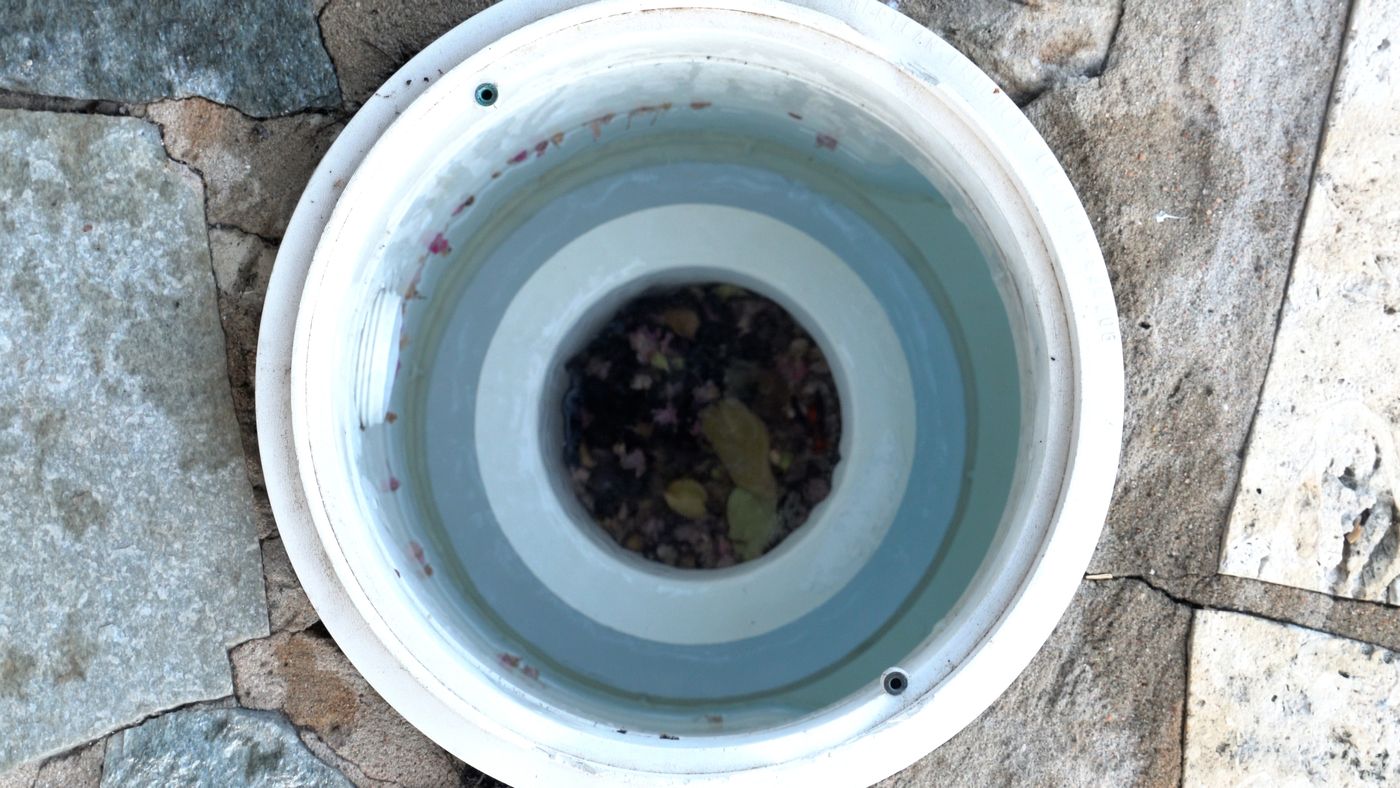
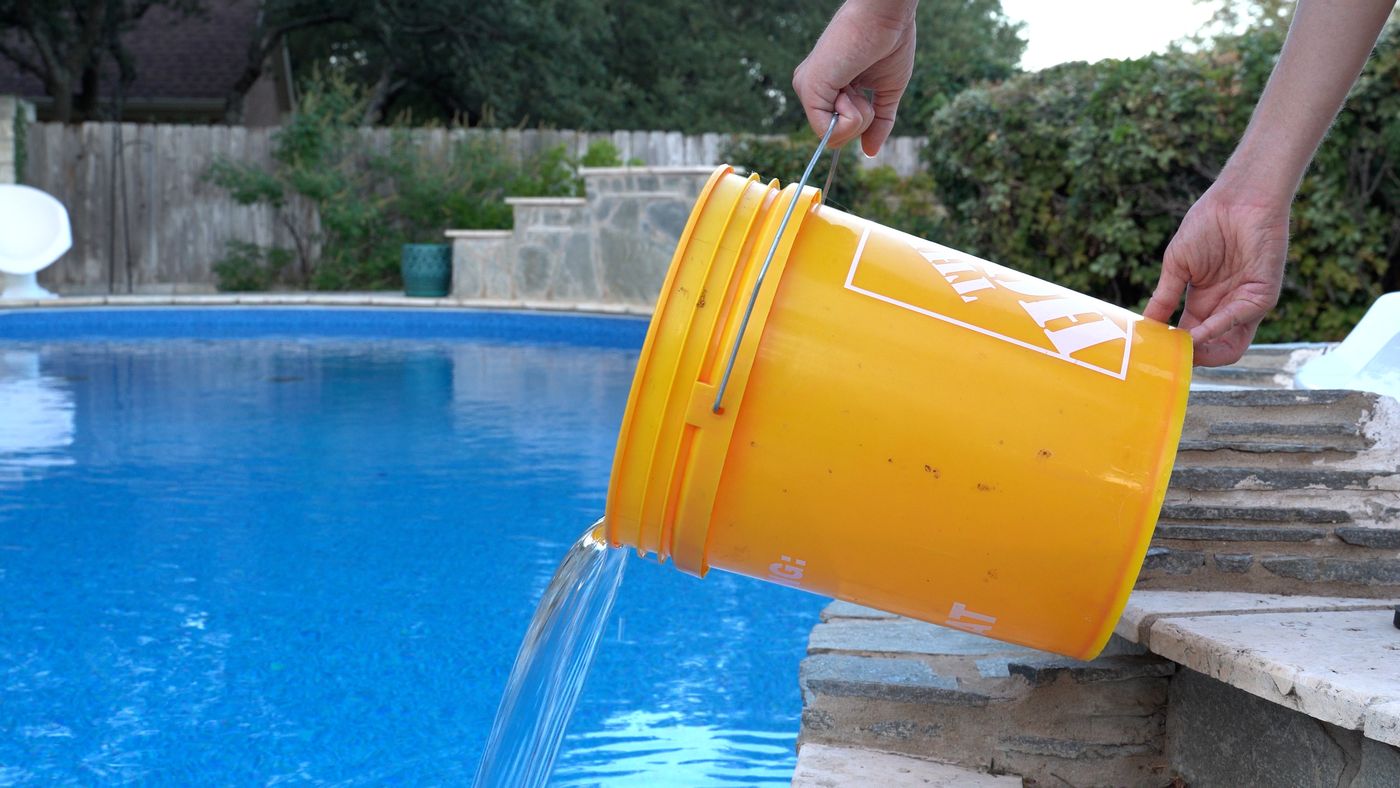
Physically removing water is the only method that takes chlorine out rather than waiting on it or converting it — and it lowers CYA, calcium, and salt at the same time. If your chlorine runs chronically hot because tablets pushed your CYA sky-high, this is the two-birds fix. Drain 6–12 inches, refill, retest, and repeat if needed. Check your local rules on where pool water can go, and keep high-chlorine water off the lawn and garden beds.
4. Chlorine Neutralizer (Sodium Thiosulfate) — The Fast Lane, Handled With Care
This is the chemical the pros use, and it works within the hour. It's also the easiest method to botch. Overdose it and you create chlorine demand — the water develops an appetite that eats every new drop of chlorine you add for days, your ORP falls through the floor, and you've traded a two-day problem for a week-long one. It can nudge pH around as well. I would not recommend this for the average pool owner.
If you use it: dose for half the reduction you want, circulate for 30–60 minutes, retest, and only then add more. Product strengths vary, so the label wins over any chart on the internet — mine included.
Where I land: thiosulfate lives on my shelf strictly for emergencies — the swim party that starts in three hours. For everything else, sunlight costs nothing and cannot be overdosed.
5. Hydrogen Peroxide — Works, But Skip It
Pool-grade peroxide neutralizes chlorine on contact. It's also one more hazardous chemical to store, with dosing that's harder to predict. If you're buying a chemical for this job anyway, thiosulfate is the more controllable tool. I would skip it.
What NOT To Do
Don't "swim it down." At high levels, the swimmers absorb the difference. Your kids are not chlorine neutralizer.
Don't add CYA to "take the edge off." Stabilizer mutes chlorine; it doesn't remove it. The spike passes in a day or two — the extra CYA stays for months.
Don't fully drain over a chlorine spike. Full drains carry real risks (floating liners, hydrostatic damage), and a partial drain does the job.
Don't keep dosing blind. If your strip is maxed out — or reading zero after a shock — the strip is the problem. Test smarter before you add anything.
Why This Keeps Happening (Fix The Cause)
Chronic high chlorine almost always traces back to one of three habits:
Tablets and floaters. A floater doesn't know your pool. It dissolves until it's empty — rain or shine, swimmers or none — and every tablet stacks more CYA into your water. My position on trichlor tablets is no secret: it's the number one cause of both chlorine spikes and "chlorine that stopped working."
Calendar shocking. "Shock every week" is advice designed to sell shock. You shock when there's a reason — ORP under 650, visible algae, a big storm, a heavy swim day — not because it's Sunday. Let's get real: sell you the shock on Saturday, sell you the neutralizer on Monday. That's not pool care; that's a subscription plan. I go deeper on this in stop shocking your pool.
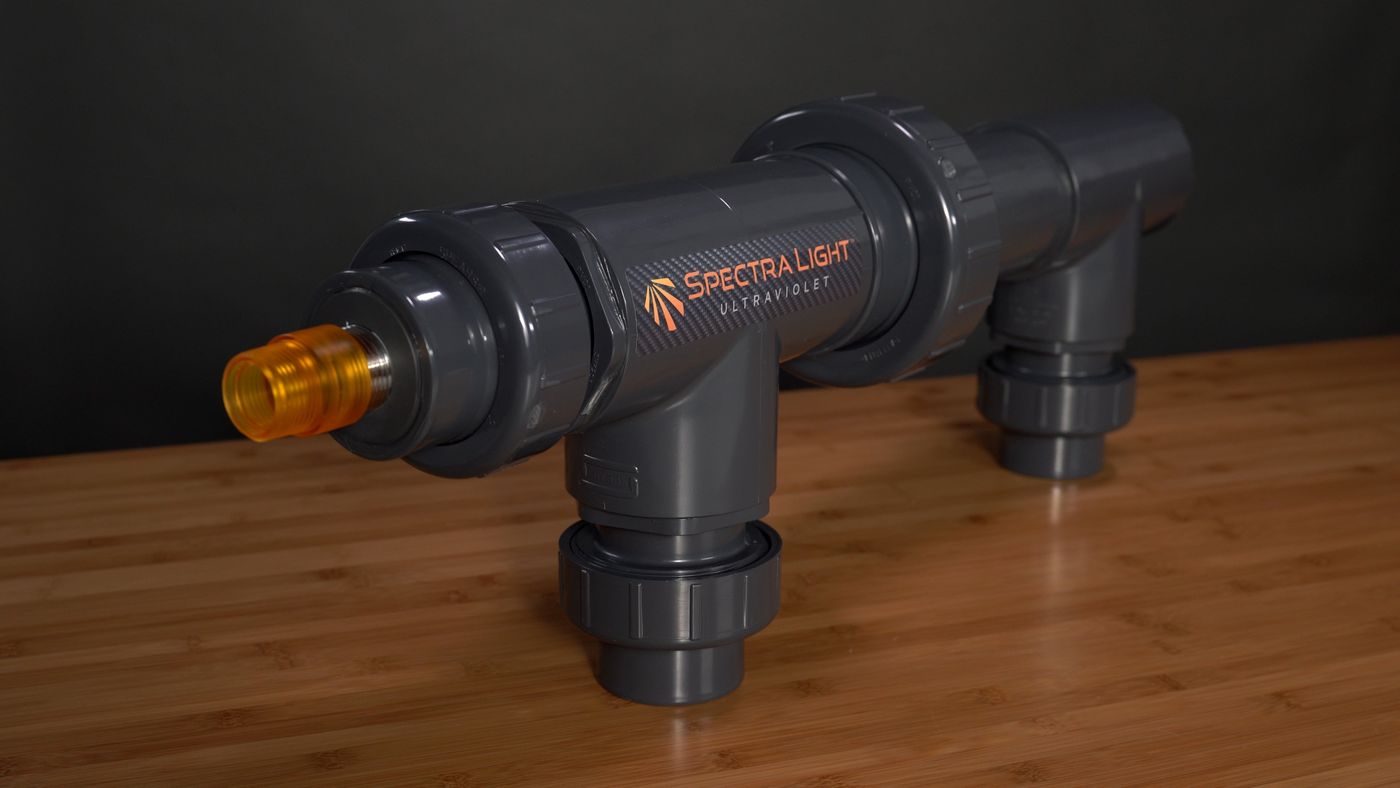
Blind dosing. Pouring chlorine by feel is how you land 200–300% over target. The fix is boring and it works: liquid chlorine, metered by a liquid chlorine injector, guided by ORP readings from the ICO. The pool gets what it needs each day — no spikes, no waiting to swim, no guessing. And if you want to shrink chlorine demand at the root, UV sanitation like the SpectraLight lets you run far lower chlorine for the same water quality — that full story is in my pool shock guide.
The Setup I Run
Ondilo ICO monitor for continuous ORP and pH, a liquid chlorine injection system, and SpectraLight UV cutting chlorine demand in the first place. Current links and discounts on all of it live on my deals page at ThePoolNerd.com/Deals.
Frequently Asked Questions
Is it safe to swim at 10 ppm chlorine?
Health codes treat 10 ppm as the shutdown line for public pools, and comfort problems start well before that. My ceiling is 5 ppm with CYA at 30–50 — you keep a safety margin, and your eyes will thank you.
How long after shocking can I swim?
Minimum 8 hours — but test instead of timing. You're cleared when FC is at or below 5 ppm and ORP is back in the 650–750 mV band. Routine shocks land there in 8–24 hours.
My strips read zero the morning after shocking. Where did the chlorine go?
Nowhere. Chlorine above roughly 10 ppm bleaches the test chemistry and fakes a zero. Confirm with an FAS-DPD kit or the dilution trick before you even think about adding more.
Will rain lower my chlorine?
A light rain dilutes less than you'd think. A big storm is a net negative: it dumps contaminants that consume chlorine and drag ORP down — plenty of owners end up shocking after a storm, not neutralizing. Test, and let the number decide.
Should I pull my robotic cleaner out during high chlorine?
I do. Most manufacturers say to remove cleaners during shock treatment, and there's no upside to marinating your cleaner's plastics, seals, and cables in 15 ppm water. Drop it back in once you're under 5 ppm.
Final Verdict
So what's my final verdict on how to lower your pool's chlorine?
High chlorine is the easiest pool problem to fix — and one of the easiest to fumble. Stop the source, pull the cover, and let sunlight do free work. Save the partial drain for chronic cases carrying CYA baggage, and keep thiosulfate strictly in the break-glass drawer: half doses only, retest between.
Trust numbers — not your nose, and not a maxed-out strip. FAS-DPD when chlorine is high; ORP around the clock if you want the guesswork gone for good. At or below 5 ppm and 650–750 mV, jump in.
And fix the cause. Liquid chlorine dosed by ORP doesn't spike. Tablets, calendar shocking, and blind pouring do. Get the system right once, and "is it safe to swim?" stops being a question you have to ask.
The information is for educational purposes only. Handling pool chemicals, specifically chlorine and chemical neutralizers, involves significant risk of injury or property damage. Always read the manufacturer's labels and MSDS sheets. Use this information at your own risk.
If you want to look into a pool water monitor like the ICO or a UV system like the SpectraLight, head on over to my deals page at ThePoolNerd.com/Deals, where I post all the best deals on top pool equipment and more.
Until next time, keep nerding out — and enjoy that pool. I'll see you in the next one.


Comments
Loading comments…