
 Justin D.
Next time you're at the pool store, flip over that $25 bucket of "Alkalinity Increaser" and read the single active ingredient. Then, go to your kitchen pantry and do the exact same thing. You'll quickly realize you've been paying a 300% markup for baking soda with a fancy label.
Yes, baking soda absolutely belongs in your pool. It isn't some cheap internet hack, and it certainly isn't a watered-down substitute for the "real" product. The bucket labeled Alkalinity Up at your local pool shop contains one ingredient: sodium bicarbonate. That is baking soda. Same chemical, same white powder. The only difference is the picture on the label and the price on the shelf.
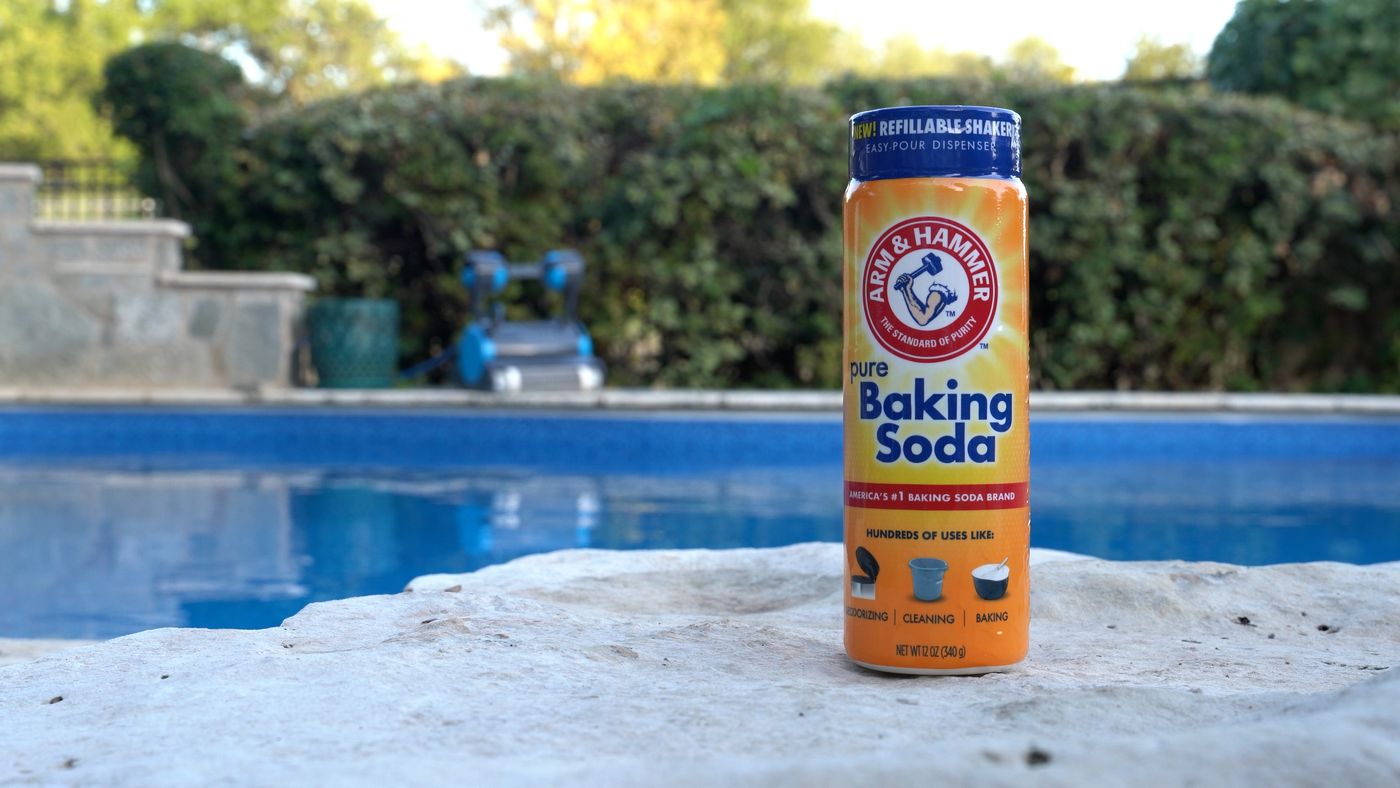
Welcome back to The Pool Nerd. I'm Justin, your resident pool aficionado. Today we're covering one of the easiest money-saving swaps in all of pool care: what baking soda does in your water, what it replaces, what it can't do, exactly how much to add, and how much cash it leaves in your pocket every season.
Let's break it down.
Raising Alkalinity: What You Need Checklist
The chemical is plain sodium bicarbonate—grocery baking soda matches pool-store “alkalinity increaser.” You only need a drop kit to measure TA before and after.

Taylor K-2005 Test Kit
What it is: A professional drop (titration) kit for chlorine, pH, alkalinity, calcium hardness, and cyanuric acid.
Why you need it: You can’t SLAM or balance blind—especially CYA, which handcuffs chlorine. This kit gives numbers you can trust, not strip guesswork.

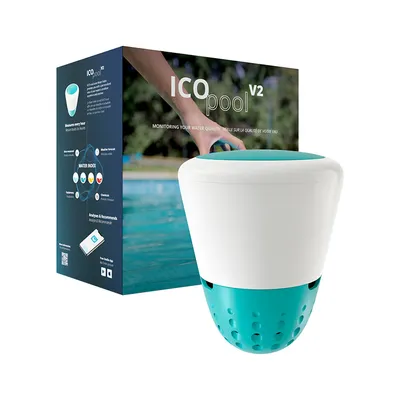
Ondilo ICO Pool Water Monitor
What it is: A floating smart monitor that samples pH, ORP (sanitizer effectiveness), and temperature on a schedule and sends trends to your phone.
Why you need it: You still need a real drop kit for parameters the ICO doesn’t replace (like TA and CYA), but hourly ORP/pH catches drift and dosing mistakes long before weekly strip checks do.
Read the full ICO review — Shop ICO direct (no Amazon listing for the hardware we run).

Baking soda (alkalinity increaser)
What it is: Sodium bicarbonate—the same compound as pool-store “alkalinity increaser.” Arm & Hammer 15 lb is a practical mid-size bag; USP pure 50 lb bucket is the usual pick when you want the lowest $/lb; grocery or pool-store bags work if the label is plain bicarbonate.
Why you need it: It raises total alkalinity with a gentler pH bump than soda ash. Do not use soda ash here if you only need TA up.

USP Pure Baking Soda (50 lb bucket)
What it is: Sodium bicarbonate in a large sealed bucket—often labeled USP/food-grade pure bicarbonate.
Why you need it: When you correct TA often or run a big pool, the cost per pound usually beats small retail boxes. Same dosing rules as any pure bicarbonate: add in stages, circulate, and retest.
A Quick Word on the Pool Nerd Method
Saving money on chemistry is great, but the ultimate goal is to make your pool completely hands-off and easier to maintain. When you combine balanced water with the right tech — like a smart pool water monitor tracking your levels 24/7, a corded robotic pool cleaner scrubbing the waterline, and a UV system neutralizing bacteria — your pool practically runs itself. Want to see the exact gear I use to automate my pool? Check out my top equipment picks over at ThePoolNerd.com/deals, and check out all my articles on pool maintenance as well.
What Baking Soda Does in a Pool
Baking soda is sodium bicarbonate. In pool water, its job is raising Total Alkalinity — the TA number on your test kit.
Think of TA as your water's shock absorber. pH is the number everyone watches, but TA is what holds pH in place. When TA sits in the healthy 80–120 ppm range, your pH resists the daily push and pull from rain, swimmers, sunlight, and chlorine dosing. When TA crashes below that range, your pH turns into a pinball — it bounces high, it bounces low, and every bounce sends you back to the chemical shelf.
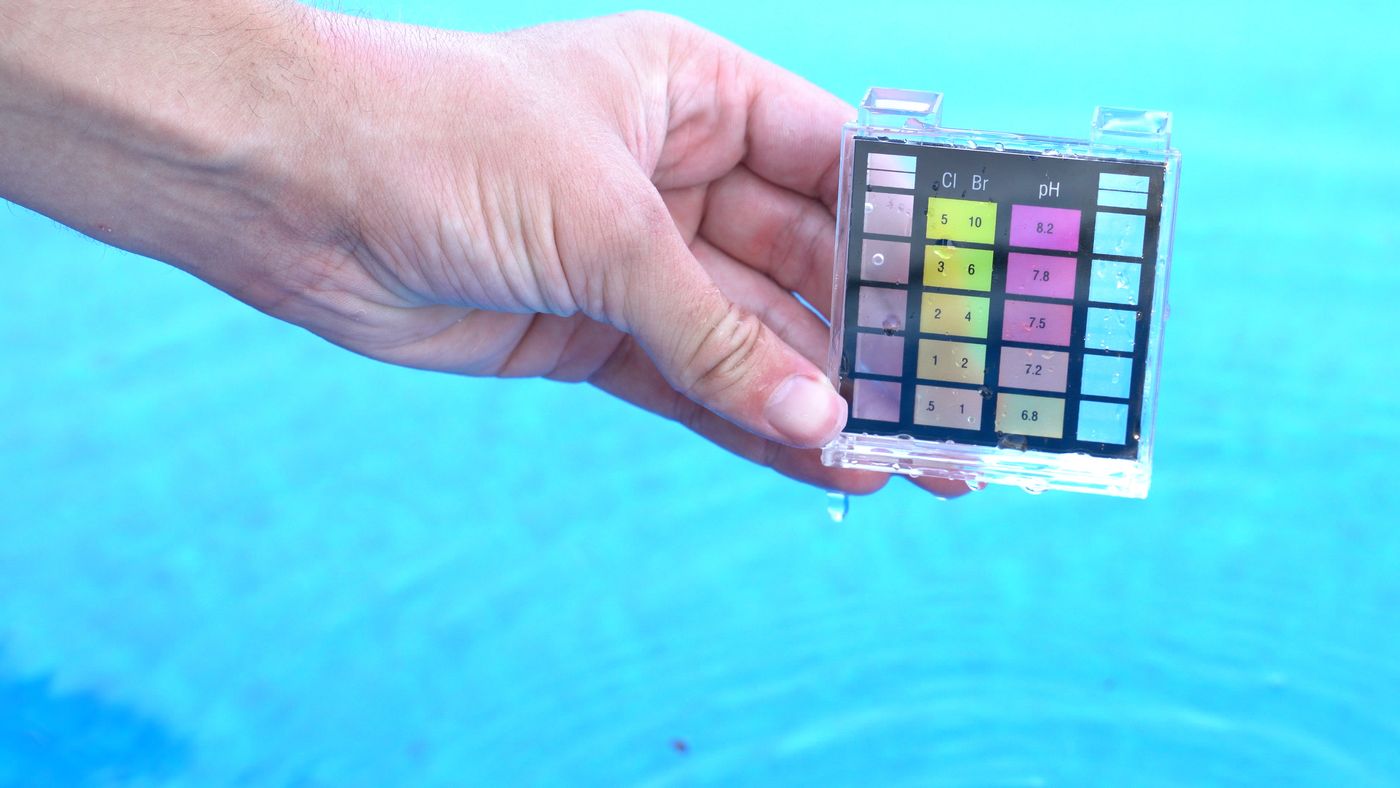
Baking soda also nudges pH upward a little. A dissolved solution of sodium bicarbonate settles around 8.3 on the pH scale, so it can lift a slightly low pH while it rebuilds your buffer. But its main job is clear: baking soda is a TA tool first and a pH tool a distant second. Pool stores love to blur that line, so we'll draw it sharply in a minute.
Here's the thing most owners never learn: chasing pH without fixing TA is like straightening a picture frame that hangs from a loose nail. You can adjust it all day. It will not stay straight until you fix the nail.
The Label Pool Stores Hope You Never Read
Walk into any pool store and find the bucket labeled "Alkalinity Increaser," "Alkalinity Up," or "Total Alkalinity Booster." Flip it over and read the active ingredient. On nearly every brand on that shelf you'll find a single line: sodium bicarbonate, 100%.
Now pick up a bag of baking soda at the grocery store. Ingredient list: sodium bicarbonate.
It's the same thing.
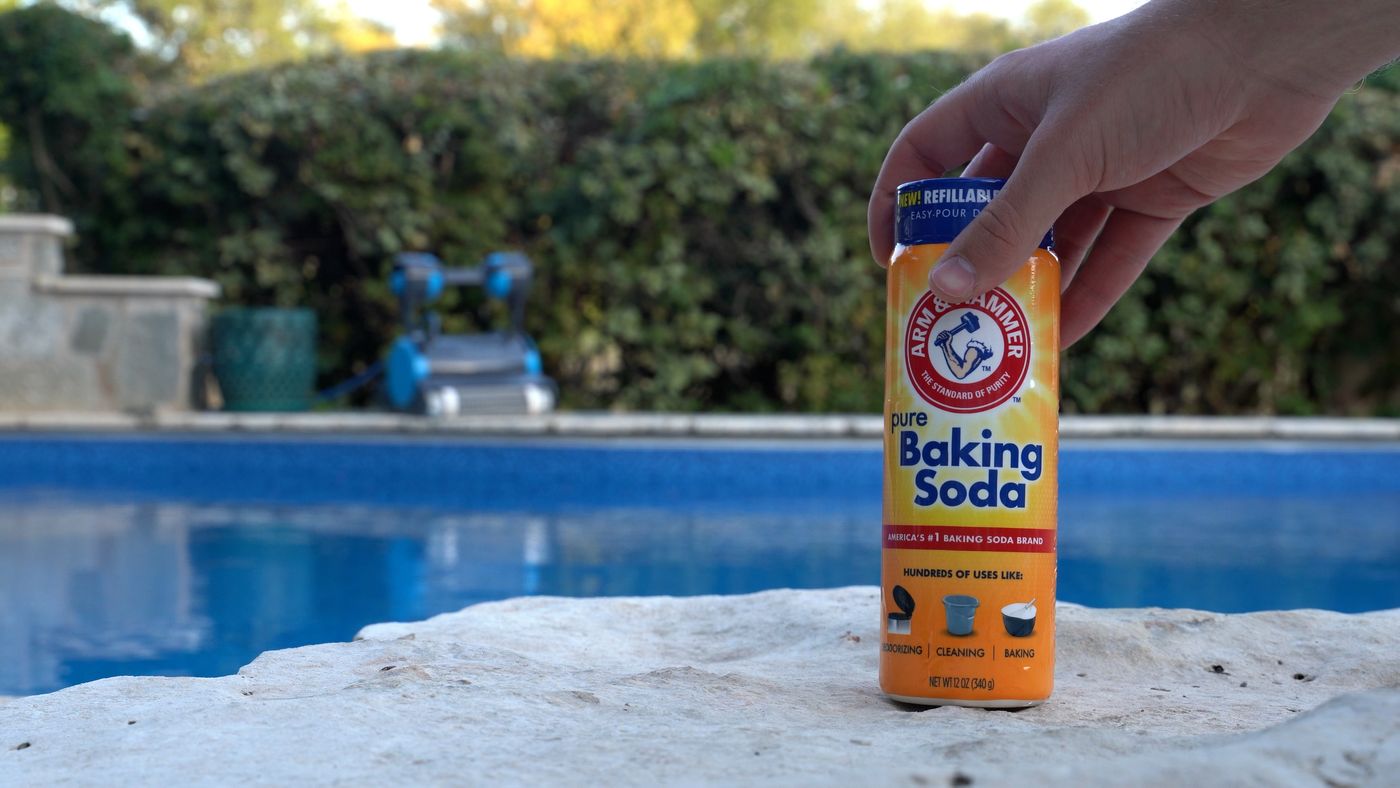
Here's the kicker: the grocery version is food grade. It meets a purity standard strict enough to bake cookies with — a tougher bar than your pool will ever require. You are not buying a lesser product to save money. You're buying the identical chemical, at a higher purity certification, for a fraction of the price.
| Product | Chemical | Typical size | Typical price* | Cost per lb |
|---|---|---|---|---|
| Pool store "Alkalinity Increaser" | Sodium bicarbonate | 10 lb bucket | $20–$28 | $2.00–$2.80 |
| Grocery baking soda (bulk bag) | Sodium bicarbonate | 13.5 lb bag | $7–$10 | $0.52–$0.74 |
Note: prices move around by region and season — treat these as ballpark numbers.
That's not a small gap. In my experience, that's a three-to-four-times markup on the same thing — one of the widest margins in the entire pool store.
What Baking Soda Replaces — and What It Doesn't
Slow down here, because the internet gets sloppy on this point and the sloppiness costs people money.
Baking soda replaces exactly one product: Alkalinity Increaser. Any bucket whose active ingredient reads "sodium bicarbonate" comes off your shopping list forever.
It does not replace:
- Soda ash ("pH Up"). Soda ash is sodium carbonate — a different chemical with a much stronger pull on pH. When your pH is well below 7.0 and needs a serious lift, soda ash is the right tool.
- Liquid chlorine. Baking soda has zero sanitizing power. It kills nothing.
- Pool shock. A green pool is a sanitizer failure, not an alkalinity problem.
- Calcium hardness increaser. Different parameter, different chemical entirely.
Here's the quick decision guide I use:
| Your test results | What to add |
|---|---|
| TA low, pH fine (7.0–7.4) | Baking soda (sodium bicarbonate) |
| TA low AND pH low | Soda ash (sodium carbonate) |
| TA high (120+), pH low | Borax — 20 Mule Team, laundry aisle |
| pH high | Muriatic acid |
If that Borax line surprised you, my full guides on raising pH and lowering pH walk through the whole toolkit — the laundry-aisle trick alone has saved readers a pile of cloudy-water headaches.
Don't Grab the Wrong Box
Baking soda (sodium bicarbonate) and washing soda (sodium carbonate) sit near each other in the store and sound nearly identical. Washing soda IS soda ash — a far stronger pH raiser. Pour in pounds of it thinking it's baking soda and your pH will blow straight past 8.0. Read the box: sodium bicarbonate is the one you want for alkalinity.
Why This Matters Even More on the Pool Nerd Method
If you run your pool the way I teach — liquid chlorine for sanitizing, muriatic acid for pH control, nothing else in the water — then TA management is part of the deal.
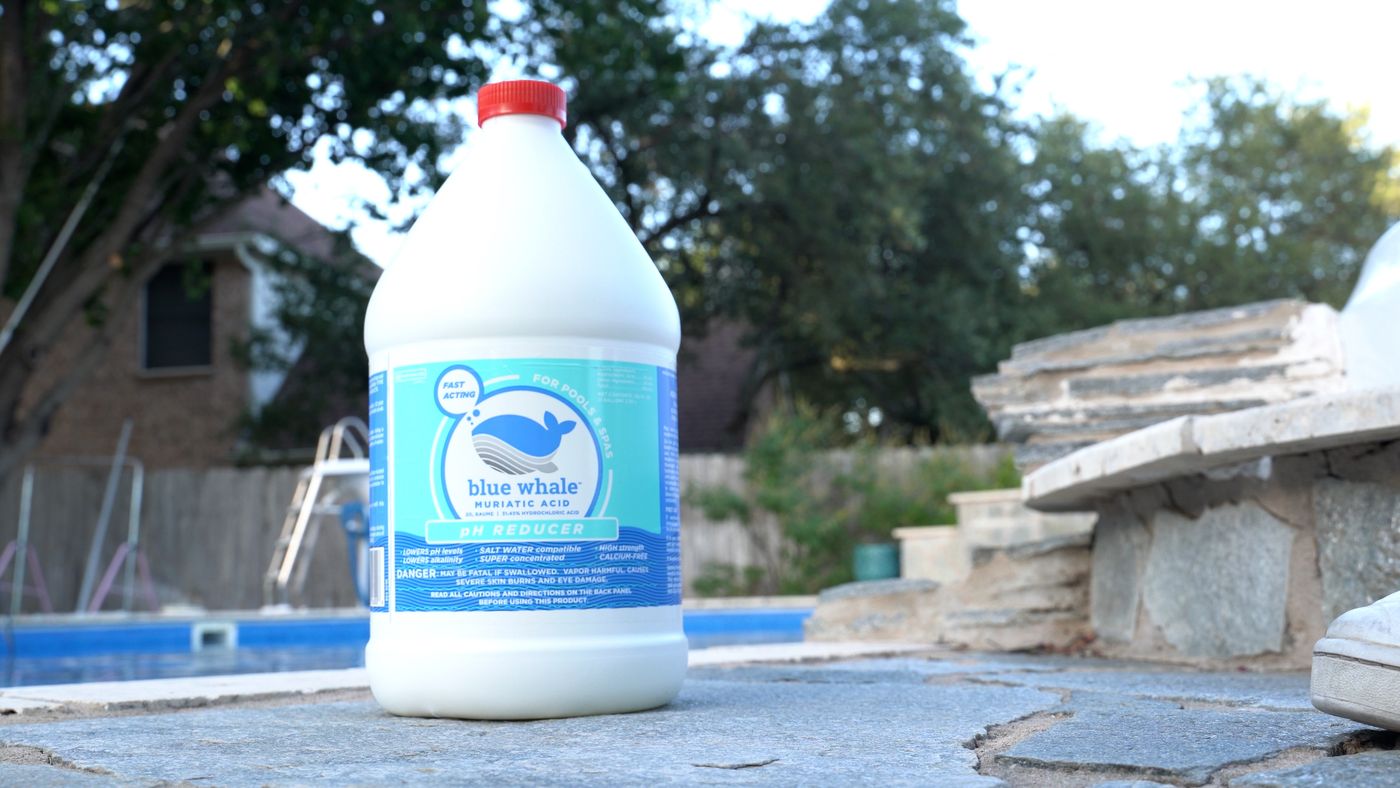
Muriatic acid does its job by consuming alkalinity. Every acid dose that pulls your pH back into the 7.0–7.2 Power Zone also shaves a few ppm off your TA. Add a rainy stretch (rain is acidic, and it dilutes TA at the same time) plus a couple of heavy swim weekends, and a pool that started the season at 100 ppm can drift into the 50s by August.
And here's what low TA does to the numbers that matter: an unstable pH drags your chlorine's killing power up and down with it. At pH 7.2, roughly 65% of your chlorine exists as hypochlorous acid — the form that destroys algae and bacteria. Let pH bounce to 8.0 and that share collapses to around 20%. Your ORP — the true measure of sanitizing power — rides the same rollercoaster, diving every time pH spikes.
Stable TA is what makes the whole system boring. And boring water chemistry is the goal.
How Much Baking Soda to Add
The rule of thumb: 1.5 pounds of baking soda per 10,000 gallons raises TA by roughly 10 ppm.
| Pool volume | Raise TA 10 ppm | Raise TA 20 ppm | Raise TA 30 ppm |
|---|---|---|---|
| 10,000 gal | 1.5 lbs | 3 lbs | 4.5 lbs |
| 15,000 gal | 2.25 lbs | 4.5 lbs | 6.75 lbs |
| 20,000 gal | 3 lbs | 6 lbs | 9 lbs |
| 25,000 gal | 3.75 lbs | 7.5 lbs | 11.25 lbs |
Two rules keep you out of trouble:
- Know your exact volume. Guessing your gallons is how people yo-yo their chemistry. Use the pool volume calculator and get a hard number.
- Follow the One Pound Rule. Don't add more than one pound of product per 10,000 gallons in a single dose. Need 6 pounds in a 20,000-gallon pool? That's three rounds: add, circulate 4–6 hours, retest, repeat. Patience beats overcorrection every time.
Alkalinity Calculator
Already know your numbers? Plug in your pool volume and current alkalinity reading below, and the calculator will tell you exactly how much baking soda you need. For dosing charts and more detail, head to the full pool alkalinity calculator page.
Pool Alkalinity Calculator
Enter your pool details below for an instant chemical dosage recommendation.
How to Add It, Step by Step
Step 1 — Test first. You need two numbers before you touch anything: TA and pH. A Taylor K-2006 drop test (or the K-2006 Salt for salt pools) gives you both.
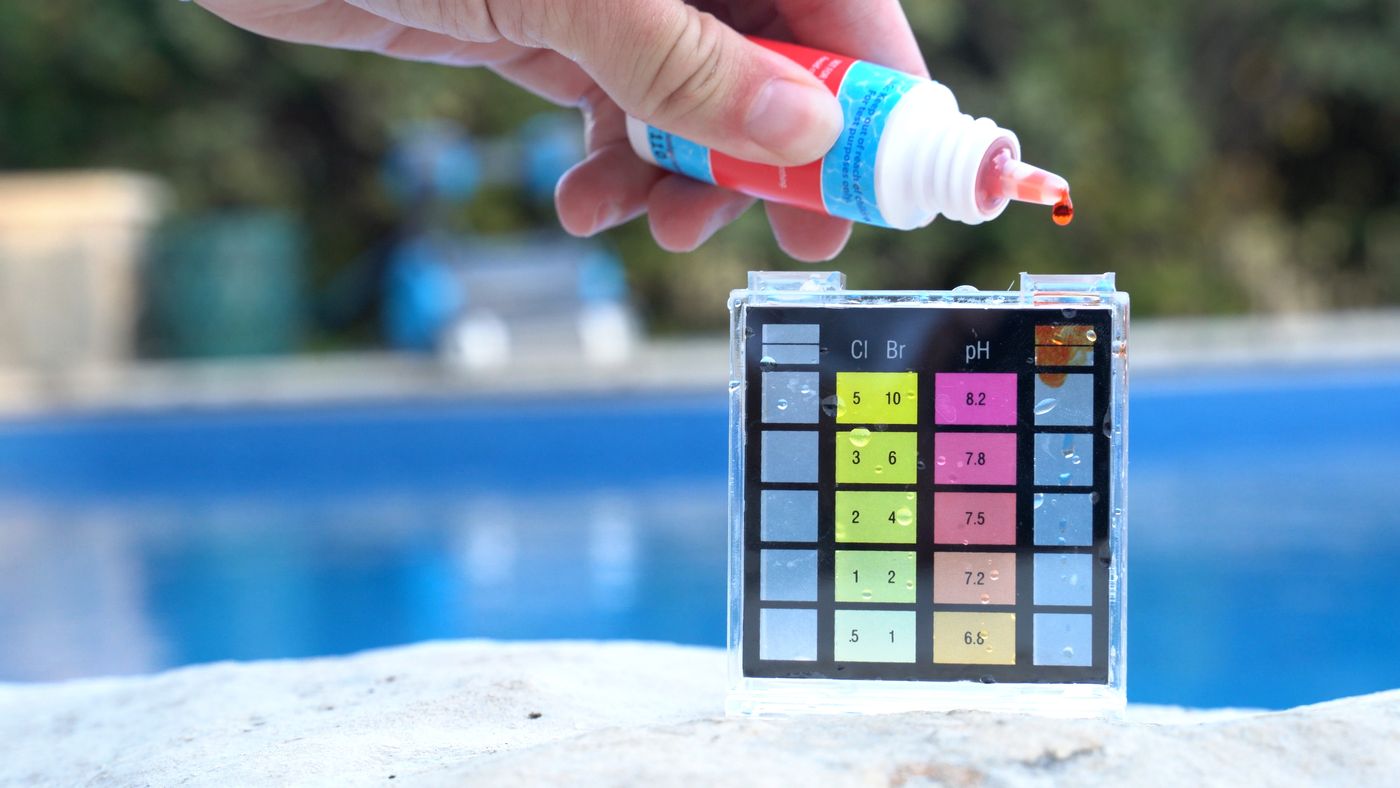
Step 2 — Do the math. Current TA, target TA, pool volume, dosing table above. My sweet spot is 90–100 ppm — comfortably inside the 80–120 range with room to drift.
Step 3 — Broadcast it. With the pump running, sprinkle the powder in wide arcs across the deep end. Baking soda dissolves fast and doesn't generate heat, so no bucket pre-mix is required — just don't dump it in one pile, and never pour it into the skimmer.
Step 4 — Circulate and retest. Give it 4–6 hours of pump time, then test TA again. Repeat doses until you hit target.
Step 5 — Recheck pH the next day. Baking soda usually lifts pH a tenth or two. If it drifted above your zone, a small measured shot of muriatic acid brings it home — and this time, with a healthy buffer behind it, it stays there.
The Money Math
Let's run a season. Say you've got a 15,000-gallon pool and — between acid dosing and a wet spring — you correct TA four times a year at an average of 20 ppm per correction. That's 4.5 pounds each time, 18 pounds per season.
- Pool store alkalinity increaser at roughly $2.50 per pound: about $45 a season.
- Grocery baking soda at roughly $0.60 per pound: about $11 a season.
Same chemical, same result, around $34 back in your pocket — from one product, on one parameter. It's not the biggest line item in pool care. It's the easiest one to win, because there is zero performance trade-off. None.
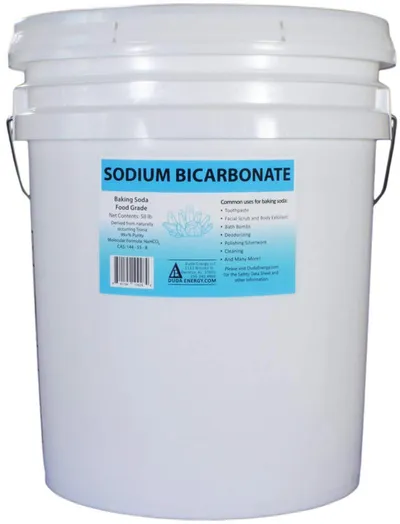
USP Pure Baking Soda (50 lb Bucket)
The Best Cost-Per-Pound Way to Buy Sodium Bicarbonate
And once you start reading the ingredient label on this bucket, you'll start reading it on every bucket. That habit is worth far more than $34 — it's the same habit behind the three chemical swaps that cut my monthly bill from $150 to about $30.
Let's Get Real: What Baking Soda Won't Do
The same corners of the internet that discovered this swap also invented some nonsense around it. Time to clear the deck.
"Baking soda clears green water." Wrong. Algae is a sanitizing failure — your ORP fell and something moved in. Baking soda kills nothing. If your pool is green, you need chlorine doing its job at the right pH, not a buffer adjustment.
"Baking soda is a natural chlorine alternative." No. It has no oxidizing or sanitizing ability whatsoever. Anyone selling that idea is setting you up for a very expensive algae bloom.
"More is better — it keeps the water soft." Push TA past 120 ppm and you've bought a new problem: pH that creeps upward nonstop, cloudy water, and scale forming on surfaces and inside your heater. Then you're buying extra acid to undo your "soft water" project. Hit the range, then stop.
"Pool-grade sodium bicarbonate is purer." Backwards. Food grade is the stricter standard. The baking-aisle bag is at least as pure as anything in the pool aisle.
Plain Baking Soda (100% Sodium Bicarbonate)
Arm & Hammer bulk bags or any store brand with a one-ingredient label: sodium bicarbonate. Buy the biggest bag you can find — it keeps for years in a dry, lidded bucket. Skip anything scented, blended, or "pool enhanced." That's marketing, not chemistry.
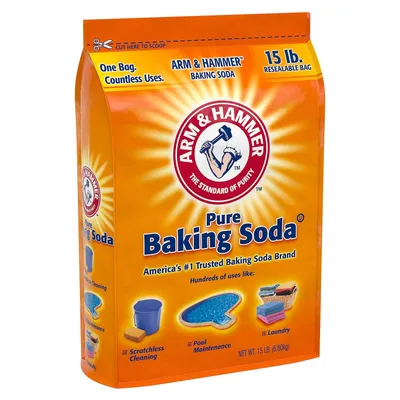
Arm & Hammer Baking Soda (15 lb)
100% Sodium Bicarbonate — Identical to Alkalinity Increaser
Catch TA Drift Before It Costs You
Low TA announces itself through pH behavior long before the water looks any different. If you test weekly with drops, watch for pH readings that swing more than a couple of tenths between tests — that instability is the classic low-TA fingerprint.
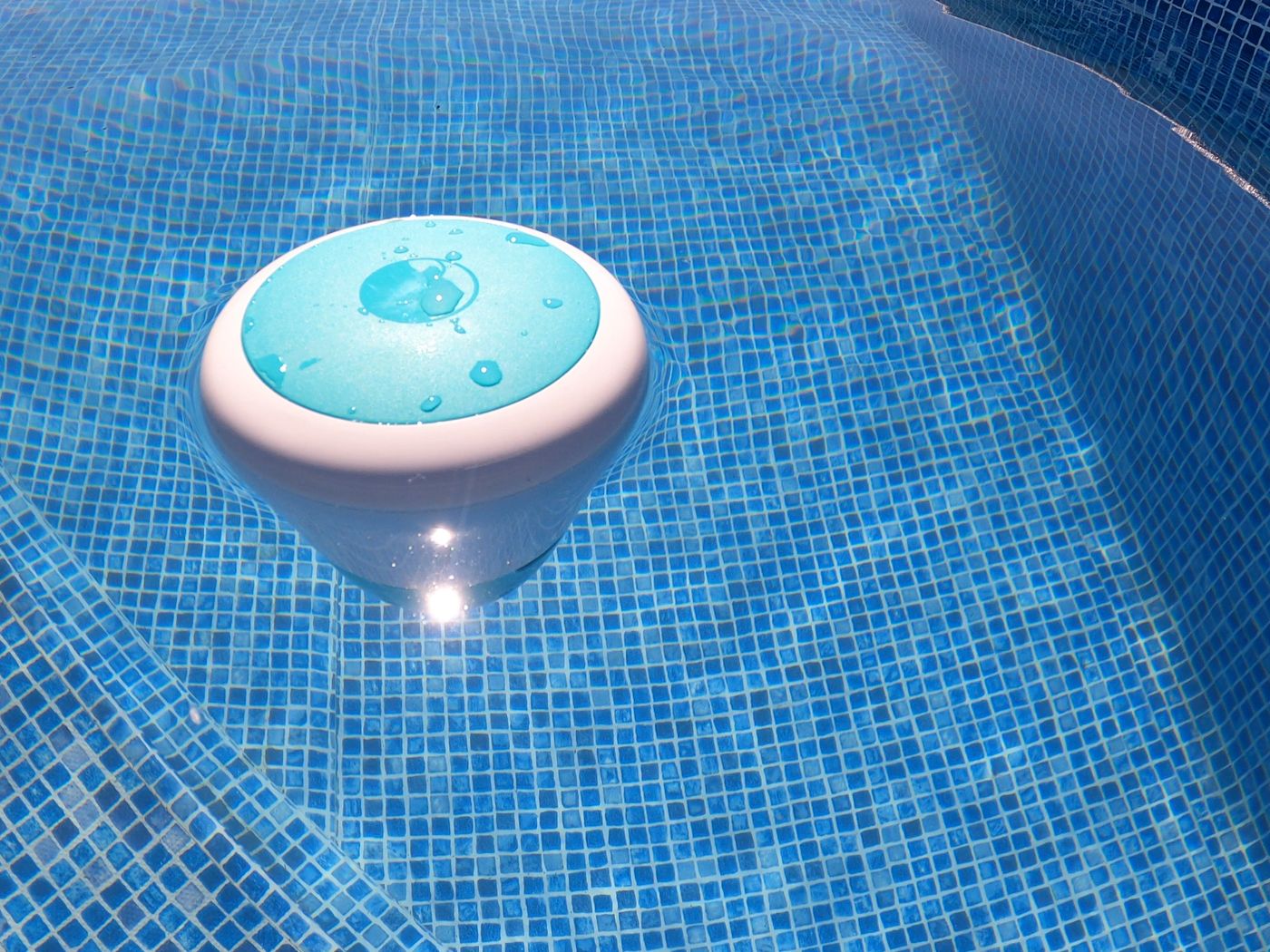
I catch it earlier with the ICO by Ondilo sitting in my pool. It logs pH and ORP every hour, and a low-TA pool draws an unmistakable picture in the app: a jagged pH line with ORP sawing along underneath it. The ICO doesn't measure TA directly — no consumer monitor does — but it flags the instability the moment it starts, and a thirty-second drop test confirms the cause. If you want to see how continuous monitoring works, mysmartpool.com explains ORP and the ICO in plain English.
Frequently Asked Questions
How soon can we swim after adding baking soda?
Once it's fully dissolved and circulated — give it about an hour. It's one of the gentlest things you'll ever put in your water.
Will baking soda raise my pH?
A little. Its main effect is TA. If pH is your true problem, revisit the decision table above — soda ash or Borax may be the right tool instead. My guide on how to raise pool pH covers both.
Can I use it in a saltwater pool?
Yes. Salt pools follow the same TA rules. Keep in mind that salt cells push pH upward on their own, so most salt pool owners fight high pH — but when TA runs low, sodium bicarbonate is still the fix. My saltwater pool maintenance guide covers the full salt-pool routine.
How do I store a 13-pound bag?
Airtight bucket, dry spot, out of the sun. Sodium bicarbonate is shelf-stable for years as long as it stays dry.
My Final Verdict
So what's my final verdict on baking soda in a swimming pool? Baking soda is the rare pool store swap with zero catch. It isn't "almost as good as" alkalinity increaser. It is alkalinity increaser — the same molecule at a food-grade purity standard, priced for pancakes instead of pools.
Keep a big bag on the shelf, hold your TA between 80 and 120 ppm, and your pH stops fighting you. When pH holds steady in the Power Zone, your chlorine stays in its strongest form, your ORP parks at 650–700, and your water stays boring in the best possible way.
The pool store can keep the bucket with the swimmer on it.
Want the gear that makes chemistry hands-off — monitors, robots, UV systems? Head to ThePoolNerd.com/Deals, where I post the best prices I can find on equipment I trust. And if you want to keep nerding out on water chemistry, my full guides on raising pH, lowering pH, and beating algae are waiting for you.
Until then, enjoy that pool — I'll see you next time.
Related Reading
- How To Raise Alkalinity In Your Pool — The full TA guide, with testing and dosing detail
- How To Lower Total Alkalinity — For when you overshoot past 120 ppm
- Pool Chemical Alternatives: 3 Swaps That Save You Money — Baking soda, liquid chlorine, and muriatic acid
- How To Raise pH In Your Pool — Soda ash, Borax, and when to use each
- How To Lower pH In Your Pool — Safe muriatic acid dosing
- Pool Alkalinity Calculator — Exact doses for your pool volume
- ICO Pool Water Monitor Review — The ORP and pH monitor I use
This information is for educational purposes only. Always read manufacturer labels before handling any pool chemical, and use this information at your own risk.


Comments
Loading comments…