
 Justin D.
One bucket costs twenty-five dollars at the pool store. Another bucket costs seven dollars at the hardware store. And chemically? They are the same compound.
Today I'm handing you the three swaps that took my monthly chemical bill from about a hundred and fifty bucks down to around thirty. And stick around, because swap number three is the biggest saver of the bunch — and it's the one the industry most wants you too nervous to try.
Hey there, and welcome back to The Pool Nerd. I'm Justin, your resident pool aficionado, and today we're exposing the biggest markup in backyard pool care: the chemicals themselves.
Pool Chemical Swaps: What You Need Checklist
Three commodity chemicals replace the pool-store buckets—baking soda, liquid chlorine, and muriatic acid—plus one deliberate dose of stabilizer and a real way to test so every swap stays safe.

USP Pure Baking Soda (50 lb bucket)
What it is: Sodium bicarbonate in a large sealed bucket—often labeled USP/food-grade pure bicarbonate.
Why you need it: When you correct TA often or run a big pool, the cost per pound usually beats small retail boxes. Same dosing rules as any pure bicarbonate: add in stages, circulate, and retest.

Baking soda (alkalinity increaser)
What it is: Sodium bicarbonate—the same compound as pool-store “alkalinity increaser.” Arm & Hammer 15 lb is a practical mid-size bag; USP pure 50 lb bucket is the usual pick when you want the lowest $/lb; grocery or pool-store bags work if the label is plain bicarbonate.
Why you need it: It raises total alkalinity with a gentler pH bump than soda ash. Do not use soda ash here if you only need TA up.
Swap #2 — liquid chlorine, multipack shipped Champion Pool Shock (4 Pack Liquid Chlorine)

Champion Pool Shock (4 Pack)
What it is: A case of liquid pool chlorine (sodium hypochlorite)—not cal-hypo granules. Confirm strength on the listing and jug label (often around 10–12.5%).
Why you need it: Same upside as other liquid shock: no CYA from the product, easy to pour with the pump running—useful to keep stocked for openings, algae pushes, storms, or parties.
How to use: Treat it like any liquid shock (pour with circulation; big doses still work best at dusk). Store cool and shaded; opened jugs lose strength over time—plan to use them within a few weeks.

Champion Muriatic Acid
What it is: Dilute hydrochloric acid—standard for lowering pH and, with the right method, total alkalinity.
Why you need it: High pH destroys chlorine efficiency. Always follow the label; never mix acid with chlorine.

Pool Mate 7 lb Cyanuric Acid Stabilizer
What it is: Granular CYA (chlorine stabilizer)—protects free chlorine from sunlight.
Why you need it: New fills, heavy rain dilution, or unstabilized liquid programs often land below ~30–50 ppm CYA; without it, the sun burns chlorine fast. Add slowly per label (skimmer or predissolve) and retest after circulation.

In The Swim Calcium Chloride (hardness increaser)
What it is: Calcium chloride—raises calcium hardness (CH) without messing with CYA the way some other products can.
Why you need it: Plaster and equipment are happier when CH sits in range; very soft fill water, new plaster, or winter dilution often needs a bump. Test CH before you dose.

Taylor K-2005 Test Kit
What it is: A professional drop (titration) kit for chlorine, pH, alkalinity, calcium hardness, and cyanuric acid.
Why you need it: You can’t SLAM or balance blind—especially CYA, which handcuffs chlorine. This kit gives numbers you can trust, not strip guesswork.

Ondilo ICO Pool Water Monitor
What it is: A floating smart monitor that samples pH, ORP (sanitizer effectiveness), and temperature on a schedule and sends trends to your phone.
Why you need it: You still need a real drop kit for parameters the ICO doesn’t replace (like TA and CYA), but hourly ORP/pH catches drift and dosing mistakes long before weekly strip checks do.
Read the full ICO review — Shop ICO direct (no Amazon listing for the hardware we run).
The Pool Store Markup Machine
Here's the thing about that free water test at the pool store — it isn't free. It's a sales funnel. You walk in with a water sample. They hand you a printout with four numbers flagged in red. And you walk out with a hundred and eighty dollars of buckets wearing proprietary names like "Balance Boost" and "pH Reducer Plus."
Peel off the label, and most of those buckets are commodity compounds you can buy at the grocery store, the hardware store, or a warehouse club — for a fraction of the price. It's the same trap I break down in how I cut my pool costs by over 70%: the business model depends on you coming back.
So here's the plan. We're covering three simple swaps, two chemicals you should absolutely never swap out, and the one rule at the end that makes all of this safe. Skip that rule, and these swaps can actually bite you — so make sure to read to the end.
Here's the cheat sheet up front:
| Pool Store Bucket | What It Actually Is | Pool Store Price | The Swap |
|---|---|---|---|
| "Alkalinity Increaser" | Sodium bicarbonate | ~$4/lb | Baking soda, ~$1/lb |
| Trichlor tablets | Chlorine + cyanuric acid | Stacks CYA forever | Liquid chlorine (sodium hypochlorite) |
| "pH Decreaser" (dry acid) | Sodium bisulfate | ~$20/bag | Muriatic acid, $8–10/gal |
Swap #1: Baking Soda Instead of Alkalinity Increaser
Let's start with the easiest money you'll ever save.
Flip over a bucket of "Alkalinity Increaser" and read the label: one hundred percent sodium hydrogen carbonate. Sodium hydrogen carbonate is sodium bicarbonate. Baking soda. The stuff in the orange Arm & Hammer box.
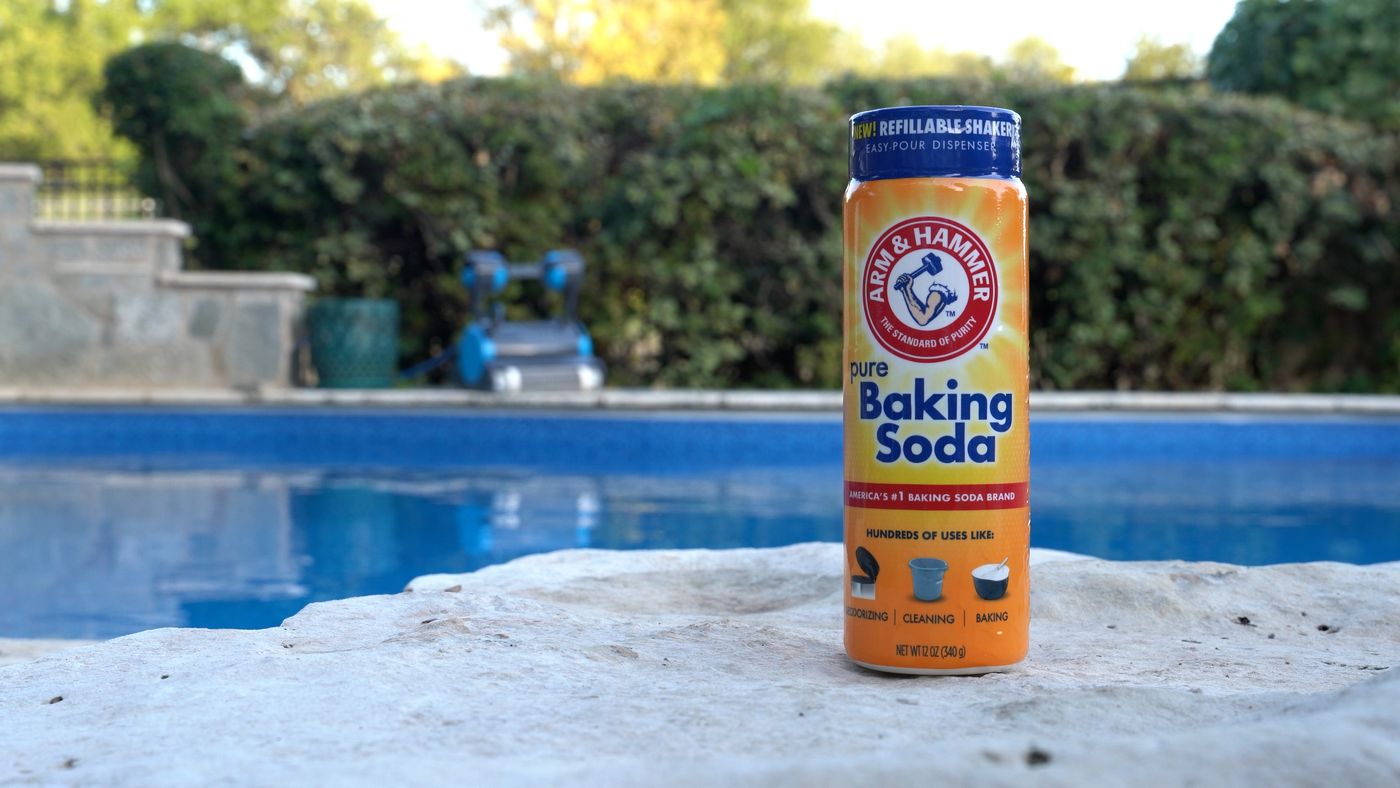
The pool-store version runs about four dollars a pound. The warehouse-club bag runs about a dollar a pound. Same compound. One label. Four times the price.
Dosing is simple: one and a half pounds of baking soda per 10,000 gallons raises total alkalinity by roughly 10 ppm, and I keep alkalinity between 80 and 120 ppm. Broadcast it across the deep end with the pump running, let it circulate for a few hours, and retest. Done. If your alkalinity needs work, my full guide on how to raise pool alkalinity walks through it step by step, and my pool chemistry calculator gives you the exact dose for your pool.
The molecule does not know which store it came from. Sodium bicarbonate is a fixed chemical structure — it behaves the same whether the package says "pool" or "baking."
The Baking Soda Swap
- Compound: 100% sodium bicarbonate — identical to "Alkalinity Increaser."
- Dose: 1.5 lb per 10,000 gallons ≈ +10 ppm total alkalinity.
- Target: 80–120 ppm TA.
- Buy: the biggest plain bag you can find — no scents, no additives, no "pool" label tax.
Swap #2: Liquid Chlorine Instead of Tablets
Now the big one: chlorine.
If you've been around this channel, you know where I stand — liquid chlorine and muriatic acid are the only two chemicals most pools ever need. Liquid pool chlorine is sodium hypochlorite dissolved in water, usually 10 to 12.5 percent strength. Plain household bleach? Also sodium hypochlorite dissolved in water, usually 6 to 8.25 percent.
Same molecule. Different concentration. Very different price.
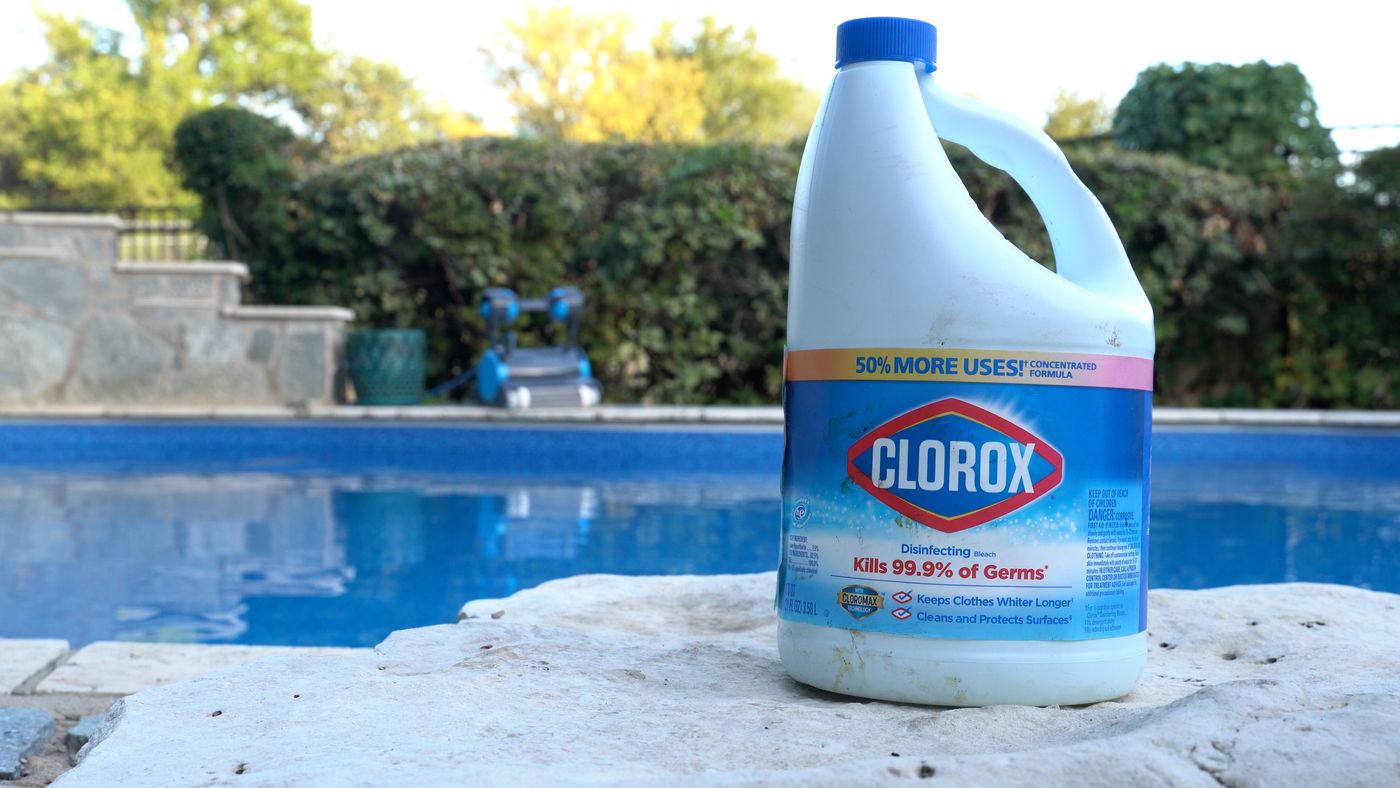
Two rules before anyone touches a bleach jug:
- Rule one: plain and unscented only. No splashless, no scents, no gel formulas. Those additives — thickeners, surfactants, fragrance — do nothing for sanitizing and plenty for clouding your water and gunking up your filter.
- Rule two: do the strength math. Six percent bleach is roughly half the strength of 12.5% pool chlorine, so you'll pour about twice the volume for the same free chlorine. Compare cost per gallon at equal strength.
The Trichlor Tablet Trap
Now — let's get real about the elephant in the pool aisle: those three-inch trichlor tablets.
Tablets get marketed as the convenient option. But you need to use them very carefully. Tabs are the fast food of pool care.
Trichlor is chlorine chemically welded to cyanuric acid — stabilizer. For every 10 ppm of chlorine your tablets add, they drag roughly 6 ppm of cyanuric acid in with them. The chlorine gets used up. The cyanuric acid does not. It stacks, week after week, and as it climbs, it smothers your sanitizer — that's the chlorine lock spiral.
My rule is the 7.5% ratio: free chlorine needs to sit at or above 7.5% of your CYA number. At 50 ppm of stabilizer, that's about 3.75 ppm of chlorine minimum, just to stay sanitary.
Let tablets run the show for a season and your CYA hits triple digits. Your chlorine can't keep up. The water turns. And you march right back to the store. Here's the kicker: the store then sells you shock to fix the problem their tablets created. That's not a maintenance plan. That's a subscription. If you're still running pucks, at least read how many chlorine tabs you actually need first.
And if hauling and pouring liquid chlorine every day sounds like a chore, you don't have to go back to tablets. Look into a liquid chlorine injector — you can find my top picks in my guide to the best chlorine injection systems.
Swap #3: Muriatic Acid Instead of pH Decreaser
Swap three is the money swap — and the one everybody tiptoes around.
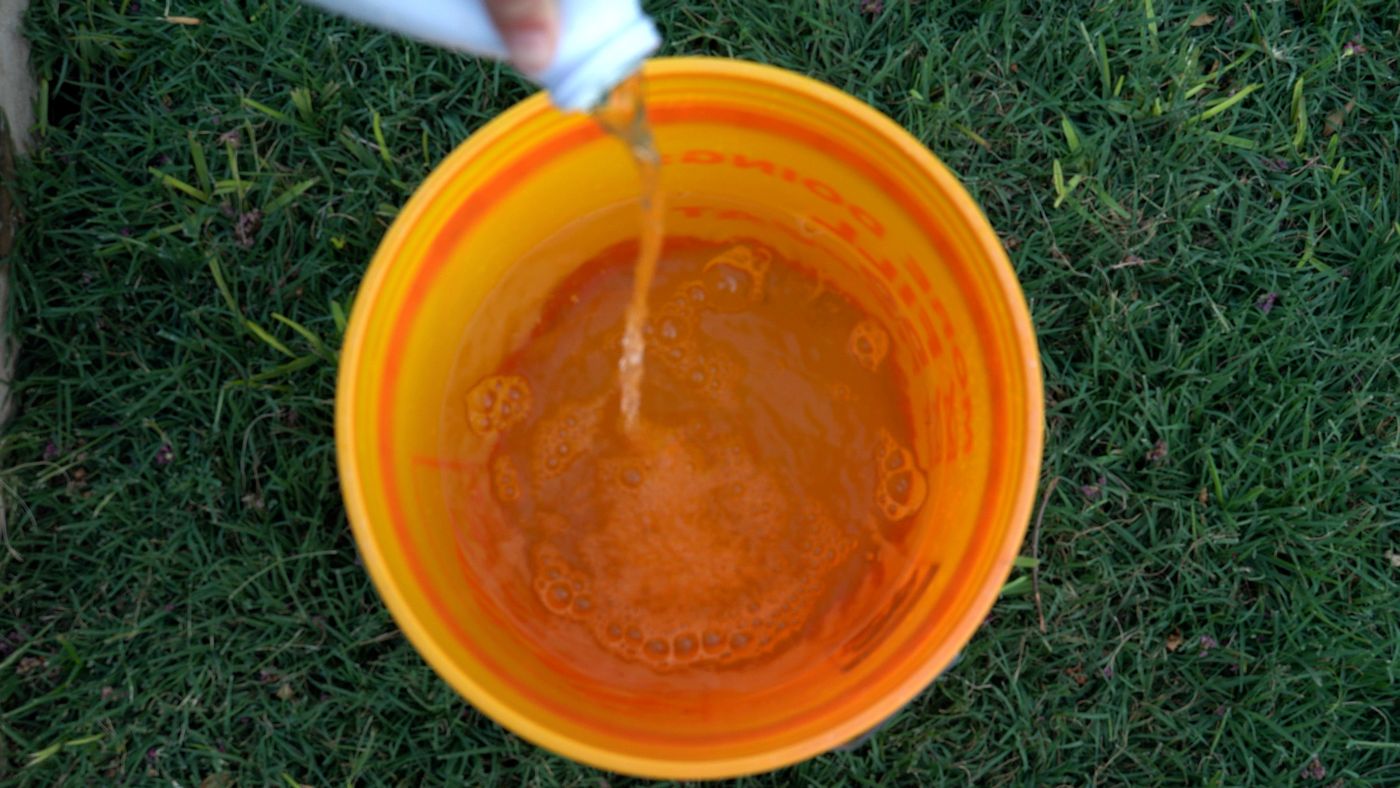
The pool store sells "pH Decreaser": a twenty-dollar bag of dry acid, sodium bisulfate. The hardware store sells muriatic acid — diluted hydrochloric acid — for eight to ten dollars a gallon, and it works faster.
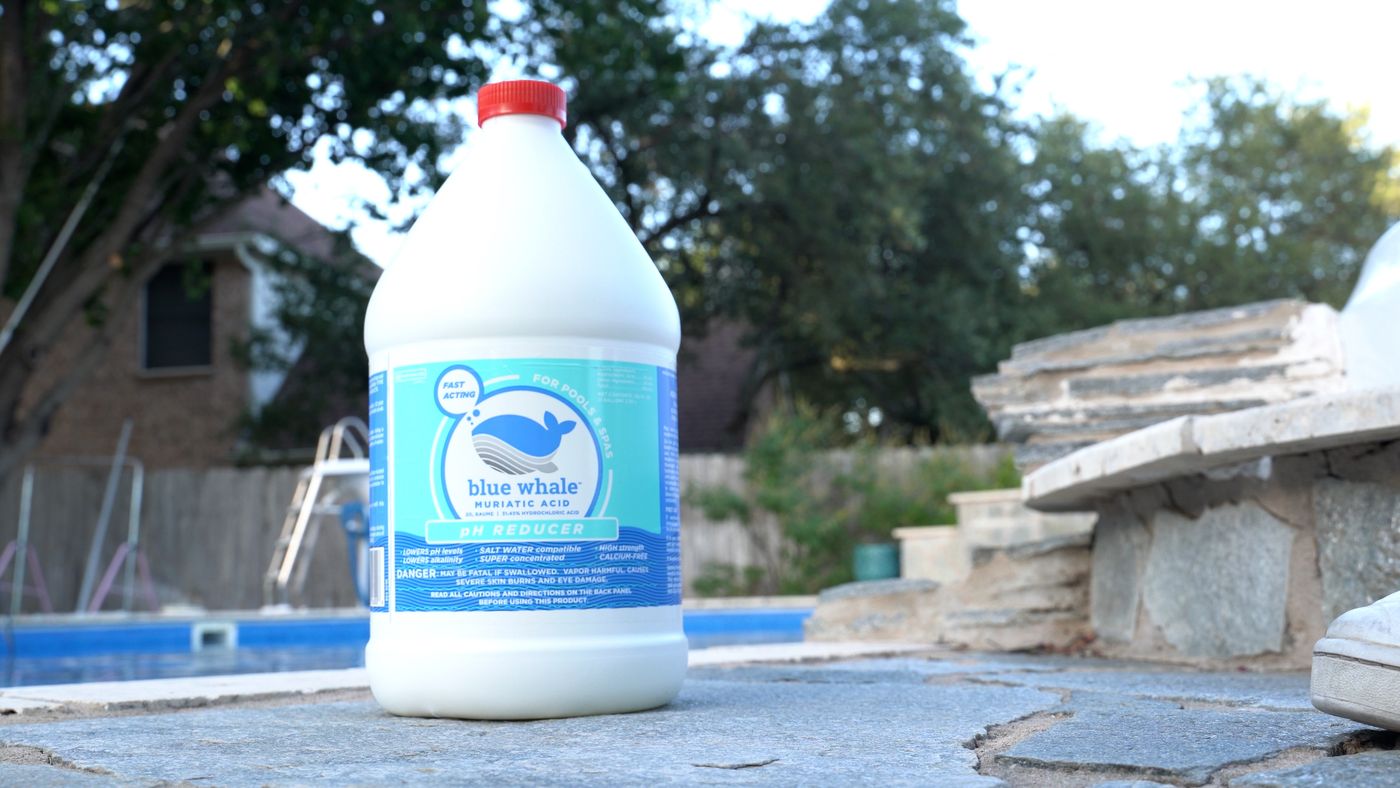
Dry acid also leaves sulfates behind, and sulfates never leave your water except when you drain it. Muriatic acid does the job clean.
And pH is not some nerd detail. It's the master dial for every dollar you spend on chlorine. At a pH of 7.2, roughly 65% of your chlorine exists as hypochlorous acid — the form that kills things. Let pH drift up to 8.0, and that drops to around 20%. Same chlorine bill. A third of the killing power.
That's why my order of operations never changes: correct pH first, then dose chlorine. My targets: 7.0–7.2 for vinyl and fiberglass, 7.2–7.4 for gunite. My full guide on how to lower pool pH covers the dosing in detail.
Muriatic Acid Safety Checklist
Now, the part I will emphasize: safety. Muriatic acid is serious business, and it demands respect.
Remember A and W, like the root beer — Acid into Water, always, never the reverse. Gloves, goggles, stand upwind. And never, ever let acid and chlorine meet — not in a bucket, not in a shed, not in the same corner of the pool. If you're dosing both on the same day, acid goes first, the pool circulates for 30 to 60 minutes, then chlorine comes second.
Screenshot this checklist:
Muriatic Acid Handling — Non-Negotiable
- Chemical-resistant gloves + sealed goggles, every time. Work outdoors, stand upwind of the fumes.
- A&W Rule: ALWAYS add Acid to Water — never water to acid. The reverse can splash violently.
- Pour slowly in front of a running return jet. Never pre-mix in metal containers.
- NEVER let acid and chlorine meet — the resulting gas is toxic. Same-day dosing: acid first, circulate 30–60 minutes, then chlorine.
- Store acid in a ventilated space, away from chlorine, off bare concrete.
- Skin contact: rinse 15+ minutes with fresh water.
What You Should Still Buy
So what should you still buy at a pool store — or at least, buy as an actual pool chemical? Two things, and these are the ones you should never try to swap.
First: cyanuric acid itself — stabilizer. Your chlorine needs sunscreen, or the sun burns it off by lunchtime. The right way to get it is one deliberate dose to 30–50 ppm at the start of the season. Buy it once, online, in a bag — and never let tablets drip-feed it into your pool uninvited. My guide on how to raise CYA covers the right way to dose it.
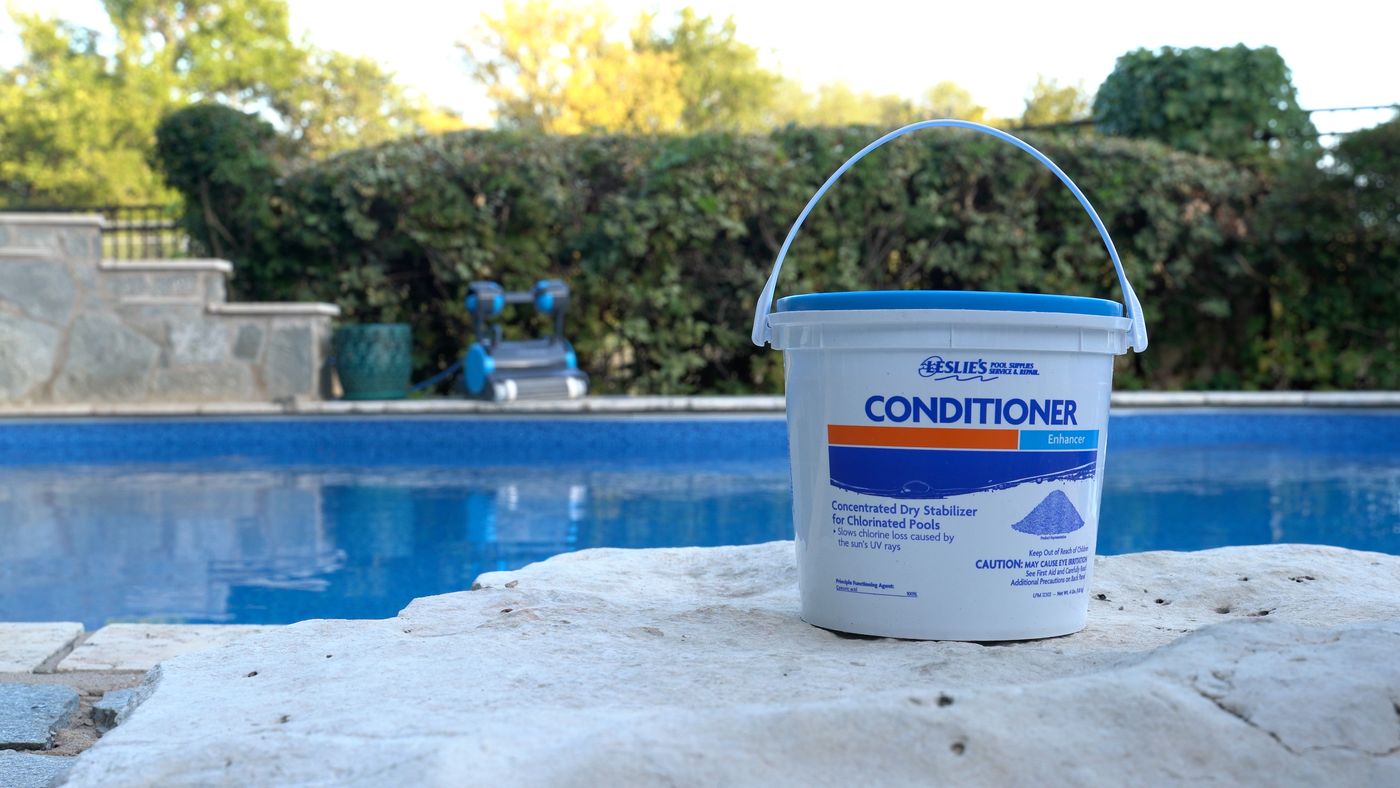
Second: calcium hardness increaser, if you've got a gunite or plaster pool. Soft water is hungry water, and it will pull calcium straight out of your finish.
Stack the Savings: The Three Multipliers
Want to shrink your pool bill even further? These are three things you should have as a pool owner that make owning a pool easier and reduce the amount of chemicals you need in the first place.
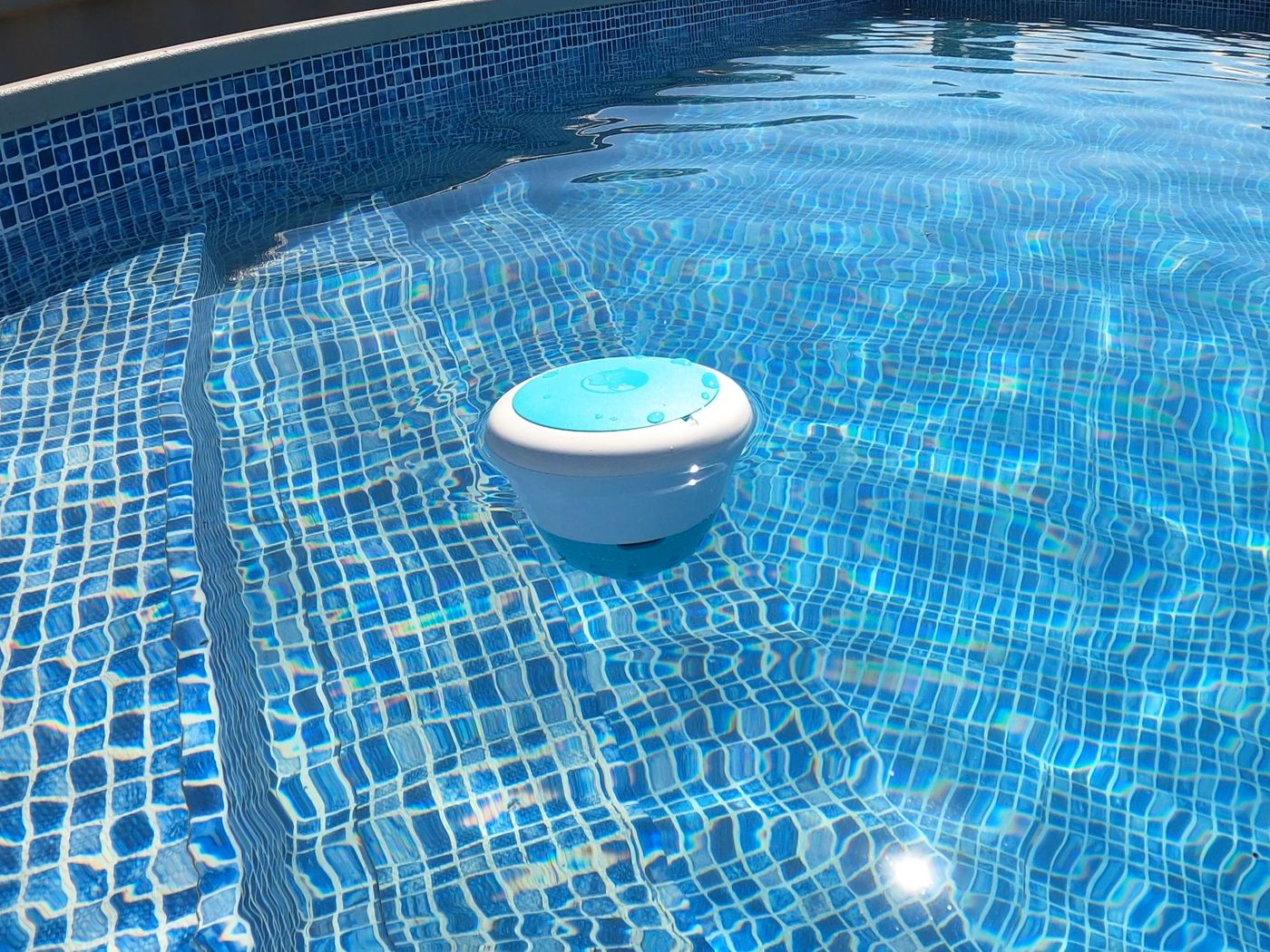
First: a pool water monitor. If you don't have one already, get one — especially if you maintain your pool yourself. I use the Ondilo ICO, which sits in the water 24/7 measuring ORP, pH, and temperature and sends it all to my phone. You can check my top picks in my guide to the best pool water monitors, where I keep an updated list of all the ones I've tested.
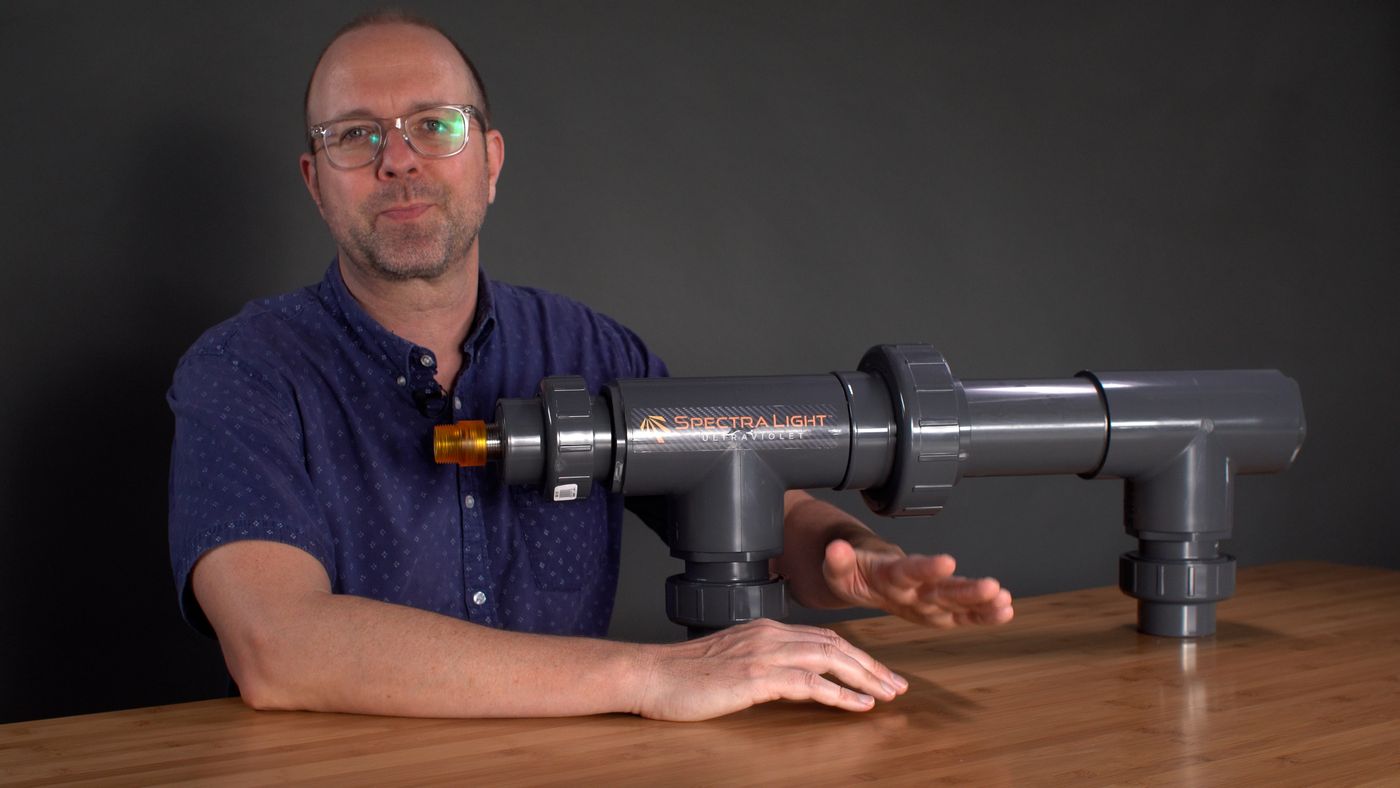
Second: ultraviolet. I run the SpectraLight UV system on our pool. The water passes through a UV chamber that neutralizes chloramines and the chlorine-resistant nasties, so your chlorine spends its life sanitizing instead of firefighting. In my testing, my chlorine demand dropped noticeably after the install.
Lastly — and almost nobody connects this one to their chemical bill — debris. Most pools don't have a chlorine problem. They have an organic load problem. Every leaf and every bug in that water is chlorine food. My robot pulls the organics out daily, before they burn through sanitizer. You can check out all my top picks like the Dolphin Escape, Clear UV, Dolphin Premier and more in my best robotic pool cleaners guide.

Clean water is cheap water.
The One Rule That Makes This Safe
And now, the rule that makes every one of these swaps safe: you cannot dose what you do not measure.
Throw the paper test strips in the trash — they're mood rings. You want a proper liquid reagent drop kit — the Taylor K-2006 is the gold standard around here, or the K-2006 Salt for salt pools — a quality digital tester, or the ICO watching around the clock.
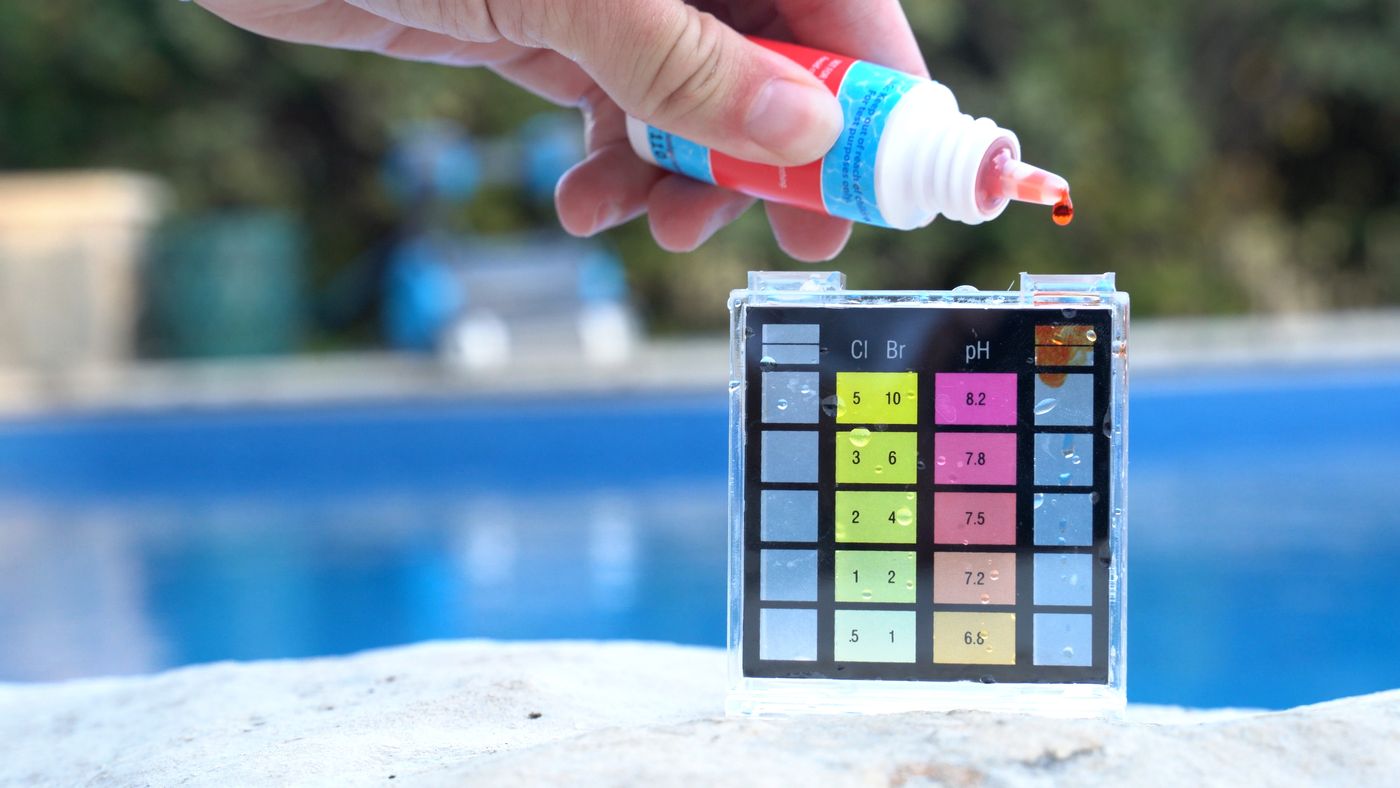
When you know your numbers, generic chemicals are just chemistry. When you're guessing, even the expensive buckets won't save you.
Nerd Numbers Cheat Sheet
Here's the on-screen card — screenshot this one too:
Nerd Numbers
- ORP: 650–700 mV (700+ ideal).
- Free chlorine: ≥ 7.5% of CYA (e.g., 50 ppm CYA → 3.75 ppm FC minimum).
- pH: 7.0–7.2 vinyl/fiberglass · 7.2–7.4 gunite.
- Total alkalinity: 80–120 ppm.
- CYA: 30–50 ppm, dosed once deliberately — never via tablets.
Frequently Asked Questions
Is baking soda really the same as alkalinity increaser?
Yes — chemically identical. Both are 100% sodium bicarbonate. Check the pool-store label yourself: "sodium hydrogen carbonate" is just another name for the same compound. The only differences are the label and the price per pound.
Can I really use household bleach in my pool?
Yes, as long as it's plain and unscented — sodium hypochlorite and water, nothing else. No splashless, no fragrance, no gel. Remember it's roughly half the strength of pool-grade liquid chlorine, so you'll pour about twice the volume and should compare cost at equal strength.
Is muriatic acid safe for a regular pool owner to use?
Yes — with respect. Gloves, sealed goggles, stand upwind, always add acid to water, and never let acid and chlorine meet. Follow the safety checklist above and it's a routine part of pool care. It's cheaper and faster than dry acid, and it doesn't leave sulfates behind.
What chemicals should I never swap?
Cyanuric acid (stabilizer) and calcium hardness increaser. Buy real stabilizer and dose it once, deliberately, to 30–50 ppm — and if you have a gunite or plaster pool, keep your calcium in range so the water doesn't eat your finish.
Final Verdict
So what's my final verdict? Follow these simple rules and you're on the right path to a cleaner, healthier, and more affordable pool.
My test pool was burning about $150 a month on labeled buckets. These three swaps run the same water for around $30. That's $120 a month back in your pocket — call it $1,400 a year, north of $7,000 across five seasons — and that's before a UV system trims your chlorine demand even further.
Stop paying for labels. Start managing water like the nerd you are.
If you've been running any of these swaps, drop your numbers in the comments over on the video — we love to hear other helpful tips from pool owners. And if you wanna keep nerding out over your pool, head on over to my deals page, where I post the best deals on the ICO, the SpectraLight, dosing pumps, robots, and the rest of the gear I trust. Until then — enjoy that pool, and I'll see you in the next one.


Comments
Loading comments…