
 Justin D.
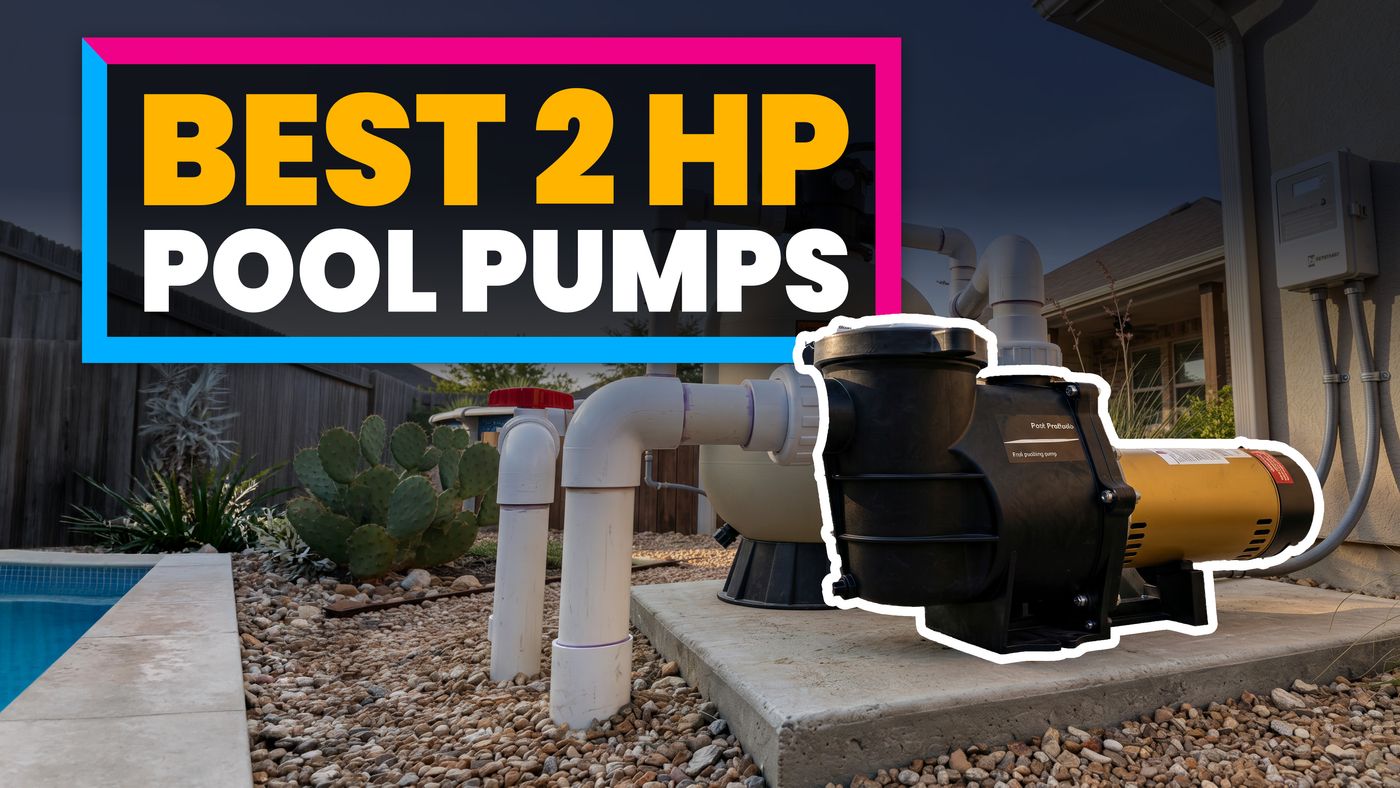
It's tempting to replace a worn-out 2 HP pool pump with the same horsepower and call it done. I'd pause long enough to check how the old one spent its day. If it ran at full speed for hours just to keep water moving through the filter, this replacement is a chance to improve that routine.
Welcome to The Pool Nerd! I'm looking at the 2 HP pumps I'd consider and the variable-speed alternatives that could fit an existing inground pool. Some of those alternatives have a slightly different total horsepower rating, so I'll explain where the comparison makes sense.
For an exact 2 HP option on a compatible 115V setup, I'd start with the Aquastrong PSP200ADT two-speed pump with timer. My first variable-speed comparison is the Hayward TriStar VS 1.85 THP, while the Pentair SuperFlo SF-N2-2A deserves a look for a matching two-speed SuperFlo installation.
We'll work through the tradeoffs so you can choose a pump that handles the demanding jobs and runs sensibly during everyday filtration.
If the pool turns out to need less or more than this, the neighboring guides cover the best 1.5 HP and best 2.5 HP pool pumps.
My Top 2 HP Pool Pump Picks
My Top 2 HP Pool Pump Picks


- Best Overall Exact 2 HP Pump for 115V. Aquastrong PSP200ADT, with two speeds and a built-in timer.
- Best Pentair 2 HP Two-Speed Replacement. SuperFlo SF-N2-2A, part 340044, for a compatible existing installation.
- Best Hayward Variable-Speed Alternative. TriStar VS W3SP3202VSP, rated at 1.85 THP.
- Best Jandy Variable-Speed Alternative. VS FloPro VSFHP185DV2AS, rated at 1.85 THP with SpeedSet.
- Best Hayward Super Pump Upgrade. Super Pump VS 620 W3VSP26620, rated at 2.25 THP.
- Best Dual-Voltage Single-Speed Comparison. VIVOHOME 2 HP, with the Oswerpon 2 HP worth checking alongside it.
For a new inground purchase, I'd spend extra time comparing the variable-speed alternatives. Their flexibility can make a bigger difference to everyday ownership than getting an exact "2" on the motor label.
Aquastrong PSP200ADT Two-Speed with Timer: Best Overall 2 HP Pool Pump for a 115V Setup
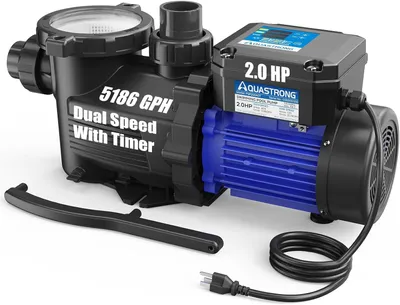
This is the Aquastrong I'd choose when I want an exact 2 HP listing, two operating speeds and a timer without building a separate control system around the pump.
The daily routine is where that package makes sense. If low speed keeps the skimmer working and supplies enough flow for the equipment you're using, it can handle the regular filtration period. High speed is available for a more demanding job such as vacuuming.
Aquastrong advertises 5,186 GPH on high and 2,578 GPH on low. Treat those as manufacturer figures to investigate alongside the pump curve. The delivered flow through your filter depends on the resistance of the whole system.
I like the convenience of the timer, particularly on a pool where the old routine involved walking outside to start the pump. Check exactly how its timer and speed selection work before buying so the controls support the schedule you want.
The main compromise is having only two speeds. If low falls below the heater's minimum flow, you may need high whenever you heat the pool. A variable-speed model can give you a setting in between.
Pros: Two speeds, a timer and 115V operation in one package. A practical choice for a compatible pool with straightforward controls.
Cons: Limited adjustment between high and low. The exact model number matters because Aquastrong also sells fixed-speed 2 HP pumps.
Who I'd buy it for: Someone replacing a basic 115V pump who wants automatic daily operation and a useful lower setting.
Check the Aquastrong 2 HP two-speed pump with timer price.
Aquastrong PSP200ADT specifications
It also features in my best two-speed pool pumps guide alongside the other high-and-low models.
Pentair SuperFlo SF-N2-2A: Best Pentair 2 HP Pool Pump for a Two-Speed Retrofit
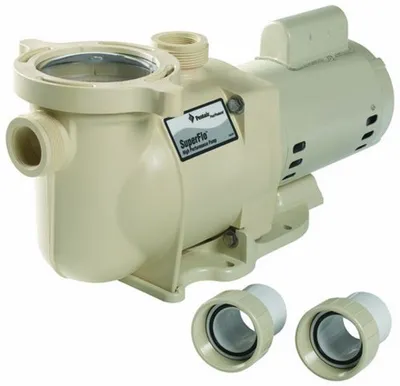
If your existing SuperFlo has served the pool well, replacing it with a familiar configuration can have an obvious appeal. The SF-N2-2A is part 340044, a 230V, two-speed model listed at 2 rated HP.
Pentair's original specification table gives it a 1.10 service factor, bringing the service-factor horsepower to 2.20. That's an example of why two listings can use different horsepower figures for the same motor. It's worth comparing total horsepower and the performance curves when you shop.
I'd consider this model for an existing two-speed SuperFlo installation where the connections and switching arrangement already make sense. The listed 1½-inch ports also help identify whether it matches the plumbing you have.
This is a legacy model, so the value depends heavily on the actual offer. Confirm that the pump is available, identify the included switch, and get the applicable warranty terms in writing. A low advertised price carries little weight if the supplier can't deliver the exact configuration.
Pros: A specific Pentair 2 HP two-speed option with published model, electrical and port information.
Cons: Two fixed settings offer less control than a variable-speed replacement. Remaining inventory and support deserve attention.
Who I'd buy it for: An owner matching a known SuperFlo setup when the installation savings make the total purchase attractive.
Check the Pentair SF-N2-2A 2 HP pump listing.
Pentair SuperFlo model table and specifications
Pentair's current variable-speed models are in my best Pentair pool pumps guide.
Hayward TriStar VS W3SP3202VSP: Best Hayward Alternative to an Older 2 HP Pump
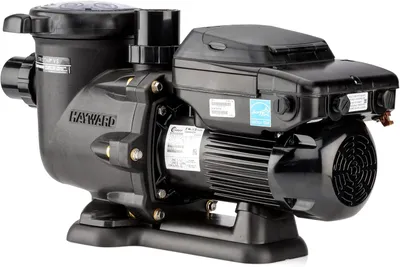
For an inground pool that filters for long hours, the TriStar VS is the first upgrade I'd compare with another two-speed or single-speed pump. Hayward rates this model family at 1.85 THP.
The appeal is being able to choose a speed for each job. Daily filtration can have one setting, a suction cleaner another, and heating its own operating window. That helps avoid spending the whole day at the speed needed for one short task.
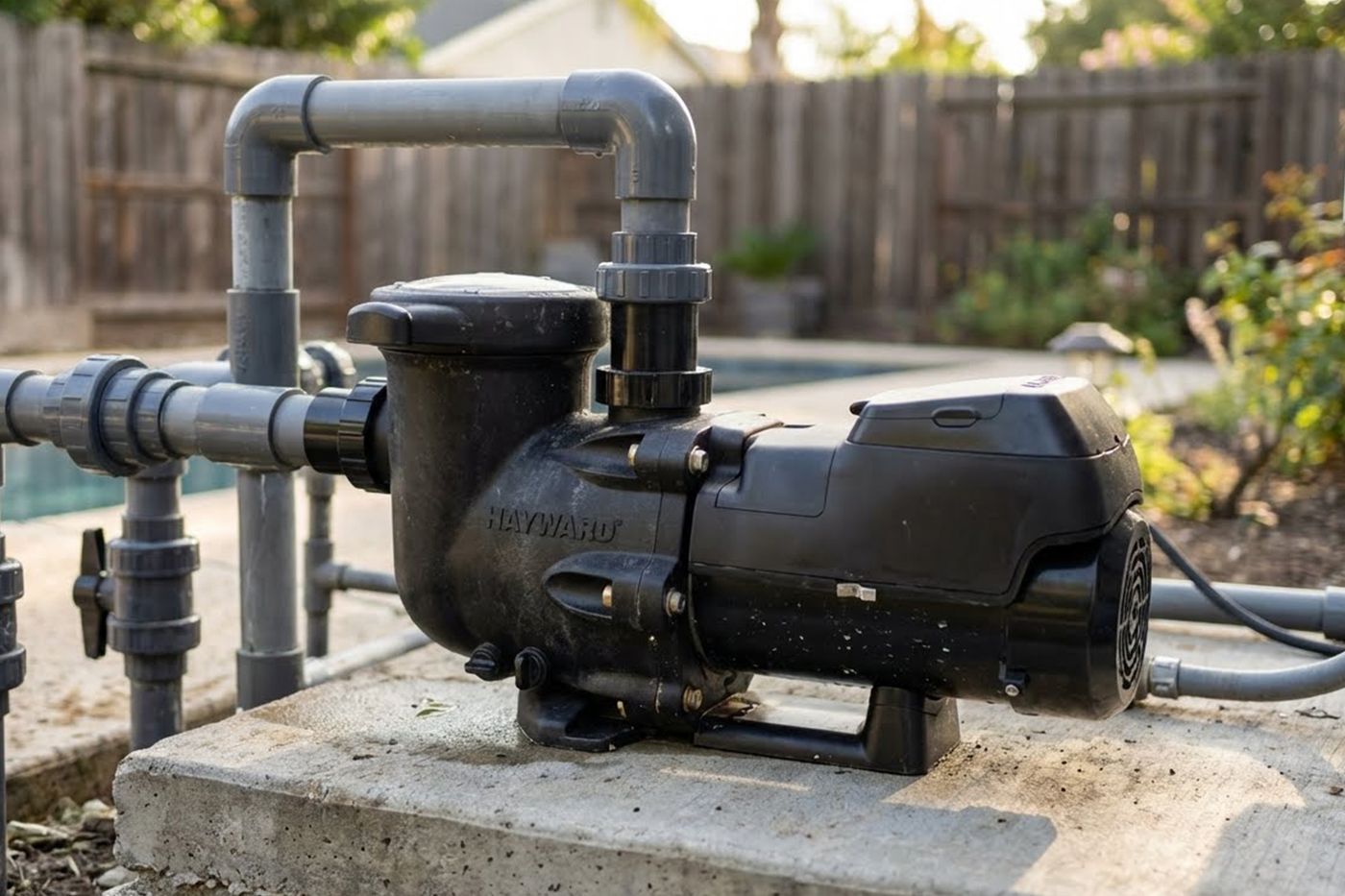
Here's where the old pump matters. If it has more capacity than the pool needs, a smaller total horsepower number may still provide every required operating point. If it is already struggling to supply a demanding spa, the new curve needs close attention.
Have the installer compare the TriStar's performance at your supply voltage with the flow needed by the equipment. The pump curve settles the sizing question far better than comparing the "2 HP" sticker on the old motor.
Pros: Adjustable speeds and scheduling flexibility for an inground pool with several different operating needs.
Cons: The exact voltage and hydraulic conditions affect available output. A lower purchase price alone wouldn't justify choosing a pump that misses a required flow.
Check the Hayward TriStar VS 1.85 THP price.
Hayward TriStar performance curves
Jandy VS FloPro VSFHP185DV2AS: Best Jandy Alternative for an AquaLink Pool
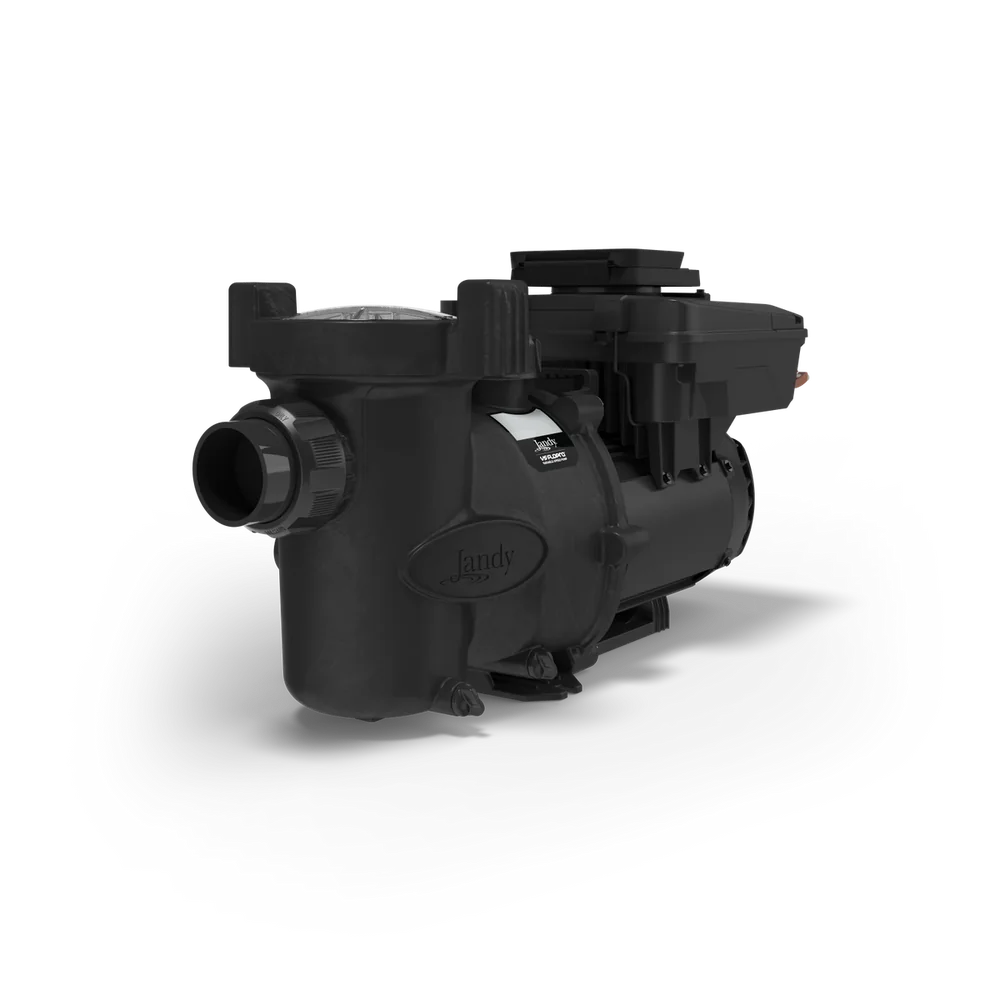
Already have AquaLink? The 1.85 THP VS FloPro is a strong reason to keep the replacement within the Jandy system.
Jandy specifies equal hydraulic performance at 115V and 208–230V for this model. That makes it especially interesting on a 115V pad, where some larger variable-speed pumps have reduced upper output.
The S suffix means the pump includes SpeedSet. You get local control at the pad, and the model is compatible with Jandy automation. The two auxiliary relays can also be useful on a simpler equipment setup, depending on how the installer configures the system.
I'd focus on how you'll operate the pool afterward. If AquaLink already handles the heater, lights and filtration schedule, maintaining that familiar routine is worth considering alongside the pump price.
Pros: SpeedSet on the S model, Jandy automation compatibility and equal performance across its supported voltages.
Cons: It's a 1.85 THP alternative. Jandy excludes online equipment purchases from its manufacturer warranty, so include the seller and installation channel in the decision.
View the Jandy VS FloPro listing.
Jandy FloPro performance and controller specifications
My best Jandy pool pumps guide compares it with the larger 2.7 THP FloPro.
Hayward Super Pump VS 620 W3VSP26620: Best Hayward Upgrade for an Existing Super Pump
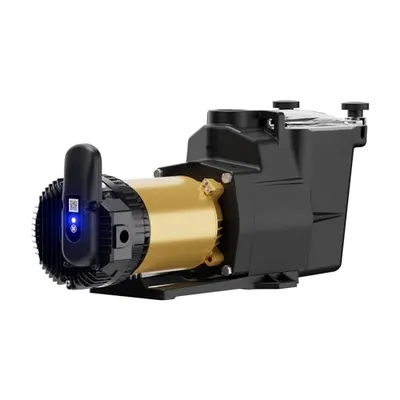
If your old pump is a Super Pump, I'd compare the 2.25 THP VS 620 with the TriStar before agreeing to extensive plumbing changes.
The footprint is part of the attraction, but the controls are worth examining too. Hayward's OmniX system provides local Bluetooth control. Access from away from home requires the separately sold gateway.
That distinction is easy to miss in a product listing. If all you want is to adjust the pump while standing at the equipment pad, local control may cover the job. If you want to change the schedule while you're traveling, price the complete remote-access setup.
Hayward publishes separate 115V and 230V curves for the 620. Use the correct one when checking whether it can run the heater, cleaner and any features you expect.
Pros: Variable-speed operation in the Super Pump family and useful local phone control.
Cons: The gateway adds cost for remote access, and upper performance depends on voltage.
Check the Hayward Super Pump VS 620 price.
Hayward VS 620 curves and OmniX features
Every Super Pump and TriStar I'd consider is in my best Hayward pool pumps guide.
Best 2 HP Single-Speed Pumps to Compare
VIVOHOME 2 HP Dual Voltage
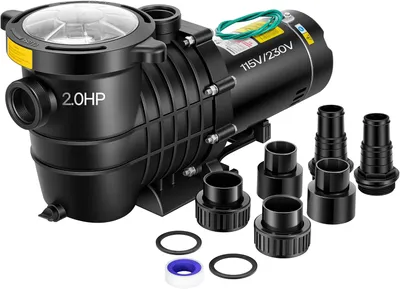
The VIVOHOME is the single-speed model I'd compare first when you need a straightforward replacement and the initial budget is tight. Its listing offers 115/230V and an advertised 6,800 GPH.
The clear strainer lid and removable basket are useful everyday features. Included connection options can also save you from chasing down one more fitting during installation.
The running cost deserves equal attention. A single-speed motor provides the same setting through the whole filtration period. If you need many hours of circulation or chlorination, compare the cost of those hours with a slower programmed setting on a variable-speed pump.
Pros: Dual-voltage flexibility, accessible strainer and a simple operating setup.
Cons: One operating speed. The advertised flow figure needs to be checked against actual system resistance.
Check the VIVOHOME 2 HP pump price.
VIVOHOME product specifications
Aquastrong PSP200-HV and Riptide 2 HP
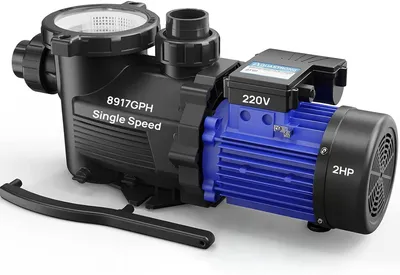
Aquastrong gives you two single-speed options worth comparing here. The PSP200-HV is a 220V model advertising 8,917 GPH. The Riptide 2 HP listing is also 220V and advertises up to 8,586 GPH.
Those numbers are eye-catching, but the amount of water your filter can accept matters more. I'd want the performance curve and a confirmed installation match before choosing either for a small filter or narrow plumbing.
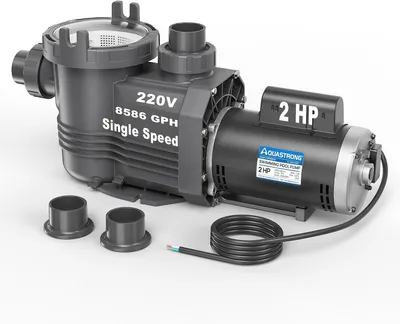
These models make the most sense when a fixed-speed duty fits the pool and the total installed cost is appealing. If the pump will spend most of its life moving far more water than ordinary filtration requires, the timed two-speed Aquastrong is the more interesting comparison.
Pros: Straightforward fixed-speed options with large advertised flow ceilings.
Cons: They require the appropriate higher-voltage supply and offer no lower-speed setting for daily filtration.
Check the Aquastrong PSP200-HV 2 HP price.
Check the Aquastrong Riptide 2 HP price.
Aquastrong PSP200-HV manufacturer specifications
Oswerpon 2 HP Dual Voltage
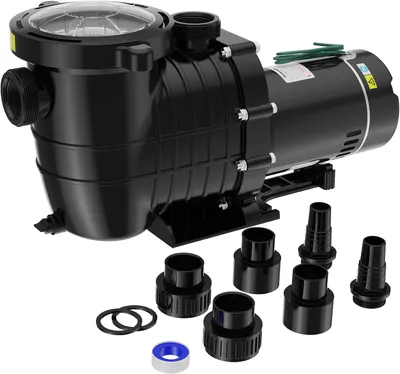
The Oswerpon listing advertises 6,900 GPH, 115/230V and several connector sizes. I'd compare it with the VIVOHOME when a budget replacement is the priority.
Included adapters are convenient, but look closely at what they connect to. An adapter fits a connection. The existing pipe diameter and route still determine resistance through the system.
Before buying, check the model's documentation and ask who supplies a lid seal, basket or drain plug later. Those small parts can determine whether a simple repair stays simple.
Pros: Dual-voltage compatibility and connector options for a basic replacement.
Cons: Its maximum GPH claim gives limited information about flow through your filter. Replacement-part support needs checking.
Check the Oswerpon 2 HP pool pump price.
For the wider single-speed field, see my best fixed-speed pool pumps guide.
How to Choose the Best 2 HP Pool Pump
Write down the two jobs the pump must do
I'd start with the everyday job and the hardest job. Everyday filtration may need modest flow for many hours. A suction cleaner, spa mode or water feature may need considerably more for a shorter period.
Find the equipment's required GPM, then check the flow your prospective pump produces at the system's total dynamic head. Head describes the resistance of the plumbing and equipment. The goal is a pump that covers both jobs while staying within the filter's maximum flow.
Read the performance curve before choosing
The horizontal axis usually shows flow in GPM, and the vertical axis shows head. Find the head your installer has estimated, move across to the curve for the intended speed and voltage, then read the corresponding flow. That gives you a useful comparison between models.
Do the same check for the demanding job. A pump that covers filtration comfortably may need a higher speed for a suction cleaner. A different valve position in spa mode can change the system resistance, so that mode may need its own calculation. This is the detail I would want resolved before buying a larger motor. My pool pump size calculator gives you a starting flow figure to take to that conversation.
Compare horsepower labels correctly
Rated horsepower multiplied by service factor gives total horsepower. Hydraulic horsepower is a different measurement of power transferred to the water.
That's why the SF-N2-2A's 2 rated HP, the TriStar's 1.85 THP and the Super Pump VS 620's 2.25 THP need context. Their curves tell you what each can move through your pool.
Put electricity in the buying calculation
Use input kilowatts, daily hours and your electricity rate. Suppose one operating setup uses 600 watts less for eight hours daily. Over a 180-day season, the difference is 864 kWh. At $0.18 per kWh, that is about $156.
That's an illustration using assumed operating figures. Measure or estimate the watts at the settings your pool requires, then compare the savings with the installed price difference.
Match the installation before checkout
Check the circuit voltage, required protection, pipe centers, inlet size and controller compatibility. Have the installation handled according to the manufacturer's instructions and applicable electrical requirements.
Also leave space to remove the basket and service the motor. A pump that barely squeezes under a deck can turn ordinary cleaning into a chore.
Common Questions About 2 HP Pumps
Will a 2 HP pump make the pool cleaner?
Cleaning depends on circulation, filtration and water chemistry working together. More pump can help only when inadequate flow is the actual problem. Check dirty filters, blocked baskets and incorrect valve positions before assuming the motor is too small.
Can I use one on an above-ground pool?
Some models are intended for that application, but the filter, plumbing, electrical supply and installation position still have to fit. An above-ground pool with a compact filter may need much less than a 2 HP pump can produce. My best above-ground pool pumps guide covers the sizes that usually fit.
Is two-speed worth buying?
It can be a useful improvement when low speed covers everyday circulation. Variable speed gives you finer adjustment, which becomes more valuable when several pieces of equipment need different flows.
My Final Picks
For an exact 2 HP, 115V purchase, I'd start with the Aquastrong PSP200ADT. For a conventional inground upgrade, I'd compare the Hayward TriStar VS and Jandy VS FloPro against the actual flow requirement.
If a matching Pentair SuperFlo installation saves substantial labor, the SF-N2-2A deserves consideration. Add the pump, fittings, controls and operating cost together before deciding. The best purchase should make the pool easier to own for the whole season.
Compare my Hayward variable-speed alternative.
MORE POOL PUMP GUIDES
By horsepower: 0.5 HP · 3/4 HP and boosters · 1 HP · 1.5 HP · 2 HP · 2.5 HP · 3 HP
By brand: Hayward · Pentair · Jandy
By type: All pool pumps · Inground · Above-ground · Variable speed · Two-speed · Fixed-speed
Sizing and scheduling: Pump size calculator · What RPM to run · How long to run · Variable speed schedule
This article contains affiliate links. The Pool Nerd may earn a commission on qualifying purchases at no extra cost to you. Product specifications, prices, and availability can change; verify the exact model and revision before ordering.
Related Reading
- Best 1.5 HP Pool Pumps
- Best 2.5 HP Pool Pumps
- Best Hayward Pool Pumps
- Best Pentair Pool Pumps
- Best Jandy Pool Pumps
- Best Two-Speed Pool Pumps
- Best Variable Speed Pool Pumps
- Best Inground Pool Pumps
- Best Fixed-Speed Pool Pumps
- Pool Pump Size Calculator
- Best Pool Pumps: The Complete Guide

Comments
Loading comments…